


Cylinder Head seals combustion chamber, houses valves & spark plugs, forms coolant passages, wit...
Content
Magnesium die casting is a high-pressure manufacturing process in which molten magnesium alloy is injected into a precision steel mold cavity at pressures ranging from 10 to 175 MPa, producing near-net-shape metal components with exceptional dimensional accuracy. The resulting magnesium die cast parts combine the lightest weight of any structural metal — magnesium is 33% lighter than aluminum and 75% lighter than steel — with high stiffness-to-weight ratio, excellent machinability, and cycle times fast enough for high-volume production. Industries from automotive to consumer electronics rely on magnesium die casting to reduce part weight without sacrificing mechanical integrity.
Magnesium die casting follows the same fundamental sequence as aluminum or zinc die casting, but with process parameters and safety protocols specific to magnesium's reactivity. There are two primary process variants used commercially:
In hot chamber die casting, the injection mechanism (plunger and gooseneck) is submerged directly in the molten magnesium bath. Magnesium's low melting point of 650°C (1,202°F) and low iron solubility make it well suited to this method. The gooseneck draws molten metal and injects it into the die at pressures of 14–35 MPa. Hot chamber machines achieve cycle times of 15–45 seconds, making them ideal for small to medium parts in high-volume production runs. Approximately 70–80% of commercial magnesium die casting uses the hot chamber process.
In cold chamber die casting, molten magnesium is ladled into a separate shot sleeve for each injection cycle, keeping the injection system outside the melt. This method is used for larger parts or when alloy chemistry requires it. Injection pressures reach 35–175 MPa, producing denser castings with lower porosity — important for structural aerospace or automotive components. Cycle times are longer, typically 30–120 seconds, due to the manual or automated ladle step.
Not all magnesium alloys are suitable for die casting. The alloy selection directly determines mechanical performance, corrosion resistance, and elevated-temperature capability of the finished magnesium die cast part.
| Alloy | Composition | Tensile Strength | Yield Strength | Key Advantage | Typical Applications |
|---|---|---|---|---|---|
| AZ91D | Mg-9Al-1Zn | 230 MPa | 160 MPa | Best corrosion resistance, highest use volume | Automotive housings, electronics enclosures |
| AM60B | Mg-6Al-0.3Mn | 220 MPa | 130 MPa | Superior ductility and impact energy absorption | Steering wheels, seat frames, instrument panels |
| AM50A | Mg-5Al-0.3Mn | 210 MPa | 125 MPa | Highest elongation among common alloys (~10%) | Crash-critical automotive safety components |
| AS41B | Mg-4Al-1Si | 210 MPa | 140 MPa | Improved creep resistance up to 150°C | Engine components, transmission cases |
| AE44 | Mg-4Al-4RE | 240 MPa | 145 MPa | High-temperature performance up to 175°C | Powertrain, engine cradles, thermal environments |
AZ91D accounts for approximately 90% of all magnesium die casting production due to its excellent combination of castability, corrosion resistance, and mechanical properties. AM60B and AM50A are preferred wherever energy absorption and ductility outweigh the need for maximum strength — particularly in automotive crash zones.
Magnesium die casting offers a combination of properties that no single alternative process can match across all dimensions. Understanding these advantages helps engineers and procurement specialists make informed material and process selections.
At a density of 1.74 g/cm³, magnesium is the lightest structural metal used in engineering. Compared directly to competing die casting materials: aluminum (2.70 g/cm³) is 55% heavier, and zinc (6.6 g/cm³) is 279% heavier per unit volume. For automotive applications, replacing an aluminum component with a magnesium die cast equivalent typically yields a 25–35% weight reduction for the same geometry and wall thickness.
Magnesium alloys have excellent fluidity in the molten state, allowing die casting of wall sections as thin as 0.6–1.0 mm — thinner than most aluminum die cast designs. This enables complex, highly integrated parts that consolidate multiple components into a single casting, reducing assembly steps, fasteners, and total system weight simultaneously.
Magnesium's high thermal conductivity and low heat content per unit volume mean it solidifies and cools significantly faster than aluminum. Hot chamber magnesium die casting routinely achieves cycle times 40–50% shorter than equivalent aluminum cold chamber parts. For high-volume programs producing millions of parts annually, this translates directly to lower per-part tooling amortization and lower energy cost per piece.
Magnesium is the easiest metal to machine of all structural metals, with a machinability rating of 500% relative to free-cutting brass (set at 100%). Cutting forces are low, tool life is extended, and high cutting speeds are achievable — which reduces secondary machining costs significantly on parts requiring tight tolerances or drilled/tapped features.
Magnesium die cast housings provide inherent electromagnetic interference (EMI) shielding — a critical requirement in electronics and communications hardware. Magnesium enclosures typically achieve shielding effectiveness of 60–90 dB across common frequency ranges, outperforming plastic housings with conductive coatings and matching aluminum in most applications.
The choice between magnesium and aluminum die casting is the most common decision engineers face when selecting a lightweight metal casting process. Each has clear advantages in specific contexts.
| Parameter | Magnesium (AZ91D) | Aluminum (A380) | Advantage |
|---|---|---|---|
| Density (g/cm³) | 1.74 | 2.71 | Magnesium (36% lighter) |
| Tensile Strength (MPa) | 230 | 310 | Aluminum (absolute strength) |
| Specific Strength (MPa·cm³/g) | 132 | 114 | Magnesium (strength per unit weight) |
| Melting Point (°C) | 650 | 660 | Similar |
| Minimum Wall Thickness (mm) | 0.6–1.0 | 1.0–1.5 | Magnesium (thinner walls possible) |
| Cycle Time (relative) | Faster (hot chamber) | Slower (cold chamber) | Magnesium (higher throughput) |
| Corrosion Resistance (bare) | Moderate (requires treatment) | Good (natural oxide layer) | Aluminum |
| Machinability | Excellent | Good | Magnesium |
| Raw Material Cost (relative) | Higher (~1.5–2× aluminum) | Lower | Aluminum |
The decision typically favors magnesium when weight reduction is the primary engineering objective and the part design allows for thin walls. Aluminum is preferred when absolute strength, bare corrosion resistance, or lower material cost is the dominant constraint.
A complete evaluation of magnesium die casting must acknowledge its documented limitations. Ignoring these constraints leads to design failures and unexpected production costs.
The global magnesium die casting market was valued at approximately $2.8 billion in 2023 and is projected to exceed $4.5 billion by 2030, driven by electrification in automotive and continued miniaturization in electronics. The major application sectors are:
The automotive sector uses magnesium die cast parts to reduce vehicle mass and improve fuel efficiency or extend EV range. Common applications include instrument panel beams, steering column brackets, seat frames, door inner panels, transfer case housings, and gearbox casings. A typical modern vehicle contains 2–6 kg of magnesium die cast components, and this figure is rising as OEMs pursue aggressive weight reduction targets. BMW, Ford, General Motors, and Volkswagen are among the largest users of automotive magnesium die castings.
Laptop chassis, tablet frames, camera bodies, smartphone structural components, and drone frames are produced in magnesium die cast to achieve the thinnest, lightest possible form factor with structural rigidity. The Apple MacBook Air and numerous Lenovo ThinkPad models have historically used magnesium alloy enclosures. The combination of EMI shielding, thin-wall capability, and premium tactile feel makes magnesium die cast a favored material for high-end portable electronics.
Aerospace applications use magnesium die cast parts for avionics housings, helicopter gearbox casings, satellite brackets, and military electronics enclosures where every gram of weight reduction has a measurable mission impact. Aerospace-grade magnesium castings must meet stringent porosity and mechanical property requirements verified by radiographic inspection and destructive testing.
Magnesium die cast housings for drills, saws, grinders, and handheld power tools reduce operator fatigue over extended use — a direct ergonomic benefit of lightweighting. The Bosch, Makita, and DeWalt product lines include multiple magnesium die cast tool housings. Industrial applications include sewing machine frames, optical instrument housings, and pneumatic tool bodies.
Because bare magnesium alloys have moderate corrosion resistance, surface treatment is nearly always required for functional parts. The choice of treatment depends on the corrosion environment, required aesthetics, electrical conductivity requirements, and cost targets.
Designing effectively for magnesium die casting requires adherence to specific geometric rules. Poor design decisions that ignore process constraints result in porosity, warpage, incomplete fills, or excessive scrap rates.
Magnesium's environmental profile is increasingly relevant as manufacturers face decarbonization mandates and extended producer responsibility regulations.
Magnesium is 100% recyclable with no degradation in mechanical properties. Secondary (recycled) magnesium alloy production requires only about 5% of the energy needed to produce primary magnesium from ore — a significant lifecycle advantage. In die casting operations, runners, gates, and trimmed flash are routinely remelted and returned to the melt furnace, with typical scrap recycle rates of 85–95% in well-managed facilities.
At the vehicle level, each kilogram of weight reduced through magnesium die casting saves approximately 11–12 kg of CO₂ over a 150,000 km vehicle lifetime in a conventional ICE vehicle, and extends the range of EVs by reducing the energy demand per kilometer. These lifecycle benefits increasingly factor into OEM material selection decisions under EU and US emissions regulations.
The primary environmental concern for primary magnesium production is the energy-intensive Pidgeon process used predominantly in China, which accounts for over 85% of global magnesium supply. As the grid decarbonizes and electrolytic production methods scale up, the carbon footprint of primary magnesium is expected to decrease substantially through the 2030s.

Cylinder Head seals combustion chamber, houses valves & spark plugs, forms coolant passages, wit...

The camshaft bracket cover secures the camshaft position, seals oil channels to prevent leaks, block...

Aluminum die-casting gearbox mold the most critical requirements: 1. Material properties require hig...

Die casting transmission EM Side Housing mold is designed by JYD(Yunmai) for NIO transmission Rear H...

transmission rear Housing molds are foundational to the efficient and precise manufacturing of autom...
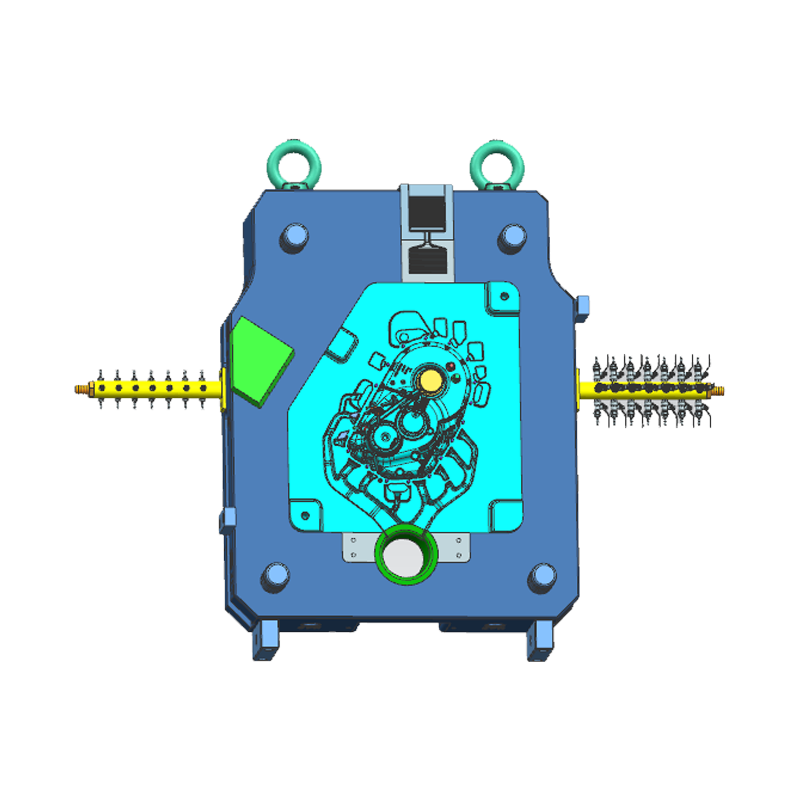
SERES transimission adopts complex cavity structure; high efficiency cooling system, the development...
Copyright © Ningbo Yunmai Precision Machinery Co., Ltd. All Rights Reserved
 OEM/ODM Die Casting/Cast Molds Manufacturers