


Cylinder Head seals combustion chamber, houses valves & spark plugs, forms coolant passages, wit...
Content
Aluminum die casting molds — also called dies — are precision-machined steel tooling used to repeatedly inject molten aluminum alloy under high pressure into a shaped cavity, producing near-net-shape metal parts with tight tolerances, smooth surfaces, and consistent geometry. A properly designed and maintained mold is the single most critical factor in part quality, cycle time, and total production economics. A typical aluminum die casting mold can last 100,000 to 500,000 shots depending on mold steel grade, part complexity, alloy, and process parameters.
Understanding mold construction, material selection, thermal management, and maintenance is essential for engineers, buyers, and manufacturers who want to minimize defects, reduce downtime, and maximize return on tooling investment.
In high-pressure die casting (HPDC), molten aluminum — typically at 650–720°C — is injected into the mold cavity at pressures ranging from 10 to 175 MPa (1,450 to 25,000 psi), filling the cavity in milliseconds. The mold consists of two primary halves: the fixed die (cover half) and the ejector die (ejector half). Once the aluminum solidifies — typically within 2–30 seconds depending on wall thickness and alloy — the mold opens and ejector pins push the part out of the cavity.
The mold steel must withstand repeated thermal cycling (from ambient temperature up to ~300°C at the cavity surface and back), high injection pressures, erosive metal flow, and mechanical clamping forces. Choosing the wrong steel grade is the most common cause of premature mold failure.
| Steel Grade | Typical Hardness (HRC) | Expected Shot Life | Best Use Case |
| H13 (AISI) | 44–48 | 150,000–300,000 | Standard production; most aluminum alloys |
| Premium H13 (e.g., Uddeholm Dievar) | 44–48 | 300,000–500,000+ | High-volume, complex geometry parts |
| P20 | 28–34 | 50,000–100,000 | Prototype or low-volume tooling |
| 8407 / W302 | 46–50 | 200,000–400,000 | Thin walls, high thermal fatigue areas |
| Maraging steel (e.g., 1.2709) | 50–54 | Varies — high strength, low toughness | Conformal-cooled inserts made via LPBF (3D printing) |
H13 tool steel remains the industry standard for aluminum die casting molds due to its balance of hot hardness, thermal fatigue resistance, and machinability. Premium H13 variants with tighter cleanliness specs and finer carbide distribution extend tool life by 50–100% over standard H13 at a modest cost premium — typically 20–40% more for the raw steel, which is a small fraction of total tooling cost.
Mold type is determined by production volume, part complexity, and process variant. Understanding the differences prevents over- or under-investing in tooling.
A single-cavity mold produces one part per shot. Multi-cavity molds — typically 2, 4, or 8 cavities — multiply output per machine cycle, reducing part cost at higher volumes. However, multi-cavity molds require precise balancing of the runner system to ensure each cavity fills simultaneously and uniformly. An imbalanced runner can lead to short shots in one cavity and flash in another within the same shot.
A unit die (or insert die) uses a standardized master die frame that holds interchangeable cavity inserts. This approach significantly reduces tooling cost for families of small- to medium-sized parts. Changing inserts takes 30–60 minutes versus 2–4 hours to change a full die set, improving machine utilization.
For design validation and pre-production sampling, soft tools machined from P20 steel, aluminum (e.g., 7075), or even machined from resin/composite materials can produce functional parts at a fraction of hard-tooling cost. Aluminum prototype dies cost $3,000–$15,000 versus $30,000–$200,000+ for production H13 dies, but are limited to a few hundred to a few thousand shots.
Vacuum-assisted (HPDC) molds incorporate sealed parting lines and vacuum valves that evacuate air from the cavity immediately before injection. This reduces gas porosity to levels that allow T5 or T6 heat treatment and welding — capabilities not possible with standard HPDC parts. These molds cost 15–30% more than conventional dies but enable structural components such as automotive shock towers and battery trays.
Poor mold design cannot be fully compensated by process optimization. These rules should be applied during the design-for-manufacturing (DFM) phase:
All surfaces parallel to the direction of mold opening must have a minimum draft angle to allow part ejection without galling or drag marks. Exterior walls: 1–3°; interior walls and cores: 2–5°; textured surfaces: add 1° per 0.025 mm of texture depth. Insufficient draft is one of the most common and costly design errors found during DFM review.
Abrupt changes in wall thickness create differential solidification rates, leading to shrinkage porosity, sink marks, and hot tears. Recommended nominal wall thickness for aluminum HPDC is 1.5–4 mm for most structural parts. Transitions between thick and thin sections should be gradual, using tapered fillets rather than sharp steps.
Sharp internal corners in the mold cavity are stress concentration points that initiate heat-checking cracks — the leading cause of premature mold failure. Minimum inside radius: 0.5 mm; preferred: ≥1.5 mm. On the steel side (external corners of cores), generous radii also prevent stress cracking under thermal cycling.
Gate location should direct metal flow away from cores and thin sections to avoid jetting and erosion. Gate velocity at the gate land is typically 30–60 m/s for aluminum. Vent area should be approximately 0.5–1% of the cavity projected area. Insufficient venting is the primary cause of back-pressure porosity and incomplete fill.
Uneven mold temperature causes dimensional inconsistency and accelerates die soldering (aluminum sticking to steel). Cooling channels should be placed 25–50 mm from the cavity surface and sized for turbulent flow (Reynolds number >10,000). Conformal cooling channels — produced via metal additive manufacturing — can reduce cycle time by 20–40% in thermally complex areas by following cavity contours that straight-drilled channels cannot reach.
Recognizing the failure mode early allows corrective action before catastrophic die damage occurs. The table below summarizes the most frequent mold failure types, their causes, and mitigation strategies:
| Failure Mode | Root Cause | Typical Onset (shots) | Prevention / Remedy |
| Heat checking (thermal fatigue cracks) | Cyclic thermal stress; sharp corners; poor preheat | 50,000–150,000 | Premium steel; generous radii; slow preheat to 180–220°C |
| Die soldering (aluminum adhesion) | High gate velocity; insufficient release agent; low Si in alloy | Variable — can start early | Nitriding or CrN/TiAlN coating; optimized lubricant spray |
| Erosive wear | High-velocity metal flow at gates and bends | 100,000–250,000 | Stellite inserts at gate; reduce gate velocity; TiAlN coating |
| Gross cracking / catastrophic fracture | Cold start; flash breakage; impact; insufficient steel section | Sudden — any stage | Proper preheat protocol; adequate support pillars; EDM-free cuts |
| Dimensional drift | Parting line wear; ejector pin wear; cavity deformation | 200,000–400,000 | Regular dimensional audits; timely cavity welding / remachining |
Surface engineering adds a hardened or low-friction layer to the cavity surface without changing part dimensions, significantly improving resistance to die soldering, erosion, and heat checking.
Mold cost is one of the most important financial decisions in a die casting program. Costs vary widely based on part size, complexity, cavitation, and sourcing geography.
| Part Size & Complexity | Typical Mold Cost (USD) | Lead Time (weeks) | Machine Tonnage |
| Small, simple (connector housings, brackets) | $8,000–$25,000 | 6–10 | 80–400 tons |
| Medium, moderate complexity (gearbox covers, pump housings) | $25,000–$80,000 | 10–16 | 400–1,200 tons |
| Large, complex (engine blocks, battery trays, structural nodes) | $80,000–$300,000+ | 16–28 | 1,200–4,400 tons |
| Giga casting (EV underbody, mega-structural) | $500,000–$1,500,000+ | 28–52 | 6,000–9,000 tons |
Key cost drivers include: number of slides and lifters (each adding $2,000–$10,000), vacuum system integration (+$5,000–$20,000), surface finish requirements, number of cavities, and whether conformal cooling is specified. Tooling sourced from China typically costs 40–60% less than equivalent European or North American tooling but may involve longer qualification timelines and higher logistical risk.
A structured preventive maintenance schedule dramatically extends mold life and reduces unplanned downtime. The following framework is used by high-volume die casters:
The aluminum alloy specified affects mold design requirements, tool life, and achievable part properties. The most widely used alloys in die casting each present different challenges:
Casting simulation software has become standard practice among competitive die casters. Running simulations before tooling is cut can eliminate 60–80% of design-related defects found in first-article trials, reducing costly engineering change orders (ECOs) and re-machining.
Simulation outputs that directly inform mold design include: fill front animation (identifies cold shuts and misruns), air entrapment mapping (guides vent placement), thermal hot spot identification (drives cooling channel layout), and die stress analysis (flags areas at risk of early cracking).
The die casting industry is undergoing rapid tooling innovation driven by EV lightweighting demands, sustainability targets, and advances in manufacturing technology.
Laser Powder Bed Fusion (LPBF) 3D printing of mold inserts in maraging steel or H13 allows cooling channels to follow the exact contour of complex cavity surfaces. Published results show cycle time reductions of 20–35% and surface temperature reductions of 30–50°C in hot spots, directly improving dimensional consistency and mold longevity.
Tesla's use of 6,000–9,000-ton die casting machines to produce the Model Y front and rear underbody as single aluminum die castings — replacing 70–171 individual stamped and welded parts — has triggered a wave of investment in large-format die tooling across the automotive industry. These dies weigh 50–100 metric tons and require unprecedented precision in thermal management and steel integrity.
Machine learning systems that analyze real-time sensor data — cavity pressure, die temperature, shot velocity, and part weight — can detect process drift before it results in scrap parts or die damage. Early adopters report scrap rate reductions of 15–30% and unplanned downtime reductions of 20–40% through predictive maintenance triggers.

Cylinder Head seals combustion chamber, houses valves & spark plugs, forms coolant passages, wit...

The camshaft bracket cover secures the camshaft position, seals oil channels to prevent leaks, block...
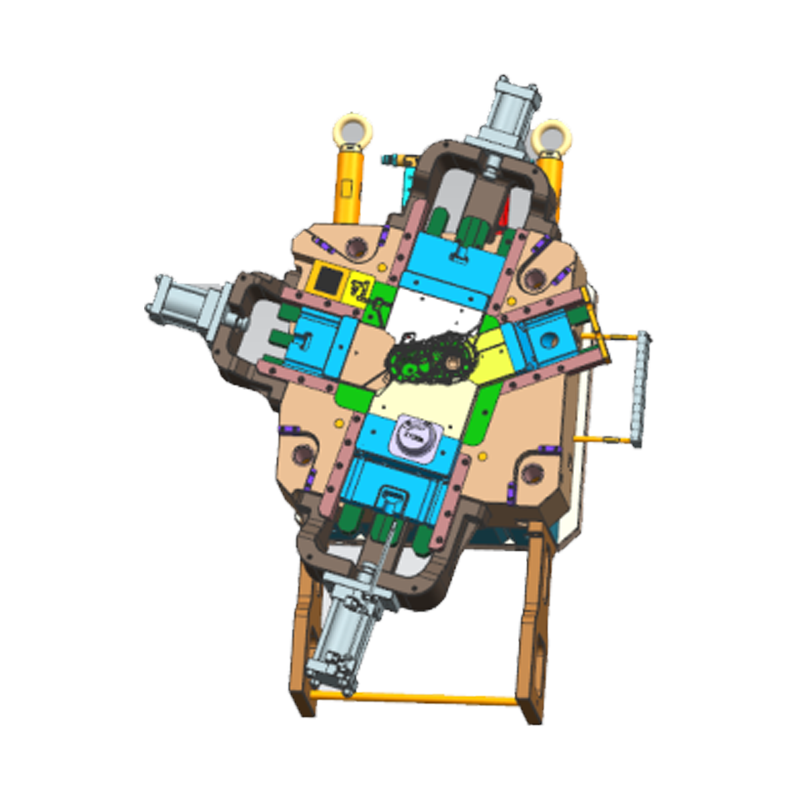
Aluminum die-casting gearbox mold the most critical requirements: 1. Material properties require hig...

Die casting transmission EM Side Housing mold is designed by JYD(Yunmai) for NIO transmission Rear H...

transmission rear Housing molds are foundational to the efficient and precise manufacturing of autom...
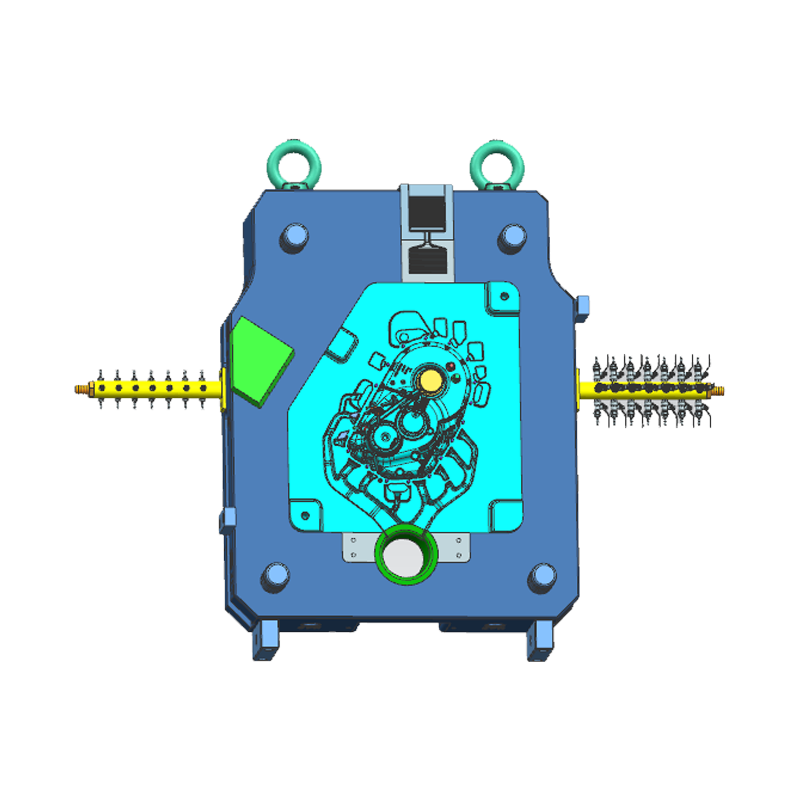
SERES transimission adopts complex cavity structure; high efficiency cooling system, the development...
Copyright © Ningbo Yunmai Precision Machinery Co., Ltd. All Rights Reserved
 OEM/ODM Die Casting/Cast Molds Manufacturers