


Cylinder Head seals combustion chamber, houses valves & spark plugs, forms coolant passages, wit...
Content
Zinc alloy die castings are precision-engineered metal components produced by injecting molten zinc-based alloys into hardened steel molds under high pressure — typically between 1,000 and 5,000 psi. The result is a near-net-shape part with tight dimensional tolerances (as close as ±0.025 mm), excellent surface finish, and mechanical properties that rival aluminum and magnesium castings at a fraction of the tooling cost.
Used across automotive, electronics, hardware, and consumer goods industries, zinc die castings are the preferred choice when high-volume production, complex geometry, thin walls, and reliable performance must be achieved simultaneously. With die life exceeding 1 million shots in some applications, zinc die casting offers one of the lowest per-part costs of any metal forming process at scale.
Zinc's physical and metallurgical properties make it uniquely well-suited to the die casting process. Its low melting point of approximately 419°C (786°F) — compared to 660°C for aluminum and 650°C for magnesium — reduces thermal stress on dies, dramatically extending tool life and lowering energy consumption per cycle.
Key material advantages include:
The term "zinc alloy die casting" most commonly refers to the Zamak family of alloys, a group of zinc-aluminum-magnesium-copper alloys standardized under ASTM B86. The name is a German acronym derived from the constituent elements: Zink (zinc), Aluminium, Magnesium, and Kupfer (copper). Beyond Zamak, ZA alloys (zinc-aluminum with higher aluminum content) extend the range of mechanical performance available.
| Alloy | Al % | Cu % | Tensile Strength (MPa) | Hardness (Brinell) | Primary Use Case |
| Zamak 2 (No. 2) | 4.0 | 2.7 | 359 | 100 | Highest hardness; bearings, gears |
| Zamak 3 (No. 3) | 4.0 | 0.1 max | 283 | 82 | Most widely used; general purpose |
| Zamak 5 (No. 5) | 4.0 | 1.0 | 331 | 91 | Higher strength; automotive, hardware |
| Zamak 7 (No. 7) | 4.0 | 0.1 max | 283 | 80 | Maximum ductility; thin-wall parts |
| ZA-8 | 8.4 | 1.0 | 374 | 103 | Hot-chamber die casting; high strength |
| ZA-27 | 27.0 | 2.2 | 426 | 119 | Highest strength zinc alloy; cold-chamber |
Zamak 3 accounts for approximately 70% of all zinc die casting production globally due to its balanced combination of castability, dimensional stability, and cost. Zamak 5 is preferred in Europe and for applications requiring higher creep resistance under sustained load.
Unlike aluminum and magnesium — which require cold-chamber machines — most zinc alloys are processed in hot-chamber (gooseneck) die casting machines, which offer faster cycle times, lower metal loss, and simpler operation.
In hot-chamber machines, the injection mechanism (gooseneck and plunger) is submerged directly in the molten zinc bath. The process sequence is:
ZA-27 and other high-aluminum zinc alloys attack iron in hot-chamber components and must be processed in cold-chamber machines, where molten metal is ladled into a separate shot sleeve for each cycle. Cold-chamber operation sacrifices some cycle speed but opens up access to the highest-strength zinc alloy grades.
Zinc die casting offers the tightest dimensional control of any high-volume metal casting process. Achieving these tolerances requires proper die design, consistent alloy composition, and controlled process parameters — but the results are reproducible at millions of cycles.
| Parameter | Standard Tolerance | Precision Tolerance |
| Linear dimensions (first 25 mm) | ±0.10 mm | ±0.025 mm |
| Each additional 25 mm | ±0.05 mm | ±0.013 mm |
| Minimum wall thickness | 0.8 mm | 0.4 mm (with optimized gate) |
| Draft angle (internal) | 0.5°–1° | 0.25° (with polished die) |
| Surface roughness (Ra) | 0.8–1.6 µm | 0.4 µm (die polished to A1) |
| Hole diameter (min) | 1.5 mm | 0.8 mm |
These tolerances allow zinc castings to be used in many applications without any secondary machining, which is a key economic advantage over sand casting, investment casting, and even many forging operations.
The zinc vs. aluminum decision is the most common alloy selection question in die casting. Both are widely used, but they have distinct cost, performance, and process profiles that make each better suited to different applications.
As a general rule: choose zinc when part complexity, surface quality, tight tolerances, or ultra-high production volumes are the primary drivers; choose aluminum when low weight or elevated operating temperatures are the primary drivers.
Zinc die castings appear across virtually every manufacturing industry. Their combination of precision, surface quality, and cost efficiency at scale makes them indispensable in the following sectors:
Zinc die castings serve in door handles, lock cylinders, fuel system components, seat belt buckles, steering column parts, window lift mechanisms, and decorative trim. A single mid-size vehicle may contain over 25 zinc die cast components. The high impact resistance of Zamak 5 is particularly valued in safety-critical hardware.
Zinc's inherent EMI/RFI shielding effectiveness (due to its electrical conductivity) makes it a natural fit for connector housings, laptop hinge assemblies, USB port frames, transformer cores, and circuit breaker components. Thin-wall zinc castings can achieve wall thicknesses of 0.5 mm in miniaturized electronic enclosures.
Door knobs, cabinet pulls, padlock bodies, faucet bodies, and window hardware are among the most common zinc die casting applications globally. The ability to plate zinc to a bright chrome or brushed nickel finish at low cost — and maintain that finish for decades — drives heavy adoption in the architectural hardware market.
Die-cast toy vehicles (the iconic "Hot Wheels" and "Matchbox" models use Zamak 3 and 5), belt buckles, eyeglass frames, zipper sliders, and musical instrument hardware are all produced in zinc alloy. The global die cast toy market alone exceeds $2 billion annually, with zinc die castings comprising the majority of metal components.
Non-implantable medical device housings, surgical instrument handles, and diagnostic equipment enclosures use zinc castings where precise dimensions, sterilizable surfaces, and the ability to accept antimicrobial coatings are required.
One of zinc die casting's most commercially significant advantages is its compatibility with a wide range of decorative and functional surface finishes — many of which cannot be applied directly to aluminum die castings without costly pre-treatment.
Like all casting processes, zinc die casting is subject to defects that must be controlled through die design, process parameter optimization, and alloy quality. Understanding the root causes of common defects is essential for engineers and purchasing managers evaluating casting suppliers.
Gas or shrinkage voids within the casting body, often invisible externally but revealed by machining or pressure testing. Gas porosity results from trapped air or lubricant vapors; shrinkage porosity from inadequate metal feed during solidification. Prevention: optimized venting, vacuum-assisted die casting, and controlled intensification pressure during the final stages of injection.
Cold shuts appear as visible seam lines where two metal flow fronts meet without fully fusing, typically caused by insufficient injection speed or die temperature. Misruns (incomplete fill) result from similar causes. Prevention: increased injection velocity (typically 30–50 m/s gate velocity for zinc), higher die temperature (180–220°C), and optimized gate location.
This is the most critical long-term failure mode unique to zinc alloys. Trace levels of lead, cadmium, tin, or bismuth — above defined ASTM limits — cause progressive grain boundary attack in Zamak alloys, eventually cracking or distorting parts over years in service. The solution is strict use of Special High Grade (SHG) zinc (99.99% purity) as the base metal and rigorous incoming alloy certification. Reputable die casters use spectrometer analysis (OES) on every heat of alloy.
Thin fins of metal extruded into die parting line gaps, requiring trimming or tumbling operations. Caused by worn or misaligned dies, or insufficient clamping force. Controlled by regular die maintenance and clamping force calculations matched to projected cavity pressure.
Understanding the cost economics of zinc die casting helps justify tooling investments and compare the process fairly against alternatives such as plastic injection molding, sand casting, or machined parts.
When sourcing zinc alloy die castings, specifying the right parameters upfront prevents costly rework, supplier disputes, and field failures. The following checklist covers the critical specification elements:

Cylinder Head seals combustion chamber, houses valves & spark plugs, forms coolant passages, wit...

The camshaft bracket cover secures the camshaft position, seals oil channels to prevent leaks, block...
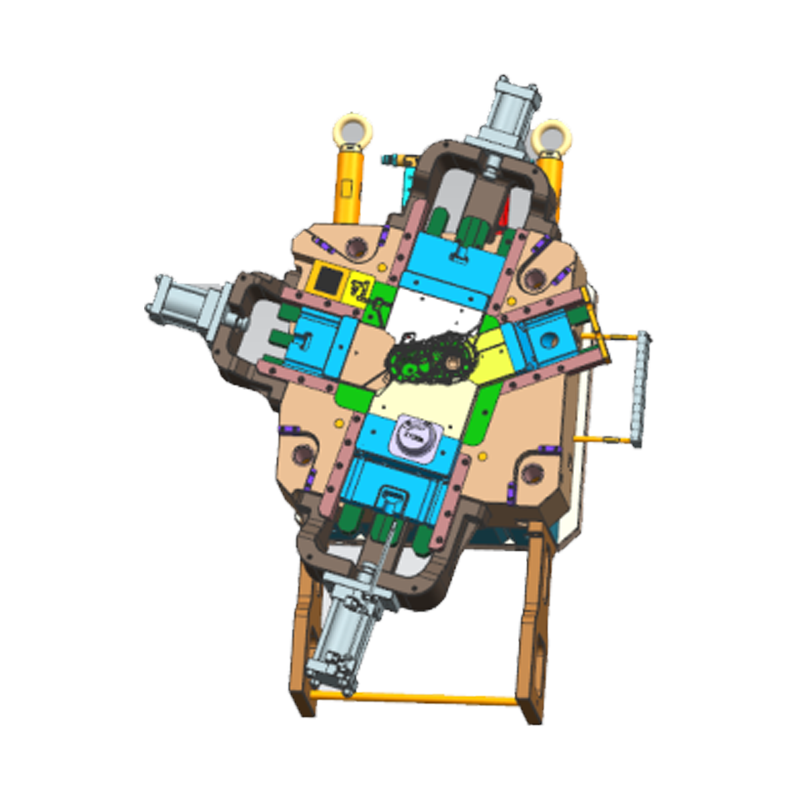
Aluminum die-casting gearbox mold the most critical requirements: 1. Material properties require hig...

Die casting transmission EM Side Housing mold is designed by JYD(Yunmai) for NIO transmission Rear H...

transmission rear Housing molds are foundational to the efficient and precise manufacturing of autom...
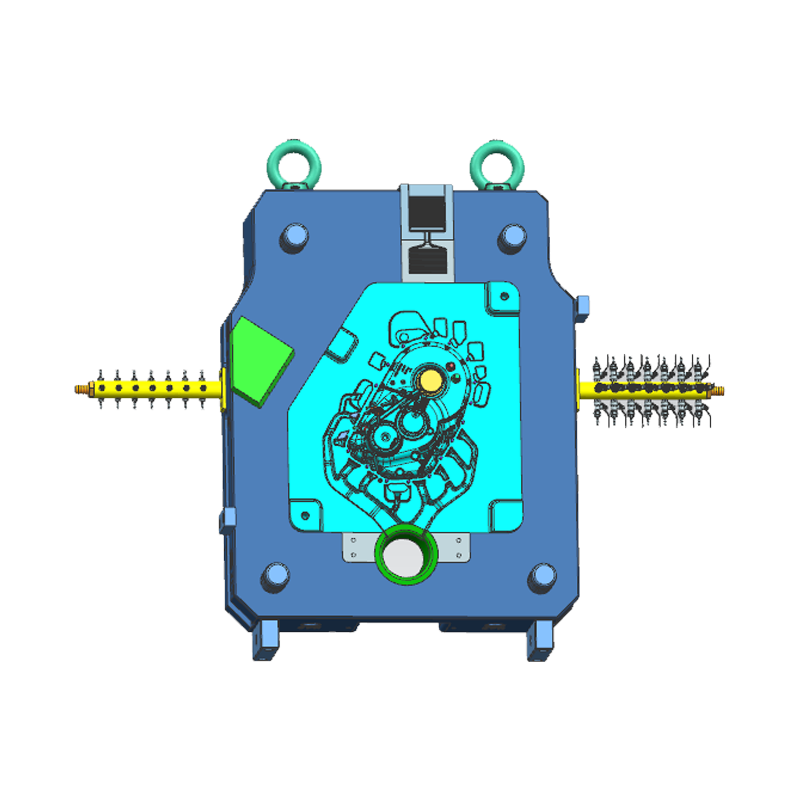
SERES transimission adopts complex cavity structure; high efficiency cooling system, the development...
Copyright © Ningbo Yunmai Precision Machinery Co., Ltd. All Rights Reserved
 OEM/ODM Die Casting/Cast Molds Manufacturers