


Cylinder Head seals combustion chamber, houses valves & spark plugs, forms coolant passages, wit...
Content
Aluminum die castings are widely used for automobile components because they reduce vehicle weight by roughly 40-50% compared to equivalent steel parts while still meeting the structural and thermal demands of engine, transmission, and chassis applications. The high-pressure die casting (HPDC) process also allows complex, thin-walled shapes to be produced with tight dimensional tolerances in a single step, reducing the need for multiple machined or welded parts.
This combination of light weight, design flexibility, and production efficiency is why aluminum die castings now appear in engine blocks, transmission housings, structural brackets, and increasingly in electric vehicle battery enclosures and motor housings.
Vehicle weight directly affects fuel efficiency, range, and emissions, which is why automakers have steadily replaced cast iron and steel parts with aluminum alternatives over the past two decades. Reducing vehicle weight by 10% can improve fuel efficiency by approximately 6-8%, according to automotive engineering studies, making aluminum die castings a direct lever for meeting fuel economy and emissions targets.
High-pressure die casting allows engineers to combine what would have been five or six separate stamped or machined steel parts into a single aluminum casting. This part consolidation reduces assembly time, eliminates fastener and weld points that could fail, and simplifies the supply chain. Some EV manufacturers have used large single-piece aluminum castings, sometimes called "gigacastings," to replace dozens of individual structural components in a vehicle's underbody.
Aluminum's high thermal conductivity makes it well-suited for components that need to dissipate heat, such as engine blocks, transmission housings, and electric motor casings. Its decent electrical conductivity is also valuable in EV applications like battery enclosures and busbar housings, where managing heat and electromagnetic shielding both matter.
Aluminum die castings appear throughout nearly every major vehicle system. The table below outlines the most common components and why aluminum die casting is chosen for each.
| Component | System | Why Aluminum Die Casting |
| Engine Block / Cylinder Head | Powertrain | Heat dissipation, weight reduction |
| Transmission Housing | Drivetrain | Dimensional precision, durability |
| Battery Enclosure | EV Powertrain | Lightweight, thermal management |
| Structural Brackets | Chassis/Body | Part consolidation, strength-to-weight ratio |
| Electric Motor Housing | EV Powertrain | Electromagnetic shielding, heat dissipation |
Not all aluminum die casting alloys perform the same way, so alloy selection should match the component's mechanical and thermal requirements.
Porosity, or trapped gas and shrinkage voids inside the casting, is the leading cause of structural failure in die-cast automotive parts. Even 1-2% internal porosity can reduce fatigue strength by more than 20% in load-bearing components, which is why reputable suppliers use vacuum-assisted die casting or X-ray inspection for safety-critical parts.
Automotive die castings typically require tolerances within ±0.1mm to ±0.3mm depending on the part, since many components mate directly with machined or stamped parts elsewhere in the assembly. Surface finish requirements also vary by application, with cosmetic or sealing surfaces needing additional machining or coating after casting.
Tooling cost is the largest upfront investment in die casting, with steel dies for complex automotive parts often costing tens of thousands of dollars depending on size and cavity count. This makes die casting most cost-effective for medium-to-high production volumes, typically above 10,000 units, where the per-part tooling cost is spread across enough output to offset the initial investment.
Material cost also fluctuates with global aluminum prices, so suppliers offering recycled or secondary aluminum alloys can offer meaningful savings for non-safety-critical components without compromising performance.
Choosing a supplier with proven process control matters as much as the alloy or design itself, since most die casting defects trace back to inconsistent process parameters rather than poor part design. A supplier that can demonstrate consistent porosity levels, dimensional repeatability, and automotive certification is generally the safer long-term partner for ongoing production.

Cylinder Head seals combustion chamber, houses valves & spark plugs, forms coolant passages, wit...

The camshaft bracket cover secures the camshaft position, seals oil channels to prevent leaks, block...
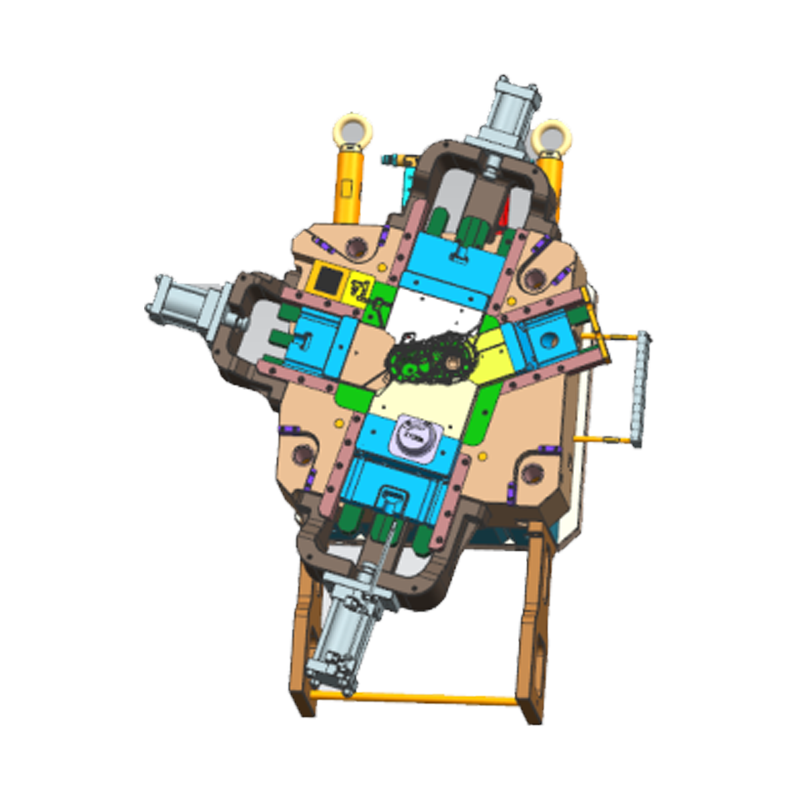
Aluminum die-casting gearbox mold the most critical requirements: 1. Material properties require hig...

Die casting transmission EM Side Housing mold is designed by JYD(Yunmai) for NIO transmission Rear H...

transmission rear Housing molds are foundational to the efficient and precise manufacturing of autom...
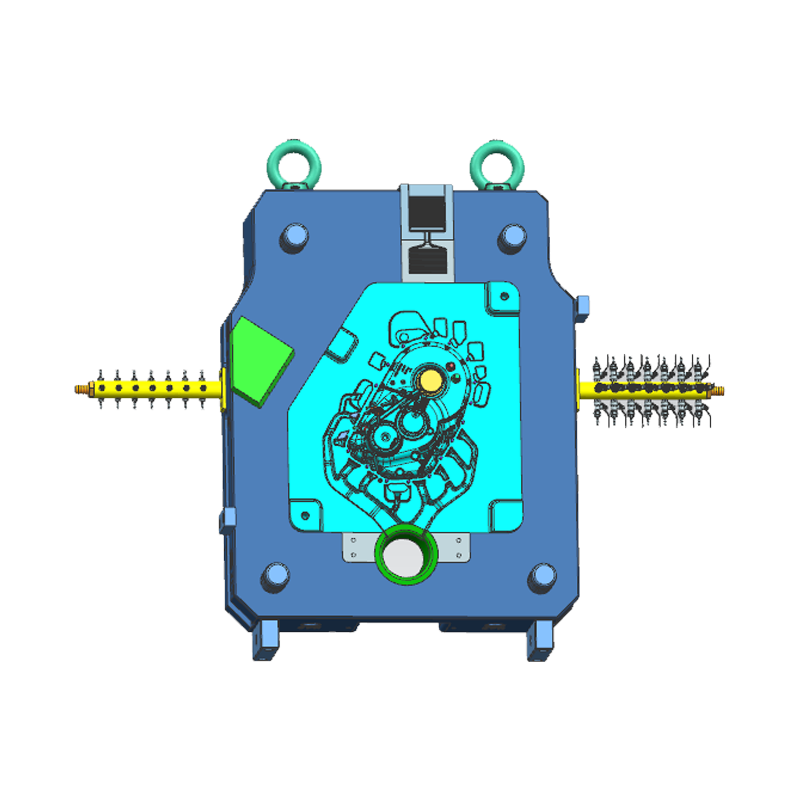
SERES transimission adopts complex cavity structure; high efficiency cooling system, the development...
Copyright © Ningbo Yunmai Precision Machinery Co., Ltd. All Rights Reserved
 OEM/ODM Die Casting/Cast Molds Manufacturers