


Cylinder Head seals combustion chamber, houses valves & spark plugs, forms coolant passages, wit...
Industry News
Home / News / Industry News / Aluminum Die Castings: The Ultimate Buyer’s Guide to Design & Factory Selection
Content
Aluminum die castings are precision metal components produced by injecting molten aluminum alloy into a hardened steel die under high pressure — typically 1,500 to 25,000 PSI — and allowing it to solidify into a near-net-shape part. The process delivers dimensional accuracy of ±0.1 mm, excellent surface finish, and the ability to produce complex geometries with thin walls as fine as 0.8 mm, all at high production volumes. A single aluminum die casting die can produce 100,000 to 1,000,000+ shots over its service life, making this one of the most cost-efficient manufacturing methods for medium-to-high volume metal components.
Aluminum accounts for approximately 80% of all die castings produced globally by volume, ahead of zinc, magnesium, and copper alloys. Its combination of low density (2.7 g/cm³), high thermal conductivity, corrosion resistance, and excellent castability makes it the default material for industries ranging from automotive and electronics to aerospace and industrial equipment. Understanding how aluminum die castings are made, what alloys are used, and what a qualified factory must demonstrate are the three most important things a buyer or engineer needs to know.
The production of an aluminum die casting follows a tightly controlled sequence. Each stage directly affects the mechanical properties, dimensional accuracy, and surface quality of the finished part.
Before each shot, the die is sprayed with a release agent (typically water-based die lubricant) to prevent the aluminum from bonding to the steel die surface and to facilitate part ejection. Die temperature is maintained between 150°C and 250°C (300–480°F) using internal cooling channels — too cold and the aluminum solidifies before filling the cavity; too hot and cycle times increase and dimensional stability suffers.
Aluminum alloy ingots are melted in a holding furnace and maintained at 620–700°C (1,150–1,290°F), depending on the alloy. Melt quality is critical: hydrogen porosity (from moisture in the melt) and oxide inclusions are the two primary internal defect sources in aluminum castings. Reputable factories degass the melt using nitrogen or argon rotary degassers, targeting a hydrogen level below 0.10 mL/100g Al, and skim oxides before ladling.
In cold chamber die casting (the standard method for aluminum), a measured shot of molten metal is ladled into the shot sleeve. The injection plunger then drives the metal into the die cavity in two phases: a slow phase to fill the runner system without air entrapment, followed by a high-velocity fast phase — typically 20–60 m/s gate velocity — to fill the cavity before premature solidification. Intensification pressure (the final squeeze phase) then compacts the solidifying metal to reduce shrinkage porosity.
Solidification occurs within 2 to 30 seconds depending on part wall thickness and die temperature. Once solidified, the die opens and ejector pins push the casting out of the cavity. The part — still attached to the runner system and overflow wells — is removed by robot or operator.
The runner, gates, and flash are removed by trim dies, CNC machining, or manual de-gating. Secondary operations — CNC drilling, tapping, milling, surface treatment — transform the raw casting into the finished component. Common surface finishes include shot blasting, powder coating, anodizing, and chromate conversion coating.
Alloy selection is one of the most consequential decisions in aluminum die casting design. The choice affects mechanical strength, corrosion resistance, machinability, and pressure tightness of the finished part.
| Alloy | Key Composition | Tensile Strength | Best For | Key Limitation |
| A380 | Al-Si8.5-Cu3.5 | 320 MPa | General purpose, housings, brackets | Moderate corrosion resistance |
| ADC12 (A383) | Al-Si10.5-Cu2.5 | 310 MPa | Thin-wall, complex geometry | Lower ductility than A380 |
| A360 | Al-Si9.5-Mg0.5 | 315 MPa | Pressure-tight, marine, food equipment | Harder to cast than A380 |
| A413 | Al-Si12 | 290 MPa | Intricate thin walls, hydraulic components | Lower strength than A380 |
| A390 | Al-Si17-Cu4.5-Mg0.6 | 350 MPa | High wear resistance, engine cylinders | Low ductility, difficult to cast |
| Silafont-36 (Al-Si10MnMg) | Al-Si10-Mn0.6-Mg0.3 | 340 MPa (heat treated) | Structural automotive, crash-relevant parts | Higher alloy cost |
A380 is the most widely used alloy globally, accounting for over 50% of North American aluminum die casting production, because it balances castability, mechanical properties, and cost. ADC12 is the near-equivalent standard in Asian markets, particularly Japan and China.
"Die casting" in industrial usage almost always refers to high pressure die casting (HPDC), but aluminum factories may also offer low pressure die casting (LPDC) and gravity (permanent mold) casting. Each process occupies a distinct performance niche.
Injection pressure of 1,500–25,000 PSI. Cycle time of 15–120 seconds. Best for high-volume, thin-wall, complex parts. Surface finish Ra 1.6–6.3 µm as-cast. Cannot be heat treated to T6 temper in standard form due to trapped porosity (though vacuum-assisted HPDC and high-vacuum die casting now enable T6 treatment for structural parts).
Metal is pushed upward into the die from a sealed furnace at low pressure (0.3–1.0 bar / 4.4–14.5 PSI). Fills slowly and without turbulence, producing near-zero porosity castings that are heat treatable. Used for automotive wheels, structural nodes, and pressure-critical components where strength is more important than cycle time. Cycle times of 3–10 minutes per part limit output volume.
Metal fills the steel die by gravity alone — no external pressure. Produces dense, low-porosity castings suitable for T6 heat treatment and applications requiring good elongation (6–12%). Wall thickness is typically 4–6 mm minimum, making it unsuitable for thin-wall designs. Used for cylinder heads, intake manifolds, and pump housings where structural integrity outweighs production speed.
Aluminum die castings appear in virtually every sector of modern manufacturing. The automotive industry is by far the largest consumer, but demand from electronics and EV battery systems is growing rapidly.
Selecting a die casting factory is a long-term supply chain decision. The factory's machine park, quality systems, and engineering capability determine whether your parts arrive on-spec, on time, and at the agreed price. These are the criteria that separate capable suppliers from risky ones.
Die casting machines are rated in tonnes of clamping force, from 80 tonnes for small components to 4,000+ tonnes for large structural castings. Tesla's Giga Press — used to cast the Model Y rear underbody as a single piece — operates at 6,000–9,000 tonnes. A factory should be able to match the machine tonnage to your projected part size and shot weight. Running a small part on an oversized machine wastes energy and cycle time; running a large part on an undersized machine results in flash, short-shots, and dimensional instability.
Factories with in-house tool rooms can control die quality, lead times, and modifications directly. A die casting die for a medium-complexity automotive part typically costs $30,000–$150,000 and takes 6–12 weeks to produce. Factories that outsource all tooling have less control over dimensional deviation between cavity design and actual cavity dimensions, and longer response times when the die requires modification after first article inspection.
Minimum acceptable certifications depend on the target industry:
A capable factory should operate coordinate measuring machines (CMM) for dimensional verification, X-ray or CT scanning for internal porosity inspection, spectroscopic alloy analysis (OES — optical emission spectrometer) for incoming and outgoing alloy verification, and tensile testing equipment for mechanical property validation. Factories that perform only visual and caliper inspection cannot reliably control internal quality.
The best aluminum die castings factories offer integrated secondary processing — CNC machining, surface treatment (anodizing, powder coating, shot blasting), and assembly — eliminating logistics handoffs and reducing total lead time. For buyers sourcing finished components rather than raw castings, a factory capable of delivering machined, coated, and inspected parts in a single supply relationship significantly reduces total cost of ownership and quality risk.
Understanding the most common defect types helps buyers evaluate a factory's process control rigor and ask the right questions during qualification.
| Defect Type | Cause | Effect on Part | Control Method |
| Gas porosity | Trapped air / hydrogen in melt | Reduced strength, leak paths | Vacuum-assisted casting, melt degassing |
| Shrinkage porosity | Insufficient intensification pressure | Internal voids, structural weakness | Optimized intensification, die design |
| Cold shuts | Two metal fronts meet and fail to fuse | Surface seam, structural weak line | Increase injection speed, die temperature |
| Flash | Metal leaks at die parting line | Dimensional non-conformance, sharp edges | Proper clamping force, die maintenance |
| Soldering | Aluminum bonds to die steel surface | Surface tears, ejection damage | Die coating, release agent, die steel grade |
| Oxide inclusions | Oxidized surface metal injected into cavity | Reduced strength, surface pitting | Melt skimming, slow ladle practice |
Die casting is not always the right process. Understanding where it wins and where alternatives are superior is essential for engineers selecting a manufacturing method.
Parts designed without consideration for die casting process constraints routinely require costly design revisions after tooling is already cut. Following these guidelines from the start reduces tooling cost and cycle time:
Three major trends are redefining what aluminum die casting factories must be capable of through 2030 and beyond.
Following Tesla's lead with its 6,000–9,000-tonne Giga Press, multiple automakers are investing in ultra-large die casting machines to produce entire vehicle body sections as single castings. Toyota, Volvo, and NIO have announced similar programs. This trend consolidates hundreds of stamped and welded parts into one die casting, reducing assembly hours by 40–60% and vehicle weight by 10–20% per structural module.
Electric vehicles require large, complex aluminum die castings for battery enclosures, motor housings, inverter cases, and cooling plates. The global EV market — projected to reach 40+ million vehicles per year by 2030 — is driving double-digit annual growth in demand for high-integrity, pressure-tight aluminum die castings. Factories capable of producing vacuum die castings with leakage rates below 1 mbar·L/s are in high demand for EV thermal management applications.
Producing primary aluminum from bauxite is energy-intensive, generating approximately 16–18 kg of CO₂ per kg of aluminum. Secondary (recycled) aluminum requires only 0.7–1.0 kg of CO₂ per kg — a reduction of over 95%. Major automotive OEMs including BMW, Mercedes-Benz, and Ford have committed to sourcing die castings made from recycled or low-carbon aluminum as part of Scope 3 emissions reduction targets, creating strong commercial incentive for factories to audit and certify their alloy supply chains.

Cylinder Head seals combustion chamber, houses valves & spark plugs, forms coolant passages, wit...

The camshaft bracket cover secures the camshaft position, seals oil channels to prevent leaks, block...
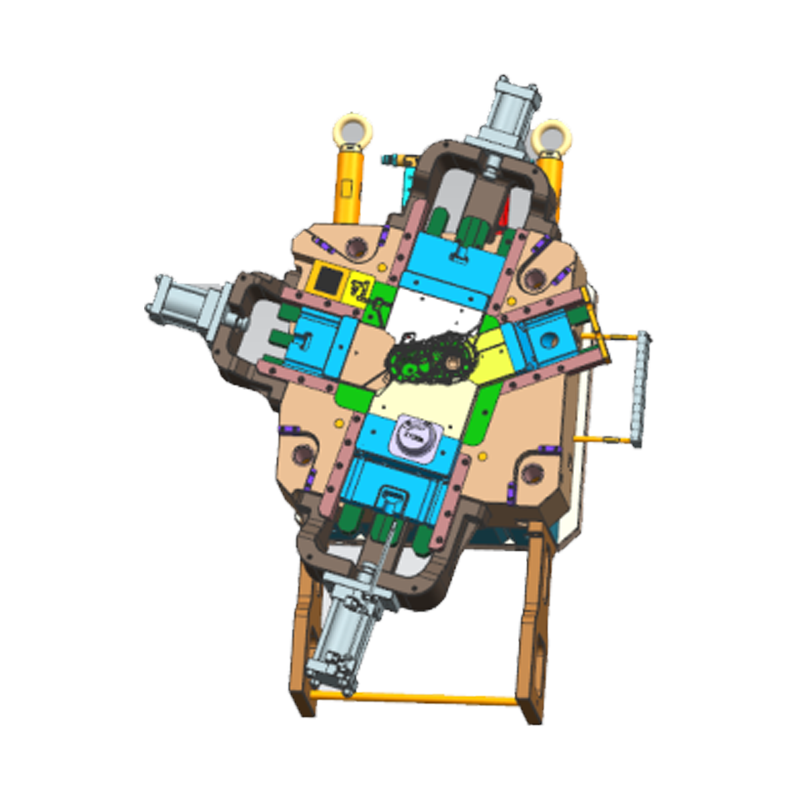
Aluminum die-casting gearbox mold the most critical requirements: 1. Material properties require hig...

Die casting transmission EM Side Housing mold is designed by JYD(Yunmai) for NIO transmission Rear H...

transmission rear Housing molds are foundational to the efficient and precise manufacturing of autom...
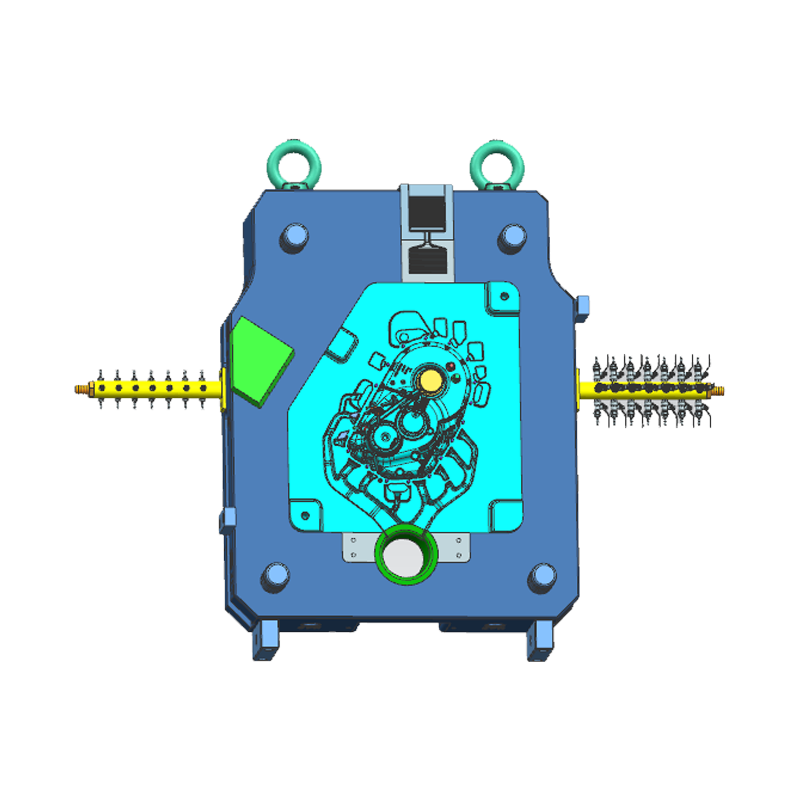
SERES transimission adopts complex cavity structure; high efficiency cooling system, the development...
Copyright © Ningbo Yunmai Precision Machinery Co., Ltd. All Rights Reserved
 OEM/ODM Die Casting/Cast Molds Manufacturers