


Cylinder Head seals combustion chamber, houses valves & spark plugs, forms coolant passages, wit...
Industry News
Home / News / Industry News / Automobile Components Aluminum Die Castings: A Complete Guide to Manufacturing and Selection
Content
Aluminum die castings are used throughout modern automobiles to produce lightweight, dimensionally precise components such as engine blocks, transmission housings, structural brackets, and electric vehicle battery enclosures, replacing heavier steel or iron parts without sacrificing structural strength. Because aluminum weighs roughly one-third as much as steel for a comparable volume, die-cast aluminum components have become central to automakers' efforts to reduce vehicle weight and improve fuel efficiency — every 10% reduction in vehicle weight typically improves fuel economy by 6% to 8%, making aluminum die casting one of the most impactful manufacturing decisions in modern vehicle design.
This article explains how aluminum die casting works, which Automobile components Aluminum Die Castings rely on it most heavily, how it compares to alternative manufacturing methods, and what automakers evaluate when selecting a die casting process.
Die casting is a manufacturing process in which molten aluminum is injected under high pressure into a reusable steel mold, called a die, shaped to the exact geometry of the final part. The metal solidifies rapidly inside the die, and the finished component is ejected, typically requiring only minor machining or trimming before it's ready for assembly.
The two dominant methods used for automotive aluminum components are:
Molten aluminum is forced into the die at pressures typically ranging from 1,500 to 25,000 psi, filling the mold in a fraction of a second. This method is favored for high-volume production of thin-walled, complex parts like transmission cases and engine covers because of its speed and dimensional accuracy.
Aluminum is pushed into the die more slowly using lower pressure, typically 15 to 100 psi, resulting in fewer internal air pockets and better mechanical properties. This method is often used for structural or safety-critical parts, such as wheels and suspension components, where strength and porosity control matter more than production speed.
Aluminum die castings appear across nearly every major vehicle system, from powertrain to structural chassis parts. Common applications include:
Electric vehicles have accelerated demand for large-format aluminum die castings, particularly for structural body components. Some manufacturers now use giant single-piece die-cast aluminum sections to replace what previously required dozens of individually stamped and welded steel parts, reducing both assembly complexity and vehicle weight in a single manufacturing step.
Battery enclosures also rely heavily on aluminum die casting because the material offers a favorable combination of strength, thermal conductivity for heat dissipation, and corrosion resistance, all critical for protecting battery packs while managing the heat they generate during charging and discharge cycles.
| Method | Production Speed | Dimensional Precision | Typical Use |
| Aluminum Die Casting | Very High | High | Complex, high-volume parts |
| Sand Casting | Low | Moderate | Low-volume, large parts |
| Steel Stamping | High | High | Body panels, sheet parts |
| Forging | Moderate | Moderate | High-stress components (crankshafts) |
Not every automotive component is a good candidate for die casting, and several factors influence whether it's the right process for a given part.
High-pressure die casting can trap small air pockets within the metal during rapid injection, creating porosity that can weaken load-bearing parts. For structural or safety-critical components, engineers often specify low-pressure casting or vacuum-assisted die casting to reduce porosity and improve mechanical strength.
Different aluminum alloys balance castability, strength, and heat resistance differently. Alloys such as A380 and A383 are common general-purpose die casting alloys, while specialized alloys are selected for parts exposed to higher operating temperatures, such as engine and transmission components.
Die casting molds represent a significant upfront investment, often ranging from tens of thousands to several hundred thousand dollars depending on part complexity and size. This makes die casting most cost-effective for high-volume production runs, where the per-unit cost drops substantially as production scales, typically becoming economical at production volumes above 10,000 to 20,000 units.
Because die-cast components often serve structural or safety functions, automotive suppliers rely on strict quality verification throughout production:
Aluminum die castings have become essential to modern automobile manufacturing because they deliver the combination of low weight, high precision, and design flexibility that automakers need to meet fuel efficiency and performance targets. From engine and transmission housings to the large structural castings now used in electric vehicle platforms, the right die casting process — matched to the right alloy and quality control standard — allows manufacturers to consolidate complex assemblies into fewer, lighter, and more reliable components.

Cylinder Head seals combustion chamber, houses valves & spark plugs, forms coolant passages, wit...

The camshaft bracket cover secures the camshaft position, seals oil channels to prevent leaks, block...
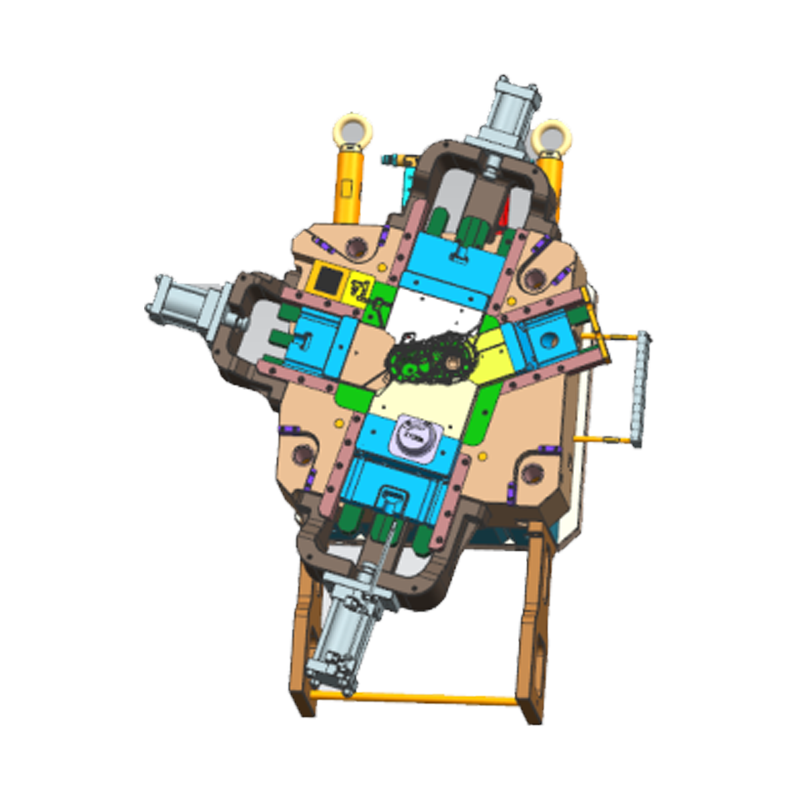
Aluminum die-casting gearbox mold the most critical requirements: 1. Material properties require hig...

Die casting transmission EM Side Housing mold is designed by JYD(Yunmai) for NIO transmission Rear H...

transmission rear Housing molds are foundational to the efficient and precise manufacturing of autom...
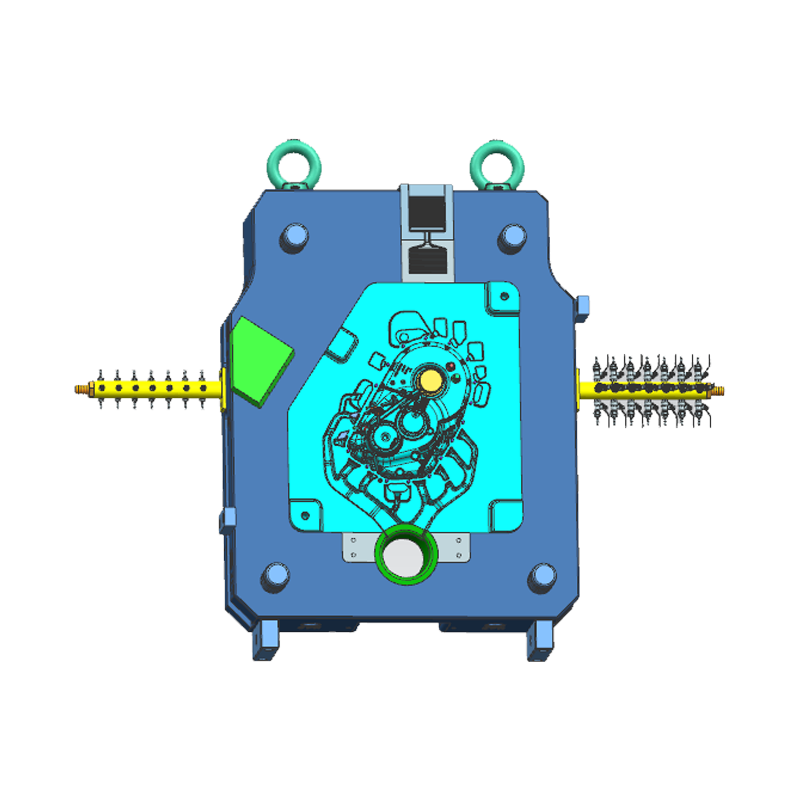
SERES transimission adopts complex cavity structure; high efficiency cooling system, the development...
Copyright © Ningbo Yunmai Precision Machinery Co., Ltd. All Rights Reserved
 OEM/ODM Die Casting/Cast Molds Manufacturers