


Cylinder Head seals combustion chamber, houses valves & spark plugs, forms coolant passages, wit...
Content
Aluminum die casting is a high-pressure manufacturing process in which molten aluminum alloy is injected into a precision-machined steel mold (called a die) at pressures between 1,500 and 25,000 psi, then rapidly cooled to form a dimensionally accurate, near-net-shape metal part. The result — an aluminum die casting — is a lightweight, strong, and complex component produced at high volume with minimal post-processing. It is one of the most widely used metal forming processes in the world, underpinning industries from automotive and aerospace to consumer electronics and industrial equipment.
Understanding the process in sequence helps clarify why aluminum die castings consistently achieve tight tolerances and excellent surface finishes that other forming methods struggle to match.
The entire cycle from injection to ejection can take as little as 15 to 60 seconds, enabling production rates of thousands of parts per shift.
Die casting uses two distinct machine configurations, and the distinction matters directly for aluminum.
The injection system is submerged directly in the molten metal bath. This allows for fast cycle times but is only suitable for low-melting-point alloys such as zinc, lead, and tin. Aluminum cannot be processed in hot chamber machines because its high melting point and aggressive chemical nature would rapidly corrode the submerged components.
The injection cylinder is separate from the molten metal furnace. For each shot, molten aluminum is manually or automatically ladled into the shot sleeve before injection. All aluminum die castings are produced using cold chamber machines. While cycle times are slightly longer than hot chamber, this method accommodates aluminum's higher processing temperatures (up to 700°C) without damaging the machine's injection components.
Not all aluminum alloys are suitable for die casting. The most common are high-silicon alloys from the A380, A383, A360, and ADC12 families, chosen for their excellent fluidity, low shrinkage, and good mechanical properties.
| Alloy | Silicon Content | Tensile Strength | Key Strengths | Typical Applications |
| A380 | 7.5–9.5% | 324 MPa | Best overall balance; excellent fluidity and machinability | Engine brackets, housings, covers |
| A383 (ADC12) | 9.5–11.5% | 310 MPa | Better die fill for thin walls; lower hot cracking risk | Electronic enclosures, complex housings |
| A360 | 9.0–10.0% | 317 MPa | Superior corrosion resistance; pressure tightness | Marine parts, hydraulic components |
| A413 | 11.0–13.0% | 296 MPa | Excellent pressure tightness; best fluidity of the group | Hydraulic cylinders, fluid system parts |
| Silafont-36 (A365) | 9.5–11.5% | 340 MPa+ | Heat-treatable; high ductility for structural parts | Automotive structural components, crash-relevant parts |
A380 accounts for approximately 85% of all aluminum die casting production globally due to its exceptional balance of castability, strength, and cost. Specialty alloys like Silafont-36 are used in structural automotive applications where elongation values above 10% are required for crash performance.
Aluminum die castings consistently outperform competing manufacturing methods across several dimensions that matter to engineers and procurement teams alike.
No manufacturing process is without trade-offs. Engineers must weigh these constraints when deciding whether aluminum die casting is appropriate for a given part.
Selecting the right process requires direct comparison across cost, accuracy, volume, and material considerations.
| Process | Tooling Cost | Dimensional Accuracy | Min. Viable Volume | Surface Finish (as-made) | Porosity Risk |
| Aluminum Die Casting (HPDC) | High ($15K–$100K+) | ±0.05–0.1 mm | 5,000–10,000 pcs | Ra 0.8–3.2 µm | Medium–High |
| Sand Casting | Low ($500–$5K) | ±0.5–1.0 mm | 1–100 pcs | Ra 6.3–25 µm | Low–Medium |
| Investment Casting | Medium ($3K–$20K) | ±0.1–0.25 mm | 500–2,000 pcs | Ra 1.6–3.2 µm | Low |
| CNC Machining (billet) | Low (no tooling) | ±0.01–0.05 mm | 1–500 pcs | Ra 0.4–1.6 µm | None |
| Aluminum Extrusion | Low–Medium ($2K–$15K) | ±0.1–0.3 mm | 500–2,000 pcs | Ra 0.8–3.2 µm | None |
The global aluminum die casting market was valued at approximately $57 billion in 2023 and is projected to exceed $80 billion by 2030, driven primarily by automotive lightweighting and electrification trends. The following industries depend on aluminum die castings as a core production technology.
The automotive sector is the single largest consumer of aluminum die castings. A modern internal combustion engine vehicle contains 40–80 kg of aluminum die castings on average, including:
Aluminum die castings provide the structural chassis and EMI shielding enclosures for laptops, smartphones, networking equipment, and LED lighting fixtures. Their combination of thin-wall capability, dimensional accuracy, and electrical conductivity makes them irreplaceable in this sector. A typical desktop networking switch housing is a single aluminum die casting that integrates heat sink fins, mounting bosses, and connector cutouts in one operation.
While aerospace more commonly uses investment casting for its lower porosity, aluminum die castings are used for non-flight-critical housings, brackets, avionics enclosures, and UAV structural frames where production volume and cost justify HPDC over investment casting.
Gearbox housings, pump bodies, compressor components, pneumatic valve manifolds, and power tool bodies are produced in large volumes as aluminum die castings. The combination of strength, machinability, and cost at scale makes aluminum HPDC the default choice for this category.
Standard HPDC has evolved into several specialized variants that address its inherent porosity limitation and expand the range of achievable part properties.
A vacuum is applied to the die cavity before and during injection, removing air and reducing entrained gas porosity by 60–80% compared to standard HPDC. Parts produced by VADC can be heat-treated, welded, and used in structural applications. This is the preferred method for automotive structural nodes and EV battery tray components.
Molten aluminum is introduced at low speed to minimize turbulence, then solidified under high squeeze pressure (typically 50–150 MPa). This virtually eliminates porosity and produces parts with mechanical properties approaching those of forgings. Squeeze casting is used for safety-critical components such as brake calipers, knuckles, and wheels.
The aluminum is processed in a partially solidified state (solid fraction of 30–50%), giving it a thixotropic (shear-thinning) behavior. Injection is laminar rather than turbulent, producing near-zero porosity and enabling T6 heat treatment. Tensile strengths above 400 MPa with elongation above 10% are achievable — competitive with aluminum forgings.
Pioneered by Tesla and now adopted by Toyota, Volkswagen, and others, giga casting uses machines of 6,000 to 16,000 tons clamping force to produce single large-format structural aluminum castings. Tesla's Cybertruck rear underbody casting weighs approximately 60 kg and replaces over 100 individual components, eliminating assembly steps and reducing body-in-white mass by up to 10%.
Effective part design is the single most important factor in achieving quality aluminum die castings at low cost. Engineers should follow these evidence-based guidelines:
Aluminum is one of the most sustainable structural metals in manufacturing. Recycled aluminum requires only 5% of the energy needed to produce primary aluminum from bauxite ore — a critical advantage as manufacturers face decarbonization pressure. Key sustainability facts for aluminum die castings:
For procurement engineers and product managers sourcing aluminum die castings, supplier evaluation should go beyond price per piece. These are the criteria that matter most in practice:

Cylinder Head seals combustion chamber, houses valves & spark plugs, forms coolant passages, wit...

The camshaft bracket cover secures the camshaft position, seals oil channels to prevent leaks, block...
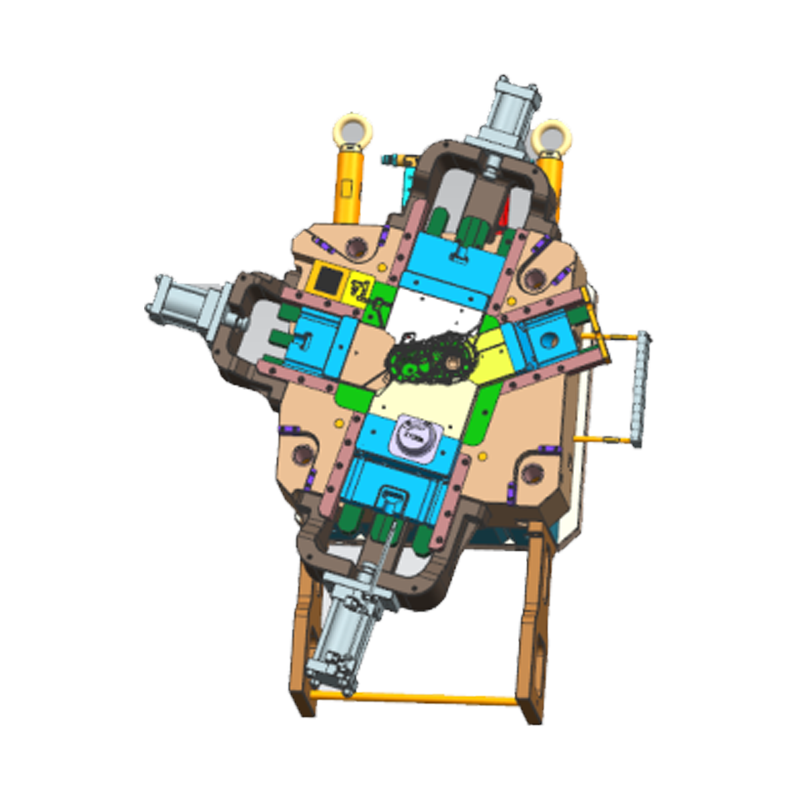
Aluminum die-casting gearbox mold the most critical requirements: 1. Material properties require hig...

Die casting transmission EM Side Housing mold is designed by JYD(Yunmai) for NIO transmission Rear H...

transmission rear Housing molds are foundational to the efficient and precise manufacturing of autom...
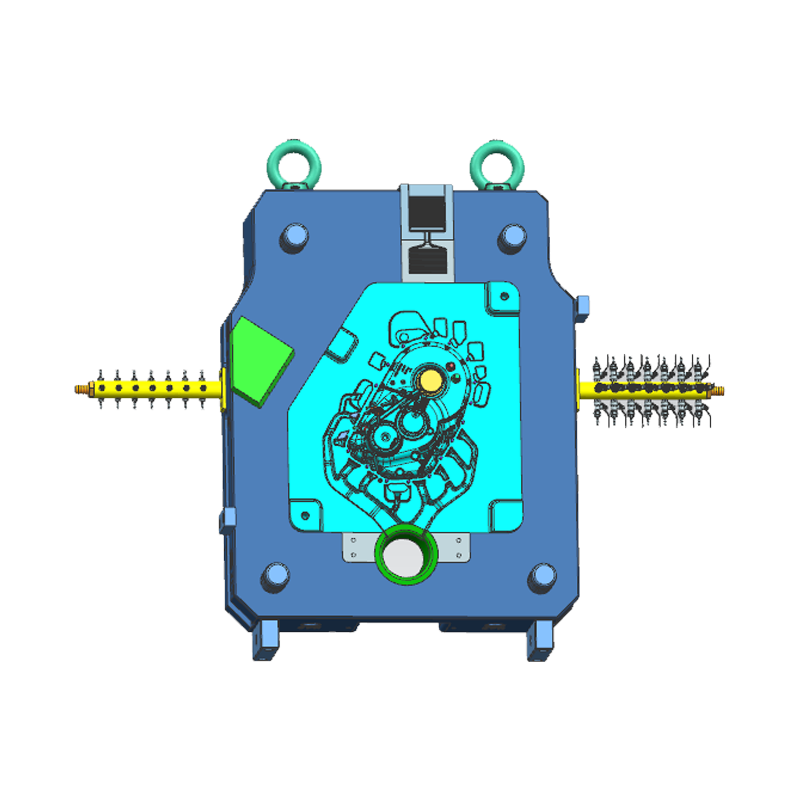
SERES transimission adopts complex cavity structure; high efficiency cooling system, the development...
Copyright © Ningbo Yunmai Precision Machinery Co., Ltd. All Rights Reserved
 OEM/ODM Die Casting/Cast Molds Manufacturers