


Cylinder Head seals combustion chamber, houses valves & spark plugs, forms coolant passages, wit...
Content
Zinc alloy die castings are precision-manufactured metal components produced by injecting molten zinc alloy into hardened steel dies under high pressure — typically between 1,000 and 30,000 psi. The result is a dimensionally accurate, smooth-surfaced part that requires minimal post-processing. Zinc die castings are among the most cost-efficient metal parts manufacturing methods available, particularly for high-volume production runs of complex, thin-walled components.
The core advantage of zinc alloy die castings over aluminum or magnesium alternatives is their combination of low melting point (approximately 385°C–390°C), exceptional fluidity, and superior die life — a single zinc die can produce 500,000 to over 1,000,000 shots before replacement, compared to roughly 100,000 shots for aluminum dies. This makes zinc die casting uniquely economical for long production runs requiring tight tolerances and fine surface detail.
Zinc alloy die casting uses one of two primary process variants depending on part size and wall thickness requirements:
Hot chamber die casting — also called gooseneck casting — is the dominant method for zinc alloys. The injection mechanism is submerged directly in the molten metal, allowing cycle times as fast as 400–900 shots per hour. This method is ideal for zinc because of its low melting point and non-ferrous chemistry, which does not erode the steel injection components. Parts weighing from a few grams up to approximately 4.5 kg can be produced using this method.
For larger zinc components, cold chamber casting — where molten metal is ladled into a separate injection chamber — is used. Cycle speeds are slower, but the process accommodates larger part geometries and heavier wall sections that exceed hot chamber capabilities.
Zinc's exceptional fluidity enables wall thicknesses as low as 0.4 mm — significantly thinner than aluminum (minimum ~0.8 mm) or magnesium (~0.5 mm). This makes zinc the preferred choice for intricate miniature components such as watch cases, micro connectors, and precision instrument housings.
Not all zinc die casting alloys are interchangeable. Each has a distinct composition and property profile suited to different performance requirements. The Zamak family and ZA series are the most widely used:
| Alloy | Al % | Cu % | Tensile Strength (MPa) |
Hardness (Brinell) |
Best For |
| Zamak 2 | 4.0 | 2.7 | 359 |
100 |
High hardness, bearing applications |
| Zamak 3 | 4.0 | 0.1 | 283 |
82 |
General purpose, most widely used |
| Zamak 5 | 4.0 | 1.0 | 331 |
91 |
Higher strength, automotive parts |
| Zamak 7 | 4.0 | 0.013 | 283 |
80 |
Improved ductility, thin walls |
| ZA-8 | 8.4 | 1.0 | 374 |
103 |
Hot chamber castings, high strength |
| ZA-27 | 27.0 | 2.3 | 425 |
119 |
Structural, bearing, cold chamber |
Zamak 3 accounts for approximately 70% of all zinc die castings produced globally due to its balanced combination of castability, dimensional stability, and surface finish quality. Zamak 5 is favoured in European automotive and industrial applications where slightly higher strength and creep resistance are required.
Understanding the material properties of zinc alloy die castings helps engineers make informed design decisions and set realistic performance expectations:
One important property consideration is creep resistance — zinc alloys are more susceptible to creep (slow dimensional change under sustained stress) at elevated temperatures than aluminium. Applications involving continuous loads above 100°C should consider ZA-27 or switch to aluminium alloy die castings.
The three dominant die casting metals each have a distinct performance and cost profile. The table below provides a direct side-by-side comparison to guide material selection:
| Property | Zinc Alloy | Aluminium Alloy | Magnesium Alloy |
| Melting Point | ~385°C | ~660°C | ~650°C |
| Die Life (shots) | 500,000–1,000,000+ | 100,000–150,000 | 200,000–400,000 |
| Min. Wall Thickness | 0.4 mm | 0.8 mm | 0.5 mm |
| Density (g/cm³) | 6.6 | 2.7 | 1.8 |
| Plating / Finishing | Excellent | Good | Challenging |
| High-Temp Performance | Fair (below 100°C) | Good (up to 150°C) | Good (up to 120°C) |
| Relative Part Cost (high volume) | Lowest | Medium | Medium–High |
| Corrosion Resistance | Good (with coating) | Very Good | Fair (requires coating) |
The decision framework is straightforward: choose zinc when part complexity is high, production volume exceeds 10,000 units, weight is not the primary concern, and a premium surface finish is required. Choose aluminium when operating temperatures exceed 100°C or when part weight is critical. Choose magnesium only when achieving the lowest possible part weight is the overriding requirement.
Zinc alloy die castings appear in virtually every manufactured goods sector. Their combination of precision, surface quality, and cost efficiency makes them indispensable across the following industries:
The automotive sector consumes a significant share of global zinc die castings, including door handles, lock cylinders, seat belt buckles, carburetor bodies, fuel system components, and instrument cluster bezels. Zamak 5 is particularly favoured here for its higher creep resistance and tensile strength compared to Zamak 3.
Zinc die castings are used for USB and audio connector housings, laptop hinges, printer frames, electrical switch components, and motor housings. The material's electromagnetic shielding properties (electrical conductivity ~16% IACS) make it effective for EMI/RFI shielding applications without secondary shielding liners.
Padlock bodies, door hardware, cabinet pulls, hinges, and key blanks are among the highest-volume zinc die casting applications globally. Zinc's ability to hold fine detail enables complex internal geometries in lock cylinders that would be impossible or prohibitively expensive in machined brass or aluminium.
The die-cast toy and scale model industry — including brands such as Matchbox and Hot Wheels — has used Zamak alloys since the 1940s. The material's ability to reproduce fine panel lines, grille details, and surface textures at sub-millimetre scale with consistent shot-to-shot repeatability remains unmatched by any other casting metal at this price point.
Belt buckles, zipper pulls, handbag hardware, watch cases, and costume jewellery components are routinely produced in zinc alloy die castings due to the material's exceptional receptivity to electroplating. Zinc can be plated with chrome, nickel, gold, copper, or silver finishes that are visually indistinguishable from solid precious metal at a fraction of the cost.
Zinc's natural surface is smooth enough for most decorative and functional coatings without extensive preparation. Common finishing options include:
Designing for zinc die casting requires specific geometric considerations to ensure consistent fill, dimensional accuracy, and structural integrity. Following these principles from the outset avoids costly design revisions after tooling is cut:
Even with a well-designed die and optimised process parameters, zinc die castings can exhibit defects that affect dimensional accuracy, mechanical performance, or cosmetic appearance. Understanding common defects helps procurement and quality engineers set appropriate inspection criteria:
Standard quality control for zinc die castings includes dimensional inspection with CMM, visual inspection per agreed cosmetic standards, and for critical applications, X-ray inspection and pressure testing to verify internal integrity.
Zinc is one of the most sustainably produced and recycled industrial metals available. Several factors make zinc die castings a responsible material choice:

Cylinder Head seals combustion chamber, houses valves & spark plugs, forms coolant passages, wit...

The camshaft bracket cover secures the camshaft position, seals oil channels to prevent leaks, block...
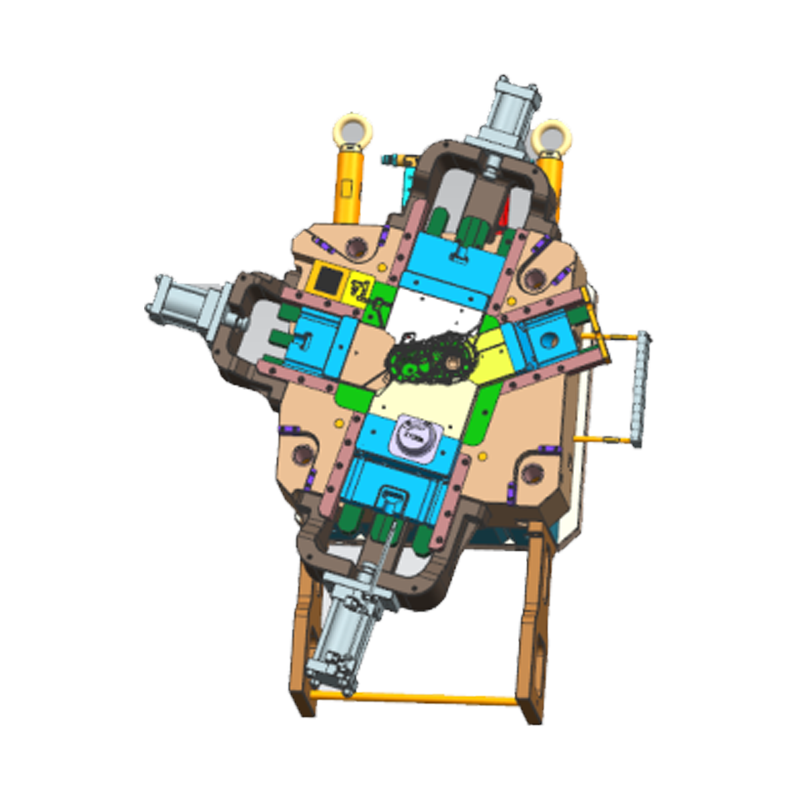
Aluminum die-casting gearbox mold the most critical requirements: 1. Material properties require hig...

Die casting transmission EM Side Housing mold is designed by JYD(Yunmai) for NIO transmission Rear H...

transmission rear Housing molds are foundational to the efficient and precise manufacturing of autom...
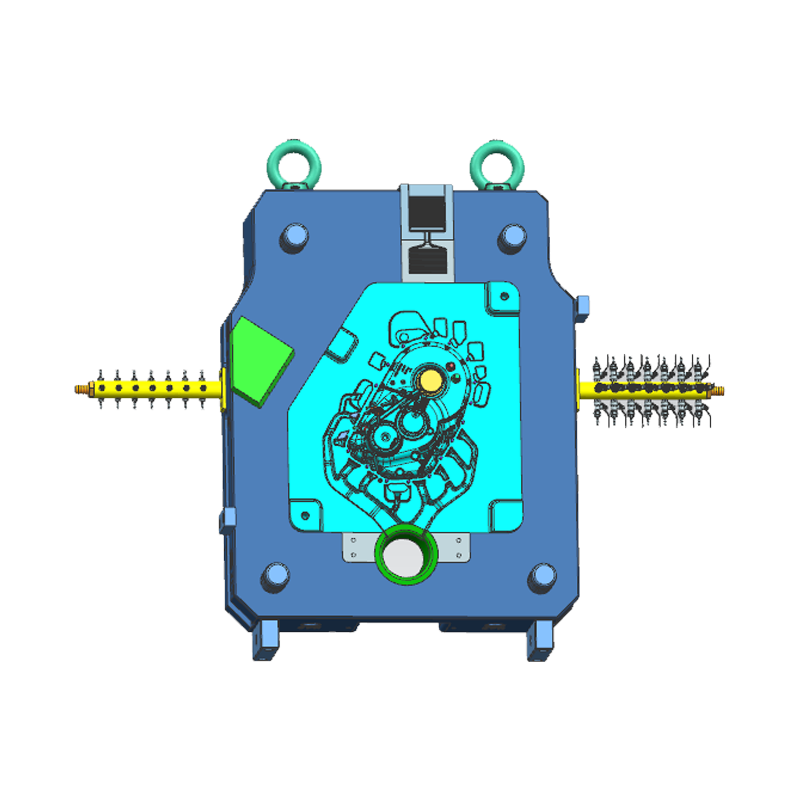
SERES transimission adopts complex cavity structure; high efficiency cooling system, the development...
Copyright © Ningbo Yunmai Precision Machinery Co., Ltd. All Rights Reserved
 OEM/ODM Die Casting/Cast Molds Manufacturers