


Cylinder Head seals combustion chamber, houses valves & spark plugs, forms coolant passages, wit...
Industry News
Home / News / Industry News / Aluminum Die Casting Molds: Engineering, Materials & Life Optimization
Content
In modern manufacturing, aluminum die casting molds are the primary engine for high-volume production of lightweight, high-strength components. The definitive factor for success in die casting is the thermal management and structural integrity of the mold steel. A well-engineered mold, typically constructed from premium H13 or Dievar tool steel, can withstand over 100,000 injection cycles under extreme pressures (up to 100 MPa) and temperatures (exceeding 650°C). For manufacturers, investing in precision-engineered molds with optimized cooling channels can reduce cycle times by 15-20% and lower scrap rates to below 2%, making them the most constructive asset for automotive, aerospace, and electronics production lines.
An aluminum die casting mold is a sophisticated mechanical assembly designed to transform molten alloy into a net-shape part in seconds. It consists of two main halves: the "cover die" (stationary) and the "ejector die" (movable).
The heart of the mold lies in the cavity and core inserts. Because aluminum has a high melting point and chemically attacks steel (soldering), these inserts must be made from hot-work tool steels. The geometry must account for shrinkage rates, typically ranging from 0.4% to 0.6%, ensuring the final part meets dimensional tolerances of ±0.05mm. Precision CNC machining and EDM (Electrical Discharge Machining) are utilized to create the intricate details required for complex heat sinks or engine blocks.
The gating system is the network of channels that directs the molten aluminum into the cavity. A constructive gating design minimizes turbulence and air entrapment. Overflows are strategically placed to collect cold metal and air, ensuring that only clean, hot aluminum fills the critical sections of the part. Proper vent design is equally vital, allowing air to escape at speeds of 30 to 100 meters per second during the injection phase.
The lifespan of aluminum die casting molds is governed by the quality of the steel. The constant expansion and contraction (thermal fatigue) lead to "heat checking"—fine cracks on the mold surface.
| Steel Grade | Hardness (HRC) | Thermal Fatigue Resistance | Best Use Case |
|---|---|---|---|
| AISI H13 (Premium) | 44 - 48 | Good | Standard automotive parts |
| Dievar (Uddeholm) | 46 - 50 | Excellent | Large structural components |
| SKD61 | 42 - 46 | Moderate | Small, simple geometries |
Heat treatment is non-negotiable. Vacuum hardening and multiple tempering cycles are required to achieve the correct balance between toughness (to prevent cracking) and hardness (to prevent erosion). Premium steels like Dievar provide significantly higher ductility, which can double the mold life compared to standard H13 in high-stress applications.
Aluminum die casting involves injecting metal at roughly 680°C. If the mold cannot dissipate this heat effectively, the cycle time increases, and the part quality suffers due to shrinkage porosity.
Traditional cooling channels are straight lines drilled into the steel. However, complex parts have "hot spots" that drills cannot reach. Additive manufacturing (3D printing) of mold inserts allows for conformal cooling—channels that follow the exact contour of the part. This technology can maintain a uniform mold temperature within ±5°C, reducing cooling time by up to 40% and virtually eliminating internal warping in the aluminum casting.
To prevent the aluminum from sticking to the mold (soldering), automated spray systems apply a release agent. A constructive approach uses electrostatic spraying, which provides a more uniform coating and reduces lubricant consumption by 30%. Maintaining a mold surface temperature between 180°C and 250°C is critical; if the mold is too cold, the metal freezes prematurely; if too hot, the lubricant fails to adhere.
A proactive maintenance strategy is the difference between a mold that lasts 2 years and one that lasts 10. The harsh environment of aluminum die casting demands constant vigilance.
For high-integrity components like suspension arms or thin-walled battery housings, standard die casting molds may be modified with vacuum or squeeze systems.
The ultimate efficiency of aluminum die casting molds is determined during the design phase. A constructive DFM process involves the part designer and the mold maker collaborating to optimize wall thicknesses (ideally 2mm to 4mm) and implement draft angles of at least 1-2 degrees. By simulating the casting process using Magmasoft or AnyCasting software, engineers can predict hot spots and turbulence before a single piece of steel is cut. In 2026, the integration of IoT sensors within the mold to monitor real-time pressure and temperature is becoming the gold standard, ensuring that every aluminum part produced is of the highest quality while maximizing the return on investment for the mold itself.

Cylinder Head seals combustion chamber, houses valves & spark plugs, forms coolant passages, wit...

The camshaft bracket cover secures the camshaft position, seals oil channels to prevent leaks, block...
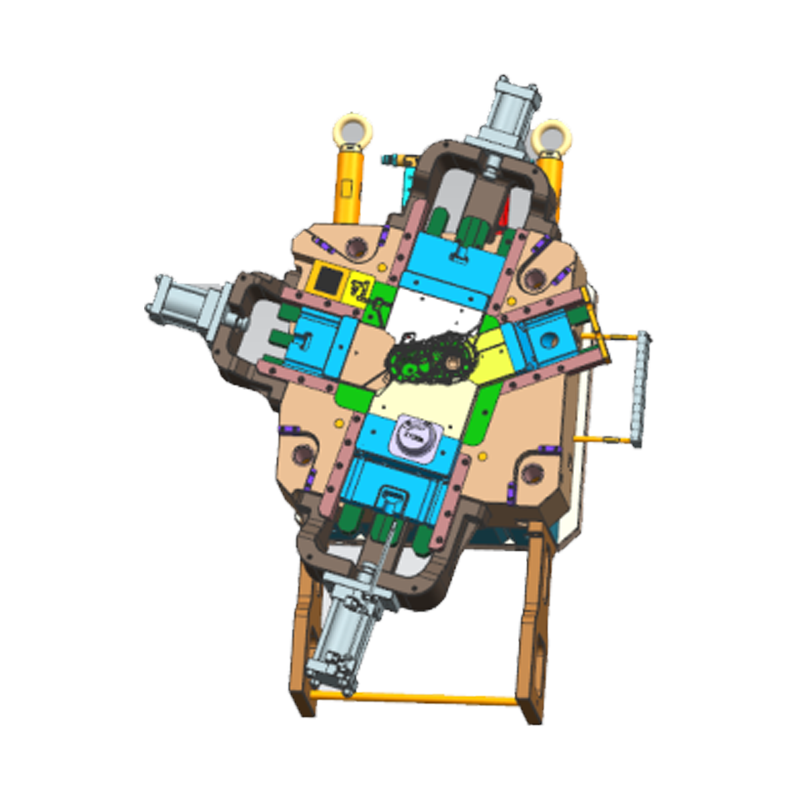
Aluminum die-casting gearbox mold the most critical requirements: 1. Material properties require hig...

Die casting transmission EM Side Housing mold is designed by JYD(Yunmai) for NIO transmission Rear H...

transmission rear Housing molds are foundational to the efficient and precise manufacturing of autom...
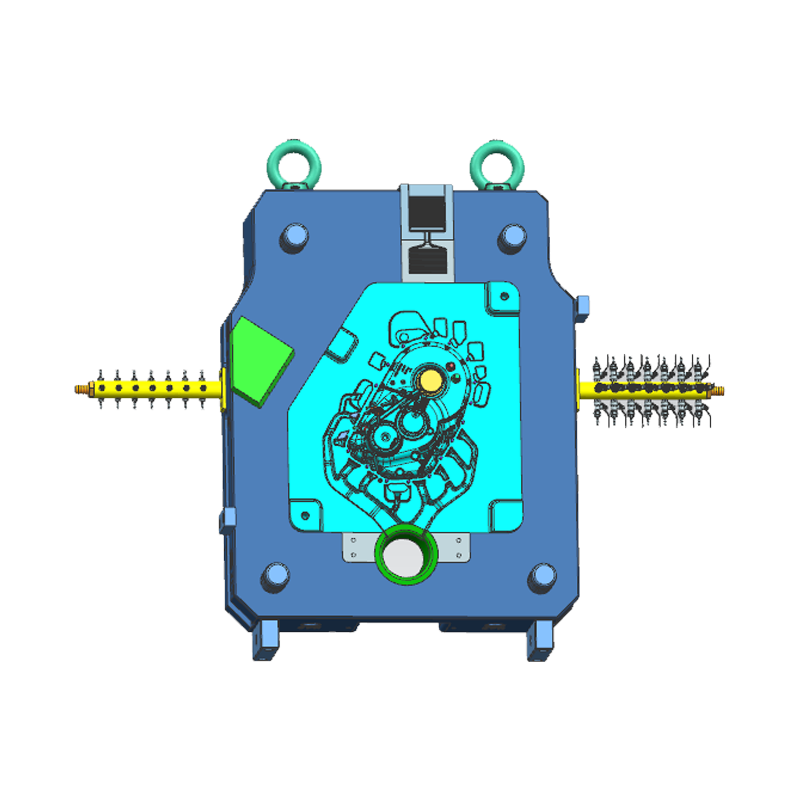
SERES transimission adopts complex cavity structure; high efficiency cooling system, the development...
Copyright © Ningbo Yunmai Precision Machinery Co., Ltd. All Rights Reserved
 OEM/ODM Die Casting/Cast Molds Manufacturers