


Cylinder Head seals combustion chamber, houses valves & spark plugs, forms coolant passages, wit...
Industry News
Home / News / Industry News / Aluminum Die Casting Automotive Parts Molds: Enhancing Durability and Precision
Content
The automotive industry has long been a driver of innovation, constantly striving for improvements in vehicle performance, fuel efficiency, and safety. One area that has seen significant advancements over the years is the production of automotive parts. The shift toward lightweight, durable, and cost-effective materials has led to the increasing use of aluminum die casting, especially for automotive parts molds. Aluminum die casting is now a vital technology in the production of high-performance automotive components, offering substantial benefits in terms of durability and precision.
Before diving into its role in automotive parts molds, it's essential to understand what aluminum die casting is and why it is widely used in automotive manufacturing.
Aluminum die casting is a process in which molten aluminum is injected under high pressure into a steel mold to produce precise and complex parts. The process is highly efficient and is often chosen for parts that require high strength, precision, and excellent surface finish. The result is a component that is both lightweight and durable, making aluminum die casting an ideal solution for the automotive industry.
Automotive manufacturers face several challenges, including the need for lighter components to improve fuel efficiency, stronger parts to enhance safety, and cost-effective solutions to meet the demands of modern consumers. Aluminum die casting offers solutions to all of these challenges, making it a preferred choice for producing various automotive components, including engine parts, transmission cases, and structural components.
Aluminum is naturally lightweight compared to other metals, which is a significant advantage in the automotive industry. Lightweight components help reduce the overall weight of a vehicle, improving fuel efficiency and performance. However, the lightweight nature of aluminum does not compromise its strength. Aluminum die-cast components offer excellent mechanical properties, making them capable of withstanding high-stress environments without deforming or breaking.
By utilizing aluminum die casting, manufacturers can produce automotive parts that are both lightweight and durable, which is essential in a market where fuel efficiency and performance are top priorities.
Precision is a crucial factor in automotive part production, as even small inaccuracies can affect a vehicle's performance and safety. Aluminum die casting provides excellent precision in terms of part dimensions and surface finish. The high pressure used during the casting process ensures that the molten aluminum fills every cavity of the mold, resulting in parts with tight tolerances and smooth surfaces. This level of precision allows for the production of complex and intricate parts that would be difficult or impossible to produce using traditional manufacturing methods.
Parts like engine blocks, cylinder heads, and transmission cases require high precision to ensure proper fit and functionality. Aluminum die casting provides the level of accuracy needed to meet these stringent requirements, which is why it is commonly used for critical automotive components.
One of the key advantages of aluminum die casting is its ability to produce parts with complex geometries. In the automotive industry, components often need to be lightweight, strong, and designed with intricate shapes to optimize space and functionality. Traditional manufacturing methods, such as machining or forging, may not be able to produce such parts efficiently or economically.
Die casting, on the other hand, can create parts with intricate shapes, including thin walls, complex contours, and undercuts, without the need for additional machining. This capability allows automotive engineers to design parts that meet specific performance, weight, and space requirements, leading to more innovative and efficient vehicle designs.
The aluminum die casting process consists of several steps, each critical to ensuring the production of high-quality automotive parts. The process involves the following stages:
The first step in aluminum die casting is the creation of a mold, also known as a die. The die is typically made from high-grade steel and is designed to withstand the high pressures and temperatures of the casting process. The mold is carefully designed to match the specifications of the desired automotive part, ensuring that the final product meets the required dimensions and quality standards.
Once the mold is ready, aluminum is melted in a furnace until it reaches a liquid state. The molten aluminum is then injected into the mold under high pressure, typically between 1,000 to 2,000 psi. This high-pressure injection ensures that the aluminum fills every part of the mold, capturing even the most intricate details of the design.
After the molten aluminum is injected into the mold, it cools and solidifies rapidly. The cooling process is critical to ensuring that the aluminum maintains its shape and does not warp or shrink. Once the part has cooled and solidified, it is removed from the mold.
After the part has been removed from the mold, excess material, such as the gates and risers, is trimmed away. The part is then subjected to finishing processes, including deburring, polishing, or coating, to improve its appearance and surface finish. In some cases, additional machining may be required to achieve the desired dimensions and tolerances.
The advantages of aluminum die casting automotive parts molds are evident in various aspects of production, from manufacturing efficiency to product performance. Here are some key benefits:
Aluminum die casting is a cost-effective method for producing large volumes of automotive parts. Once the mold is created, it can be used to produce thousands or even millions of parts with minimal additional cost. The high precision of die casting reduces the need for additional machining, making it an economical choice for mass production.
Aluminum die-cast parts are known for their durability and strength, which are essential for automotive components. Whether it’s a transmission case, an engine block, or a structural component, aluminum die casting ensures that the parts can withstand high mechanical stresses and extreme temperatures. The ability to produce parts with thin walls and high strength is a significant advantage for automotive applications, as it contributes to both the performance and longevity of the vehicle.
Aluminum die casting results in parts with a smooth, high-quality surface finish. This is especially important for automotive parts that are visible to the consumer, such as trim pieces or exterior components. The ability to produce parts with excellent surface quality reduces the need for additional finishing processes and improves the overall appearance of the vehicle.
By utilizing lightweight aluminum die-cast components, automotive manufacturers can reduce the overall weight of the vehicle, which leads to improved fuel efficiency. Lighter vehicles require less energy to operate, which helps reduce fuel consumption and lowers emissions. As automakers continue to focus on sustainability and fuel efficiency, aluminum die casting is becoming an increasingly important technology in the automotive industry.
As the demand for lightweight, durable, and high-performance vehicles continues to rise, aluminum die casting will play an increasingly important role in automotive manufacturing. The use of aluminum die-cast molds allows manufacturers to create components that meet the performance, safety, and environmental standards of modern vehicles.
The automotive industry is also moving toward electric vehicles (EVs), which require lightweight components to maximize battery efficiency and driving range. Aluminum die casting is well-suited to meet these needs, as it enables the production of high-strength, low-weight components that can enhance the overall performance of EVs.

Cylinder Head seals combustion chamber, houses valves & spark plugs, forms coolant passages, wit...

The camshaft bracket cover secures the camshaft position, seals oil channels to prevent leaks, block...
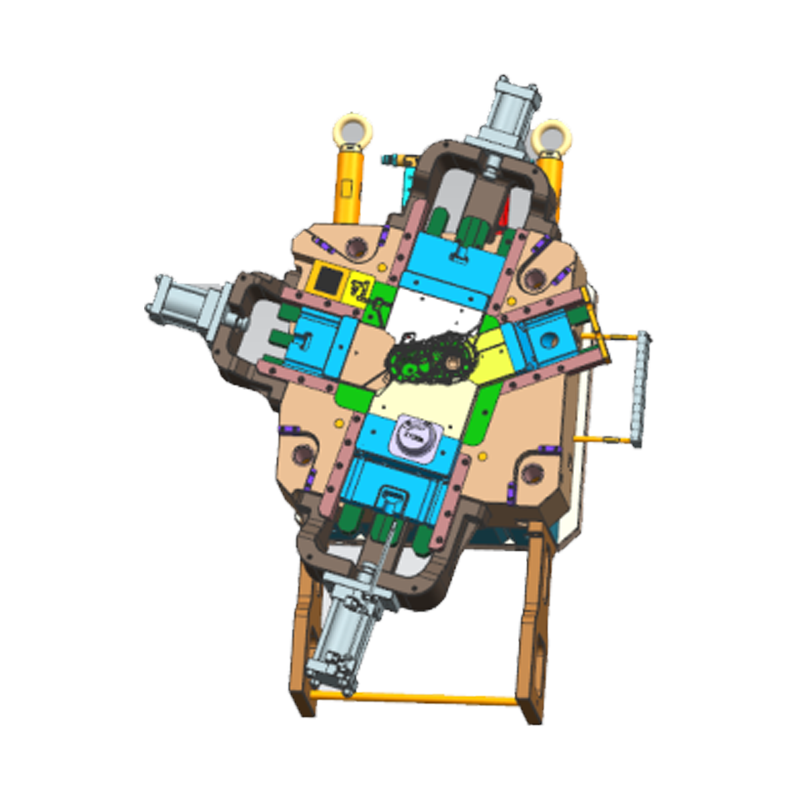
Aluminum die-casting gearbox mold the most critical requirements: 1. Material properties require hig...

Die casting transmission EM Side Housing mold is designed by JYD(Yunmai) for NIO transmission Rear H...

transmission rear Housing molds are foundational to the efficient and precise manufacturing of autom...
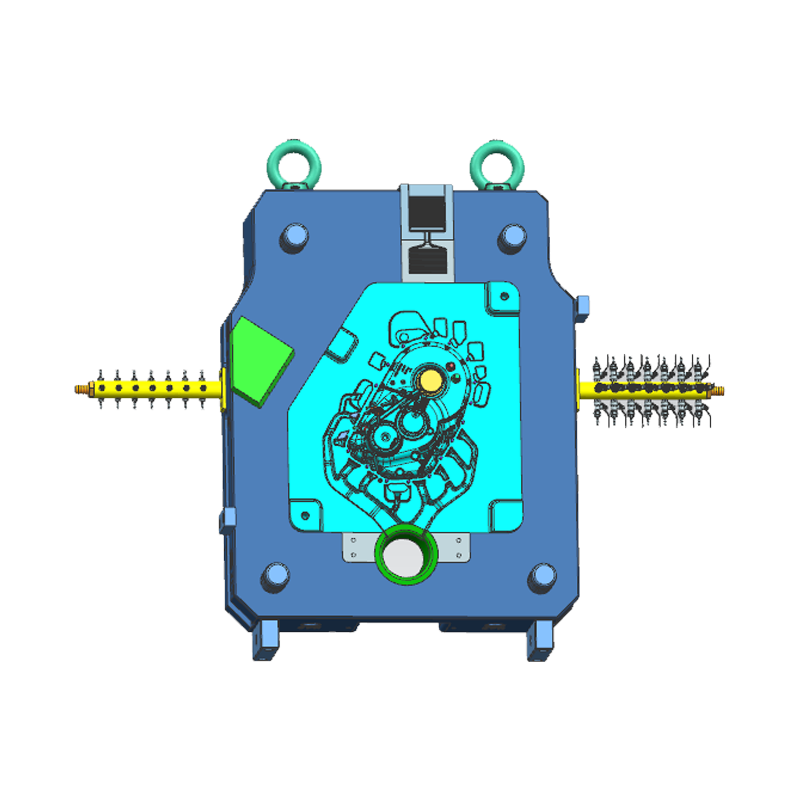
SERES transimission adopts complex cavity structure; high efficiency cooling system, the development...
Copyright © Ningbo Yunmai Precision Machinery Co., Ltd. All Rights Reserved
 OEM/ODM Die Casting/Cast Molds Manufacturers