


Cylinder Head seals combustion chamber, houses valves & spark plugs, forms coolant passages, wit...
Industry News
Home / News / Industry News / Why Aluminum Die Casting Transmission Components Molds Are Key for High-Performance Vehicles
Content
The automotive industry has always relied on innovation and precision to meet the demands of performance, safety, and efficiency. With the shift toward high-performance and electric vehicles, manufacturers are under increasing pressure to deliver components that are not only durable and lightweight but also produced efficiently and reliably. At the heart of this innovation lies the often-overlooked yet critical element of vehicle manufacturing: the Aluminum Die Casting transmission components Mold.
As a professional manufacturer and supplier of Aluminum Die Casting transmission components Mold, we have witnessed firsthand how these molds are transforming the production of high-performance vehicles.
Transmission systems are the backbone of any vehicle, translating engine power into motion and ensuring smooth acceleration, fuel efficiency, and reliable operation. High-performance vehicles—ranging from sports cars to high-torque electric vehicles—demand transmission components that can withstand extreme conditions, including:
The durability, precision, and weight of transmission components directly affect vehicle performance, efficiency, and safety. To achieve these standards, manufacturers increasingly rely on Aluminum Die Casting transmission components Mold for producing lightweight, high-strength, and precise parts.
Aluminum has become the preferred material for high-performance transmission components for several reasons:
Aluminum offers an excellent strength-to-weight ratio. Using aluminum components in the transmission reduces overall vehicle weight, improving:
By combining aluminum with die casting molds, manufacturers achieve lightweight parts without compromising structural integrity.
Aluminum naturally dissipates heat efficiently, which is crucial for transmissions that operate at high temperatures. Better thermal management reduces wear, prevents overheating, and extends the lifespan of transmission components.
Aluminum’s natural resistance to corrosion enhances the durability of transmission parts, especially in vehicles exposed to harsh environmental conditions. Components made from aluminum last longer, reducing maintenance costs and improving reliability.
While aluminum provides the material benefits, the manufacturing process determines the performance and quality of the final part. Die casting is a precision manufacturing method that forces molten aluminum into a mold under high pressure. The result is a component with:
For transmission components, precision is critical. Even slight deviations in shape or thickness can affect gear alignment, torque transmission, and overall performance.
This is where the Aluminum Die Casting transmission components Mold comes into play. A high-quality mold ensures that every component meets exact specifications, enabling reliable mass production of high-performance parts.
High-performance vehicles demand tight tolerances for transmission components. The Aluminum Die Casting transmission components Mold ensures that each part matches the original design with minimal variation. This precision guarantees:
Repeatability is equally important for large-scale production. Manufacturers can produce thousands of identical components without sacrificing quality.
Modern transmissions often require components with intricate geometries, such as:
Die casting molds allow these complex shapes to be produced accurately and efficiently, something that traditional machining or forging might struggle to achieve.
High-performance vehicles may require custom components, but manufacturers also aim for cost efficiency. Die casting molds, once created, enable rapid mass production with minimal material waste. Benefits include:
For OEMs, this combination of performance and efficiency is crucial.
Using Aluminum Die Casting transmission components Mold, manufacturers can produce parts that are both lightweight and strong. Optimized wall thickness and structural reinforcements can be built directly into the casting, providing durability without unnecessary weight.
This directly benefits vehicle performance by improving handling, acceleration, and energy efficiency.
High-end sports cars rely on precise, lightweight transmission components to achieve peak performance. Aluminum Die Casting transmission components Mold enables the production of:
The result is a smoother driving experience, enhanced acceleration, and reliable performance under high stress.
Electric vehicle (EV) transmissions have unique requirements, including compact design, high torque handling, and efficient cooling. Aluminum die-cast components meet these needs by:
For EV manufacturers, high-quality Aluminum Die Casting transmission components Mold is essential for achieving long-range, efficient, and durable vehicles.
Even heavy-duty trucks and industrial vehicles benefit from aluminum die-cast transmission parts. Lightweight, durable components reduce energy consumption and extend the lifespan of transmission systems while maintaining high load-handling capacity.
The performance of a Central Water Purifier starts with the mold, and the same applies to aluminum die-cast components. A high-quality Aluminum Die Casting transmission components Mold requires:
CAD and CAE software allow engineers to design molds with precise geometries and simulate metal flow, cooling patterns, and shrinkage. Optimized designs reduce defects and improve overall part quality.
Molds are made from durable steel alloys that can withstand high pressure, heat, and repeated use. This ensures long mold life and consistent part production.
Advanced CNC machines create mold cavities with exact dimensions, smooth surfaces, and complex shapes. Accuracy is critical to maintain tight tolerances for high-performance transmission components.
Before full-scale production, molds undergo extensive testing to verify performance under real casting conditions. Any imperfections are corrected to ensure defect-free components.
A poorly designed mold can lead to common defects such as porosity, warping, surface roughness, or incomplete fills. For high-performance vehicles, these defects are unacceptable because they compromise durability, efficiency, and safety.
Using a precision-engineered Aluminum Die Casting transmission components Mold minimizes these risks by:
The result is a high-quality, reliable component ready for assembly.
Modern automotive manufacturing emphasizes sustainability. Aluminum die-cast transmission components offer several environmental benefits:
By choosing high-quality Aluminum Die Casting transmission components Mold, manufacturers can achieve both performance and sustainability goals.
Automotive OEMs and tier-1 suppliers increasingly partner with specialized Aluminum Die Casting transmission components Mold manufacturers because:
Working with experienced suppliers ensures that transmission components meet the rigorous standards of modern automotive applications.

Cylinder Head seals combustion chamber, houses valves & spark plugs, forms coolant passages, wit...

The camshaft bracket cover secures the camshaft position, seals oil channels to prevent leaks, block...
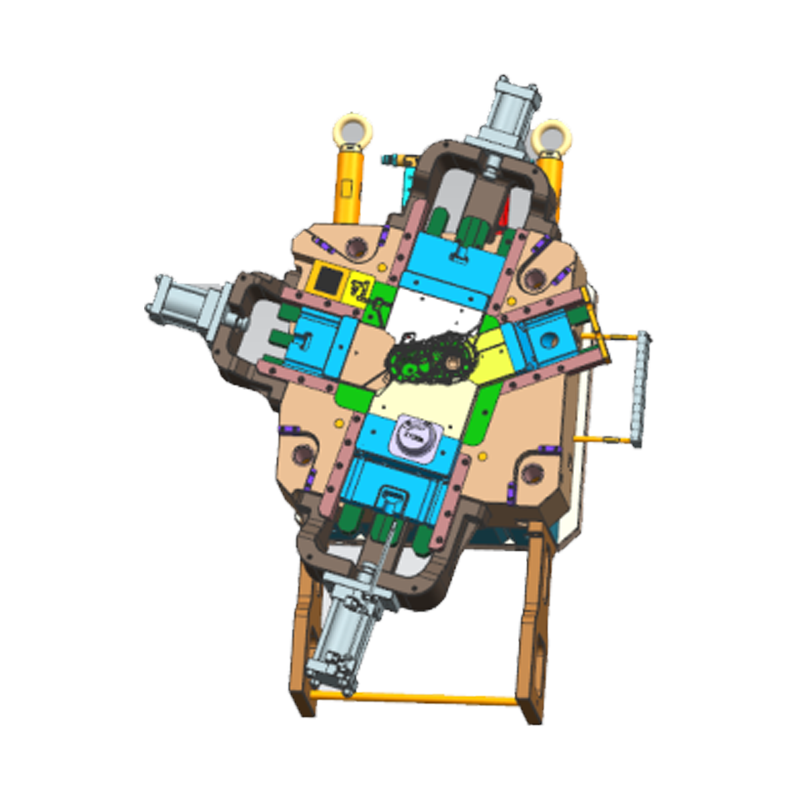
Aluminum die-casting gearbox mold the most critical requirements: 1. Material properties require hig...

Die casting transmission EM Side Housing mold is designed by JYD(Yunmai) for NIO transmission Rear H...

transmission rear Housing molds are foundational to the efficient and precise manufacturing of autom...
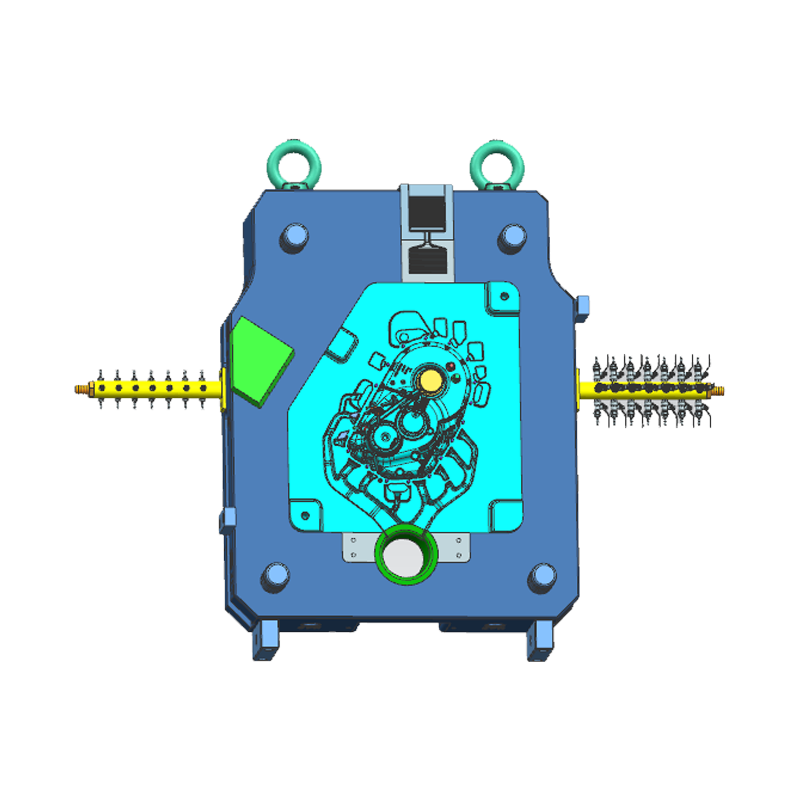
SERES transimission adopts complex cavity structure; high efficiency cooling system, the development...
Copyright © Ningbo Yunmai Precision Machinery Co., Ltd. All Rights Reserved
 OEM/ODM Die Casting/Cast Molds Manufacturers