


Cylinder Head seals combustion chamber, houses valves & spark plugs, forms coolant passages, wit...
Industry News
Home / News / Industry News / How Aluminum Die Casting Molds Contribute to Cost Savings in Mass Production
Content
In today’s highly competitive manufacturing environment, businesses are constantly seeking ways to improve production efficiency and reduce costs while maintaining high-quality standards. One of the most effective solutions to achieve these goals is through the use of aluminum die casting molds. These molds play a crucial role in producing precision metal parts in high volumes, making them an essential tool for industries such as automotive, aerospace, electronics, and consumer goods.
Aluminum die casting is a versatile and cost-effective manufacturing process that involves injecting molten aluminum into a mold under high pressure to produce detailed and complex shapes. This method not only provides excellent dimensional accuracy and surface finish but also significantly reduces production time and waste.
Before diving into the specific ways aluminum die casting molds contribute to cost savings, it’s important to understand the process itself. Aluminum die casting involves several key steps:
This process is highly repeatable, which is particularly beneficial for mass production. The ability to produce large quantities of identical parts with minimal waste and high efficiency is a key reason why aluminum die casting molds are so valuable in cost-conscious industries.
One of the main advantages of aluminum die casting is the speed of production. The process allows for the rapid manufacture of large volumes of parts, making it ideal for mass production. Once the mold is designed and created, it can be used repeatedly to produce thousands or even millions of identical parts with consistent quality. This eliminates the need for extensive labor and long production times that are typical of other manufacturing methods, such as traditional machining or sand casting.
The speed of aluminum die casting also reduces lead times for production, allowing businesses to fulfill large orders quickly. Faster production cycles mean that manufacturers can meet customer demands more effectively and increase their output without incurring additional costs associated with longer production times. As a result, manufacturers can benefit from reduced labor costs and increased efficiency, leading to significant savings over time.
Material waste is a significant factor in the overall cost of manufacturing. In traditional casting methods or machining, excess material is often trimmed away, leading to higher material costs and additional waste disposal expenses. Aluminum die casting, on the other hand, uses an efficient process that minimizes waste. Since the molten aluminum is injected under high pressure into the mold, it fills the cavities completely, ensuring that only the required amount of material is used.
Additionally, the precise nature of aluminum die casting ensures that parts are produced with tight tolerances and minimal need for secondary machining. This further reduces material wastage and the need for additional processes, both of which contribute to cost savings in mass production. In industries where material costs can account for a large portion of total production expenses, minimizing waste through aluminum die casting is a highly effective cost-saving strategy.
Another significant area where aluminum die casting molds help reduce costs is through labor savings. Because the die casting process is automated and requires less human intervention compared to other manufacturing methods, it significantly reduces the amount of labor required. Once the mold is created, the process is largely automated, with machines performing the injection, cooling, and ejection steps. This allows manufacturers to produce parts with fewer employees and less oversight.
In addition to reducing labor costs, the automation of the die casting process also reduces the potential for human error, leading to higher consistency and fewer defects. Fewer defects mean less rework, less scrap, and fewer rejected parts, all of which contribute to lower overall production costs.
Aluminum die casting molds are highly durable and designed for long-term use. Unlike molds used in other casting processes, die casting molds can withstand the high temperatures and pressures involved in the aluminum casting process, making them suitable for large production runs. This means that once a mold is created, it can be used to produce a large number of parts, making the upfront investment in the mold more cost-effective.
The longevity of aluminum die casting molds contributes to cost savings by spreading the cost of the mold over a large number of parts. Additionally, the ability to reuse molds multiple times reduces the need for frequent mold replacements, which can be expensive. For businesses that require high-volume production, the durability and reusability of die casting molds make them a smart investment in terms of cost savings.
The precision and accuracy of aluminum die casting result in high-quality parts that often require minimal finishing. Unlike other manufacturing methods that produce rough or imperfect parts that need significant post-production work, die-cast parts typically have smooth surfaces and tight tolerances straight out of the mold. This reduces the need for costly secondary processes such as machining, polishing, or grinding.
In industries where part quality is critical, such as in the automotive and aerospace sectors, the ability to produce high-quality components with minimal finishing is a major advantage. Reducing the need for additional finishing not only lowers labor costs but also reduces material consumption and energy costs associated with secondary processes. This leads to further cost savings across the production cycle.
Energy consumption is another key factor in the cost of manufacturing. Aluminum die casting is a relatively energy-efficient process compared to other methods, such as sand casting or machining. The high-pressure injection of molten aluminum into the mold ensures that material is used efficiently, reducing the amount of energy required to melt and form the aluminum.
Furthermore, the energy efficiency of the die casting process helps manufacturers keep production costs under control. With less energy required to produce each part, manufacturers can reduce their overall energy consumption, which contributes to cost savings over time. This is especially important for companies looking to improve their sustainability practices while keeping costs low.
The tooling costs associated with aluminum die casting are often lower than those of other casting methods. While the initial cost of creating a die casting mold can be higher than that of other types of molds, the cost per part decreases significantly as production volume increases. Since the mold can be used for thousands or even millions of parts, the tooling cost is amortized over a large number of products, making it a cost-effective option for high-volume production.
Additionally, aluminum die casting molds are designed to be simple and cost-effective to maintain. As long as proper care is taken, molds can continue to produce high-quality parts for many years, further reducing the overall production costs.
Aluminum die casting offers design flexibility that allows manufacturers to create complex shapes and geometries that might not be possible with other methods. This design freedom can help companies reduce the need for additional components or assemblies, further lowering costs.
For example, manufacturers can design parts with integrated features, such as ribs, holes, and bosses, directly into the casting. This reduces the need for secondary operations like drilling or machining, contributing to both material and labor cost savings. In industries where the complexity of parts is critical, such as in electronics or automotive applications, the versatility of aluminum die casting allows companies to produce innovative designs without the added expense of additional manufacturing steps.

Cylinder Head seals combustion chamber, houses valves & spark plugs, forms coolant passages, wit...

The camshaft bracket cover secures the camshaft position, seals oil channels to prevent leaks, block...
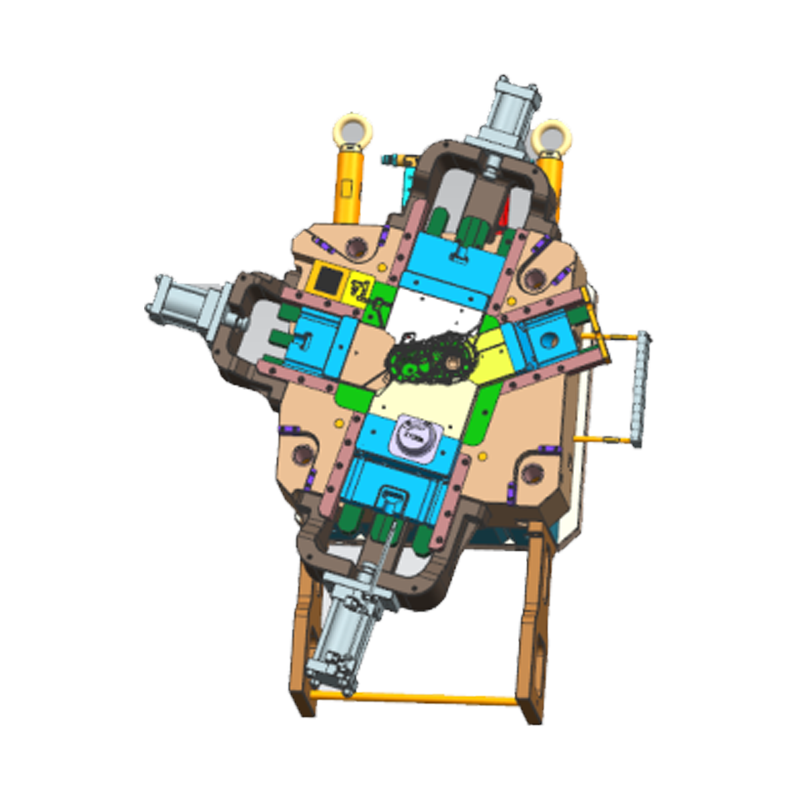
Aluminum die-casting gearbox mold the most critical requirements: 1. Material properties require hig...

Die casting transmission EM Side Housing mold is designed by JYD(Yunmai) for NIO transmission Rear H...

transmission rear Housing molds are foundational to the efficient and precise manufacturing of autom...
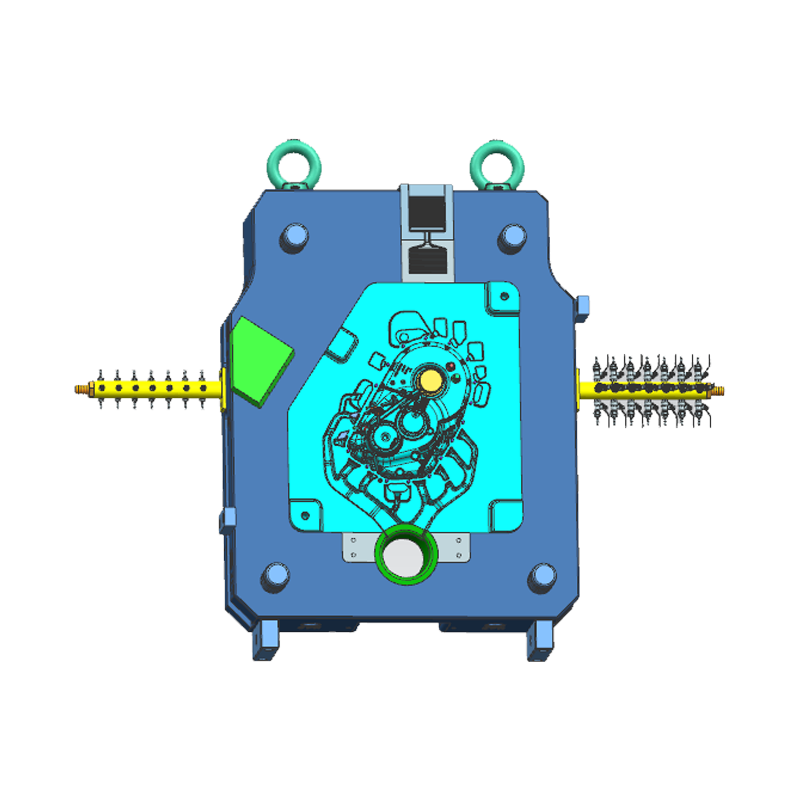
SERES transimission adopts complex cavity structure; high efficiency cooling system, the development...
Copyright © Ningbo Yunmai Precision Machinery Co., Ltd. All Rights Reserved
 OEM/ODM Die Casting/Cast Molds Manufacturers