


Cylinder Head seals combustion chamber, houses valves & spark plugs, forms coolant passages, wit...
Content
When choosing between zinc die casting and aluminum die casting, the decision comes down to part geometry, required strength-to-weight ratio, production volume, and surface finish expectations. Zinc alloy die castings deliver tighter tolerances, longer tool life, and superior surface detail at lower per-part cost for small, complex, high-volume parts — while aluminum die castings offer a significantly better strength-to-weight ratio, higher service temperatures, and are the preferred choice for larger structural components where weight matters. Neither material is universally superior; each dominates in specific application niches for well-defined technical and economic reasons.
Before diving into the details, the table below provides a side-by-side reference for the most decision-relevant properties of the two most common alloys in each family: Zamak 3 (the workhorse zinc alloy) and A380 (the dominant aluminum die casting alloy).
| Property | Zamak 3 (Zinc) | A380 (Aluminum) |
|---|---|---|
| Density | 6.6 g/cm³ | 2.71 g/cm³ |
| Tensile Strength | 283 MPa (41,000 psi) | 324 MPa (47,000 psi) |
| Yield Strength | 221 MPa (32,000 psi) | 165 MPa (24,000 psi) |
| Hardness (Brinell) | 82 HB | 80 HB |
| Melting Point | 381–387°C (718–729°F) | 540–595°C (1,004–1,103°F) |
| Max Service Temp. | ~120°C (248°F) | ~175°C (347°F) |
| Thermal Conductivity | 113 W/m·K | 96 W/m·K |
| Electrical Conductivity | ~27% IACS | ~23% IACS |
| Typical Die Life (shots) | 500,000–1,000,000+ | 100,000–150,000 |
| Typical Wall Thickness | 0.4–1.5 mm achievable | 0.9–2.5 mm typical minimum |
Zinc is 2.4 times denser than aluminum — 6.6 g/cm³ versus 2.71 g/cm³. For a geometrically identical part, a zinc alloy die casting will weigh more than twice as much as the equivalent aluminum die casting. This density difference is the single largest factor driving aluminum selection in automotive, aerospace, and consumer electronics applications where every gram of mass reduction has measurable downstream value.
In automotive applications, for example, OEMs apply a standard weight-cost trade-off of approximately $3–$10 per kilogram of weight saved over the vehicle lifetime in fuel savings and emission compliance value. A transmission housing, intake manifold, or structural bracket that switches from zinc to aluminum saves meaningful mass — and the weight saving is proportional to part volume, so larger parts benefit more dramatically.
Conversely, for small parts like lock cylinders, zipper pulls, belt buckles, or decorative hardware — where the total part mass is under 50–100 grams — weight difference is negligible in absolute terms, and zinc's other advantages dominate the decision.
Zinc alloy die castings hold tighter tolerances and achieve thinner wall sections than aluminum. This is a direct consequence of zinc's lower melting point and superior fluidity in the molten state.
For parts with fine threads cast in (rather than machined), gear teeth, or micro-features below 0.5 mm, zinc is the standard choice — aluminum simply cannot fill these features reliably in production conditions.
Tooling cost is a major factor in the total cost of ownership for die cast parts, especially at moderate production volumes.
Because zinc alloy is cast at approximately 400°C versus aluminum's 660°C+, zinc dies operate under far less thermal stress. The result is dramatically longer die life:
For a production run of 500,000 parts, an aluminum die may require 3–4 die rebuilds or replacements versus zero for a zinc die. At a die cost of $15,000–$80,000 per tool depending on complexity, this difference is substantial over a product's lifetime. For parts with very high lifetime volumes, zinc's tooling economy can represent savings of $100,000 or more over the program life compared to aluminum.
Zinc alloy die casting uses hot-chamber machines, where the injection system is submerged directly in the molten zinc. This eliminates the ladle transfer step required in cold-chamber aluminum casting and substantially reduces cycle time:
For a production run of 1 million parts, the difference between a 10-second zinc cycle and a 30-second aluminum cycle represents approximately 5,500 machine-hours of production capacity — a significant factor in machine utilization and per-part labor cost.
Zinc alloy die castings are the material of choice whenever a high-quality cosmetic finish — particularly electroplating — is required. The surface structure of zinc castings is inherently more receptive to plating than aluminum for several reasons:
The global decorative hardware, plumbing fixtures, and fashion accessories industries rely almost exclusively on zinc alloy die castings specifically because of this plating advantage. A chrome-plated zinc bathroom faucet body is both technically and economically superior to an equivalent aluminum part when plated appearance is the primary requirement.
For anodizing — the primary surface finishing process for aluminum — the situation reverses. Aluminum die castings anodize cleanly to produce hard, durable oxide layers in a range of colors. Zinc cannot be anodized. For applications requiring anodized finishes (architectural components, consumer electronics housings, sporting goods), aluminum is the only die casting option.
Both alloys form protective oxide layers in ambient conditions, but their behavior differs in demanding environments:
The Zamak family (Zinc-Aluminum-Magnesium-Copper) offers several grades optimized for specific properties:
Material cost and total part cost are different calculations. Several factors interact:
As a general rule, for small, complex, high-volume parts under approximately 500g, zinc alloy die castings typically deliver a lower total cost per part than aluminum when tooling, cycle time, and secondary operations are fully accounted for. For larger parts or weight-sensitive applications, aluminum becomes economically competitive despite higher tooling costs.
| Industry / Application | Zinc Alloy Die Castings | Aluminum Die Castings |
|---|---|---|
| Automotive | Lock cylinders, door handles, fuel system components, small brackets | Engine blocks, transmission housings, structural nodes, EV battery housings |
| Consumer Electronics | Connector bodies, hinges, camera components, micro-parts | Laptop housings, heatsinks, smartphone frames, drone bodies |
| Plumbing / Hardware | Faucet bodies, valve bodies, decorative fixtures, escutcheons | Valve housings, pump bodies, irrigation fittings |
| Fashion / Accessories | Belt buckles, zipper pulls, handbag hardware, buttons, jewelry bases | Limited (weight and plating requirements favor zinc) |
| Power Tools / Industrial | Small gear housings, trigger mechanisms, connectors | Tool housings, motor brackets, pneumatic bodies, compressor parts |
| Aerospace / Defense | Limited (weight penalty disqualifies most applications) | Avionics housings, UAV structural components, weapon sight bodies |
Use these criteria to drive the material selection decision:

Cylinder Head seals combustion chamber, houses valves & spark plugs, forms coolant passages, wit...

The camshaft bracket cover secures the camshaft position, seals oil channels to prevent leaks, block...
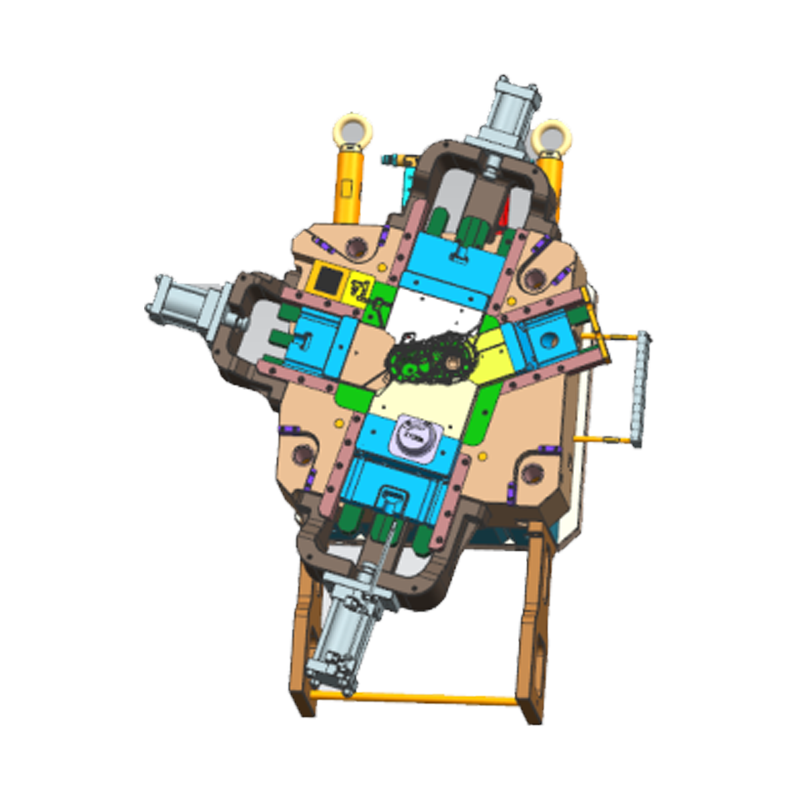
Aluminum die-casting gearbox mold the most critical requirements: 1. Material properties require hig...

Die casting transmission EM Side Housing mold is designed by JYD(Yunmai) for NIO transmission Rear H...

transmission rear Housing molds are foundational to the efficient and precise manufacturing of autom...
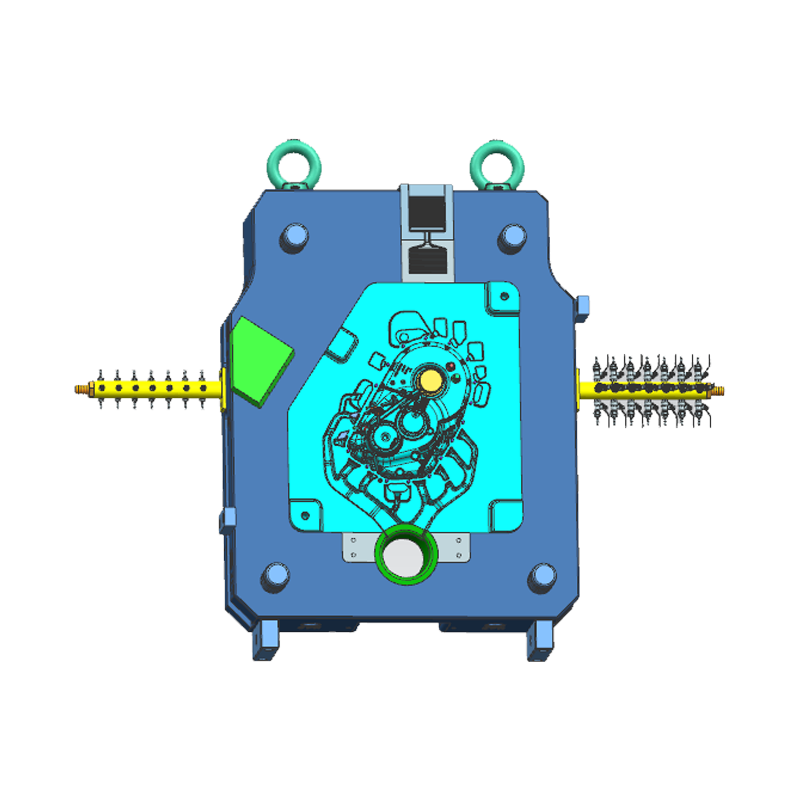
SERES transimission adopts complex cavity structure; high efficiency cooling system, the development...
Copyright © Ningbo Yunmai Precision Machinery Co., Ltd. All Rights Reserved
 OEM/ODM Die Casting/Cast Molds Manufacturers