


Cylinder Head seals combustion chamber, houses valves & spark plugs, forms coolant passages, wit...
Content
Die casting is the better choice when you need metal parts with high strength, tight tolerances, and excellent surface finish at high volumes — while injection molding is superior for complex plastic parts at lower per-unit cost and greater design flexibility. The two processes are not interchangeable: die casting forces molten metal into steel molds under high pressure, whereas injection molding injects thermoplastic or thermoset materials into a mold cavity. Choosing incorrectly between the two can result in cost overruns, poor part performance, or unnecessary redesign.
This guide breaks down every critical dimension of comparison — materials, tooling, cost, precision, production volume, and end-use performance — with specific focus on aluminum die casting molds and aluminum die castings, which represent the dominant use case in automotive, aerospace, electronics, and industrial manufacturing.
In die casting, molten metal — most commonly aluminum, zinc, or magnesium — is injected into a hardened steel mold (the die) at pressures ranging from 1,500 to 25,000 psi. The metal solidifies rapidly within the die, which is then opened and the finished part ejected. Cycle times are short, typically 15 to 60 seconds per part, making the process highly efficient at scale. Aluminum die casting specifically involves alloys such as A380, A383, or ADC12, which offer an excellent combination of castability, strength, and corrosion resistance.
Injection molding melts thermoplastic pellets and injects the liquid material into a steel or aluminum mold at pressures between 800 and 20,000 psi. The plastic cools inside the mold, the tool opens, and the part is ejected. Cycle times are similar to die casting — often 10 to 60 seconds — but the resulting parts are plastic rather than metal, with fundamentally different mechanical and thermal properties. Injection molds used for production are typically made from P20 or H13 tool steel, though aluminum injection molds are used for prototyping and short runs.
| Factor | Die Casting | Injection Molding |
|---|---|---|
| Material | Metals (aluminum, zinc, magnesium) | Plastics (ABS, nylon, PP, PC, etc.) |
| Part strength | High — metal mechanical properties | Lower — varies widely by resin |
| Dimensional tolerance | ±0.1 mm or better | ±0.05–0.2 mm (material dependent) |
| Tooling cost | $5,000–$75,000+ | $3,000–$100,000+ |
| Tooling lifespan | 100,000–1,000,000+ shots | 500,000–1,000,000+ shots |
| Per-unit cost (high volume) | Low — highly competitive at scale | Very low — especially for small parts |
| Surface finish (as-cast/molded) | Ra 0.8–3.2 µm | Ra 0.4–1.6 µm |
| Thermal resistance | Excellent — aluminum stable to 150°C+ | Limited — most plastics below 120°C |
| Wall thickness minimum | 0.8–1.5 mm | 0.5–1.0 mm |
| EMI shielding | Inherent (metal) | Requires secondary coating |
| Post-processing options | Machining, anodizing, powder coat, plating | Painting, plating, overmolding, pad print |
| Ideal production volume | 10,000+ units | 1,000+ units (varies by part size) |
Aluminum die casting molds — also called dies — are the core tooling investment in the die casting process. Understanding how they are built and how long they last directly informs cost and production planning decisions.
Aluminum die casting molds are machined from hot-work tool steels — most commonly H13 (AISI H13) — which are specifically formulated to withstand the thermal cycling and high injection pressures of aluminum casting. H13 steel is selected for its combination of hot hardness, toughness, and resistance to heat checking (the network of surface cracks caused by repeated heating and cooling). For very high-volume production, premium grades such as DIN 1.2344 ESR (electro-slag remelted H13) are used, which offer more uniform microstructure and extended die life.
A complete aluminum die casting mold typically consists of two primary halves — the cover die (fixed half) and the ejector die (moving half) — plus cores, slides, lifters, cooling channels, and the ejector pin system. Complex parts may require multiple side-action slides to form undercuts that cannot be pulled directly from the die opening direction.
A well-maintained H13 aluminum die casting mold typically achieves 100,000 to 500,000 shots before requiring significant rework or replacement. Dies used for aluminum last shorter lives than zinc dies due to aluminum's higher casting temperature (approximately 620–680°C vs 385–400°C for zinc). Factors that extend die life include proper die temperature management, use of die release lubricants, preventive maintenance schedules, and nitriding treatments on the die surface.
Integrated cooling channels drilled through the die body are essential for controlling solidification rate, minimizing porosity, and achieving consistent cycle times. Conformal cooling — where channels follow the contour of the part geometry using additive manufacturing techniques — can reduce cycle times by 15 to 30% compared to conventional straight-drilled channels, while also improving part quality by producing more uniform cooling across the part surface.
Aluminum die castings are the most widely used die cast product globally, accounting for approximately 80% of all non-ferrous die castings by weight. Their combination of low density, high strength-to-weight ratio, corrosion resistance, and excellent thermal and electrical conductivity makes them irreplaceable across numerous industries.
| Alloy | Tensile Strength | Hardness (Brinell) | Key Properties | Common Applications |
|---|---|---|---|---|
| A380 | 324 MPa | 80 HB | Excellent castability, good strength | Engine brackets, housings, enclosures |
| A383 (ADC12) | 310 MPa | 75 HB | Superior thin-wall filling, lower cracking risk | Complex thin-wall electronics parts |
| A360 | 317 MPa | 75 HB | High corrosion resistance, pressure tightness | Marine, hydraulic components |
| A413 | 296 MPa | 80 HB | Excellent pressure tightness, good fluidity | Hydraulic cylinders, manifolds |
| Silafont-36 (A356) | 280–320 MPa | 70–85 HB | High ductility, heat treatable | Structural automotive parts, crash-relevant |
Several application requirements make die casting — and aluminum die casting specifically — the clear engineering and economic choice over injection molding.
Aluminum die castings have tensile strengths in the range of 280–330 MPa. Even the strongest engineering plastics used in injection molding — such as glass-filled nylon or PEEK — rarely exceed 200 MPa in tensile strength and are far more susceptible to creep under sustained load. For brackets, housings, mounts, and any part that must bear mechanical load, aluminum die casting is the standard choice.
Aluminum conducts heat approximately 500 times better than standard engineering plastics. In applications involving heat dissipation — power electronics, LED drivers, motor controllers, EV inverters — aluminum die castings perform a structural and thermal function simultaneously that no plastic part can replicate without expensive secondary coatings or insert molding of metal components.
Electronic enclosures made from aluminum die castings provide inherent electromagnetic interference (EMI) shielding — a critical requirement in telecommunications, medical, and military electronics. Injection-molded plastic enclosures require secondary conductive coatings or metal inserts to achieve equivalent shielding, adding cost and process steps.
Aluminum die castings consistently hold tolerances of ±0.1 mm on critical dimensions without secondary machining, and can achieve ±0.05 mm with CNC finishing. Injection-molded plastic parts are subject to warpage and shrinkage variability — particularly for glass-filled resins — which makes maintaining tight tolerances on large or asymmetric parts challenging without careful process control and part design optimization.
Injection molding has distinct advantages in applications where plastic material properties are acceptable or preferred.
Total cost of ownership across a production program depends on tooling investment, per-unit material cost, cycle time, scrap rate, and post-processing requirements. The comparison shifts significantly based on volume.
At low volumes, the high tooling cost of aluminum die casting molds makes the process uneconomical. A $20,000 die casting tool amortized over 3,000 parts adds $6.67 per part in tooling cost alone, before material or machine time. Injection molding with soft aluminum tooling — or even 3D-printed molds for very short runs — is typically the correct choice below 5,000 units.
At this range, die casting becomes cost-competitive for parts that require metal properties. Tooling cost per unit falls to manageable levels, and the high recyclability of aluminum scrap (runners, overflows, and rejects are remelted with near-zero material loss) keeps per-unit material cost efficient.
Both processes are highly cost-efficient at high volumes. Die casting's advantage grows for parts requiring post-casting machining, since the tight as-cast tolerances of aluminum die castings minimize material removal — reducing machine time and tool wear costs compared to starting from billet or sand castings. For automotive programs running 500,000+ parts per year, die casting tooling costs are fully amortized within the first production quarter.
Parts designed with die casting principles from the outset achieve better quality, lower scrap rates, and longer die life. Engineers transitioning from injection molding to die casting need to account for the different flow and solidification behavior of molten aluminum.
Environmental considerations are playing a growing role in process selection, particularly in automotive and electronics supply chains where OEMs are setting recycled content targets.
Aluminum is one of the most recyclable materials in manufacturing. Recycled aluminum requires only 5% of the energy needed to produce primary aluminum from bauxite ore, and aluminum die casting scrap — including runners, overflows, and rejected parts — is returned directly to the melt furnace with no downgrading of alloy properties in most cases. Many die casting operations run with recycled aluminum content exceeding 80%.
Injection-molded plastic parts present greater end-of-life challenges. Most engineering thermoplastics are technically recyclable, but mixed-resin assemblies, overmolded parts, and painted surfaces complicate sorting and reprocessing. Thermosetting plastics used in some injection molding applications cannot be remelted at all. For companies with sustainability commitments, aluminum die castings offer a measurably better end-of-life profile than most plastic injection-molded alternatives.
Use the following decision criteria to guide process selection between die casting and injection molding for a new part or product:
In practice, many assemblies combine both processes — an aluminum die cast structural chassis or heat sink paired with injection-molded plastic covers, buttons, and bezels. The two processes are complementary rather than universally competitive, and the most cost-effective product designs often leverage the strengths of each where they are most appropriate.

Cylinder Head seals combustion chamber, houses valves & spark plugs, forms coolant passages, wit...

The camshaft bracket cover secures the camshaft position, seals oil channels to prevent leaks, block...
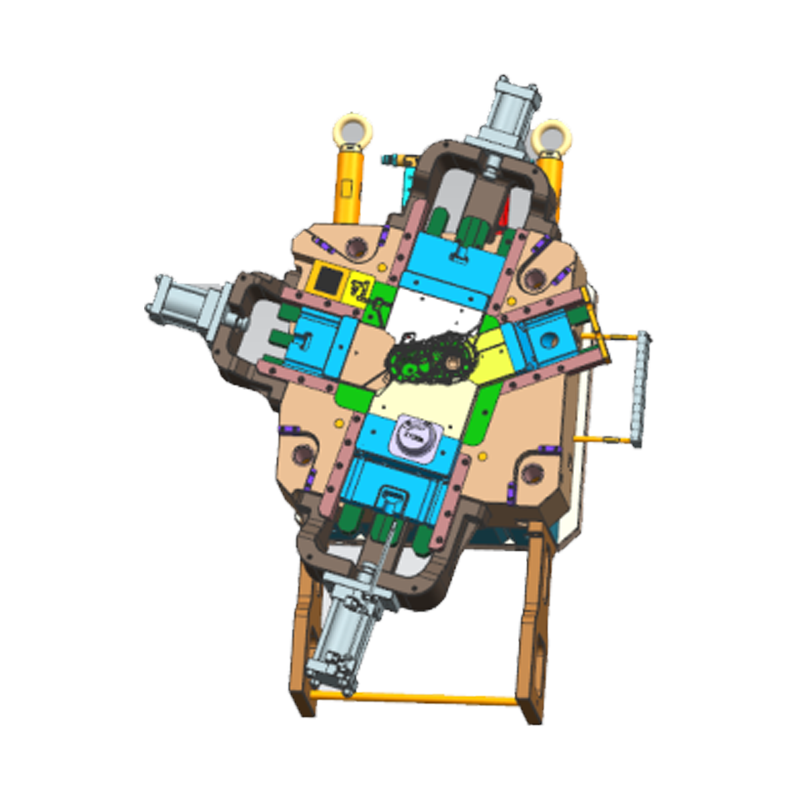
Aluminum die-casting gearbox mold the most critical requirements: 1. Material properties require hig...

Die casting transmission EM Side Housing mold is designed by JYD(Yunmai) for NIO transmission Rear H...

transmission rear Housing molds are foundational to the efficient and precise manufacturing of autom...
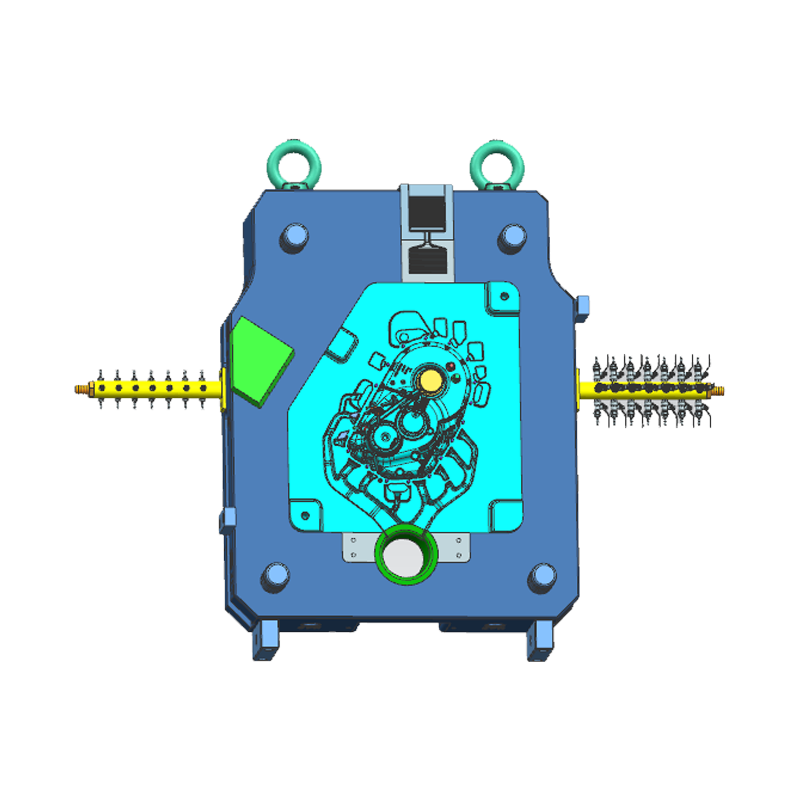
SERES transimission adopts complex cavity structure; high efficiency cooling system, the development...
Copyright © Ningbo Yunmai Precision Machinery Co., Ltd. All Rights Reserved
 OEM/ODM Die Casting/Cast Molds Manufacturers