


Cylinder Head seals combustion chamber, houses valves & spark plugs, forms coolant passages, wit...
Industry News
Home / News / Industry News / How Motorcycle Die Cast Molds Enhance Precision and Efficiency in Manufacturing
Content
Motorcycle manufacturing has evolved significantly over the years, driven by advancements in technology, materials, and production techniques. One of the most crucial innovations in this field is the use of die casting molds. These molds have revolutionized the way motorcycle components are produced, offering manufacturers the ability to achieve higher precision, greater efficiency, and improved overall performance. Die casting is a metal casting process in which molten metal is injected into a mold cavity under high pressure, resulting in parts with exceptional accuracy and fine details.
One of the key benefits of using die cast molds in motorcycle manufacturing is the high precision they offer. Die casting is a highly controlled process, where molten metal is injected into a mold cavity at high pressure. This ensures that every part produced has a consistent shape and size, which is crucial in motorcycle manufacturing, where small deviations can lead to operational inefficiencies or safety concerns.
Tight Tolerances: Die cast molds are capable of achieving tight tolerances, meaning the parts produced are extremely accurate in their dimensions. This is important for parts like engine components, suspension parts, and transmission housings, where even small variations can affect the overall performance of the motorcycle. With the precision provided by die cast molds, manufacturers can produce parts that fit together perfectly and function as intended.
Complex Geometries: The process also allows manufacturers to create complex geometries and intricate details that would be difficult or impossible to achieve with traditional manufacturing methods, such as machining or forging. This is particularly useful in motorcycle design, where components often need to be lightweight, aerodynamic, and durable, yet maintain a high level of detail.
Motorcycle die cast molds significantly enhance production efficiency, enabling manufacturers to produce large quantities of parts in a relatively short amount of time. The die casting process is faster compared to other metalworking techniques, such as forging or machining, as it can produce thousands of identical parts with minimal variation in a short timeframe.
High-Volume Production: The use of die cast molds allows for mass production of motorcycle components with a high level of consistency. The ability to produce large volumes of identical parts in a short period reduces the overall lead time for manufacturers. In industries like motorcycle production, where meeting tight deadlines and ensuring a constant supply of parts is crucial, this efficiency helps keep costs down while maintaining high standards of quality.
Automation Compatibility: Die casting molds are often designed to be compatible with automated systems, making it easier for manufacturers to scale up production. Automation can handle tasks such as mold filling, cooling, and ejection of finished parts, reducing the need for manual labor and speeding up the overall process.
Another major advantage of motorcycle die cast molds is the reduction in material waste. Unlike traditional methods such as machining, where parts are cut from larger blocks of material, die casting molds use only the amount of metal required to fill the mold cavity. This results in far less material waste, leading to significant cost savings for manufacturers.
Optimal Material Use: The ability to design molds that maximize material efficiency ensures that only the necessary amount of metal is used. Additionally, any leftover material from the process can often be recycled, making the process more sustainable and cost-effective.
Lower Manufacturing Costs: The reduction in material waste, combined with the speed and consistency of the die casting process, helps lower the overall manufacturing costs for motorcycle parts. For example, producing a motorcycle frame or engine casing using die casting can be far more economical than using traditional methods, where more material may need to be purchased and machined.
Motorcycle parts made using die casting molds are known for their high strength and durability, which are essential qualities in components that will undergo high stress and wear. The die casting process allows for the creation of parts that are not only lightweight but also incredibly strong and resistant to fatigue, making them ideal for critical components such as engine blocks, gearboxes, and suspension parts.
Material Strength: Depending on the metal alloy used (such as aluminum, zinc, or magnesium), die cast components can achieve high tensile strength and resistance to wear, corrosion, and impact. For example, aluminum die cast molds are commonly used to create lightweight yet durable components for motorcycles, ensuring that parts like engine casings, wheels, and frames can withstand the rigors of everyday use while keeping the overall weight of the motorcycle low.
Enhanced Performance: The combination of strength and lightness provided by die-cast motorcycle components improves the overall performance of the bike. Lightweight parts reduce the weight of the motorcycle, making it more agile and responsive while also improving fuel efficiency and handling.
Die cast molds offer manufacturers an unparalleled level of design flexibility. The process allows for the creation of parts with intricate shapes and precise dimensions, enabling manufacturers to meet specific design requirements. This is particularly useful in motorcycle production, where unique and custom components are often necessary to differentiate one model from another or to create specialized versions for specific riding styles (e.g., racing, touring, off-road).
Customized Components: Whether it’s a custom-designed engine housing or a uniquely shaped frame, die casting allows for highly detailed parts that fit the exact specifications of the designer. The process also allows for the use of multiple materials, enabling the creation of parts with different characteristics, such as a mix of strength and lightweight properties.
Increased Creativity in Design: The ability to produce parts with complex geometries also opens up new opportunities for creative and innovative motorcycle designs. For example, manufacturers can create aerodynamic features or unique surface textures that would otherwise be difficult to achieve with traditional methods.
Unlike other manufacturing methods, such as machining or casting, die-cast parts require less post-processing. The die casting process produces parts that are already near-net shape, meaning they need minimal finishing to meet quality standards.
Reduced Machining: Die-cast parts often require very little machining, which reduces production time and costs. The accuracy of the die casting process means that parts are already very close to the final product shape, minimizing the need for additional work like grinding, polishing, or surface treatments.
Fewer Defects: The precision of die casting helps reduce defects and inconsistencies in the parts, leading to fewer returns or reworks. This not only saves time and money but also ensures that every component meets high-quality standards.
Die cast molds ensure that every part produced has a consistent quality and performance. The process is highly repeatable, meaning that manufacturers can achieve identical parts every time, whether they are producing a single prototype or thousands of identical motorcycle components for mass production.
Quality Control: Die casting allows manufacturers to integrate quality control measures directly into the production process. Parameters like temperature, pressure, and timing can be monitored and adjusted to ensure consistent results. This level of precision helps maintain the high-quality standards required in the motorcycle industry, where even minor defects can affect performance and safety.

Cylinder Head seals combustion chamber, houses valves & spark plugs, forms coolant passages, wit...

The camshaft bracket cover secures the camshaft position, seals oil channels to prevent leaks, block...
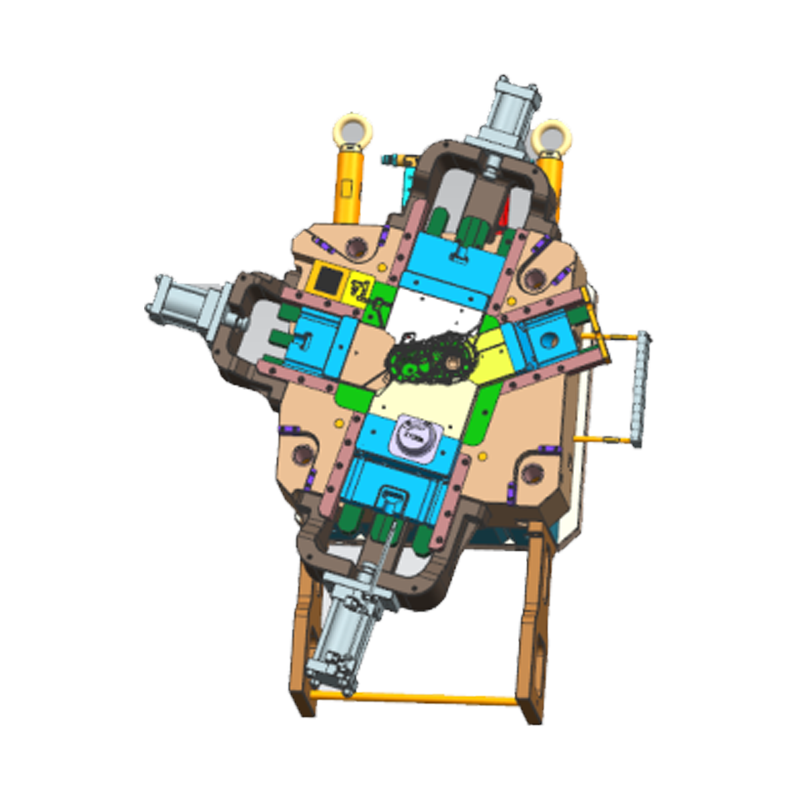
Aluminum die-casting gearbox mold the most critical requirements: 1. Material properties require hig...

Die casting transmission EM Side Housing mold is designed by JYD(Yunmai) for NIO transmission Rear H...

transmission rear Housing molds are foundational to the efficient and precise manufacturing of autom...
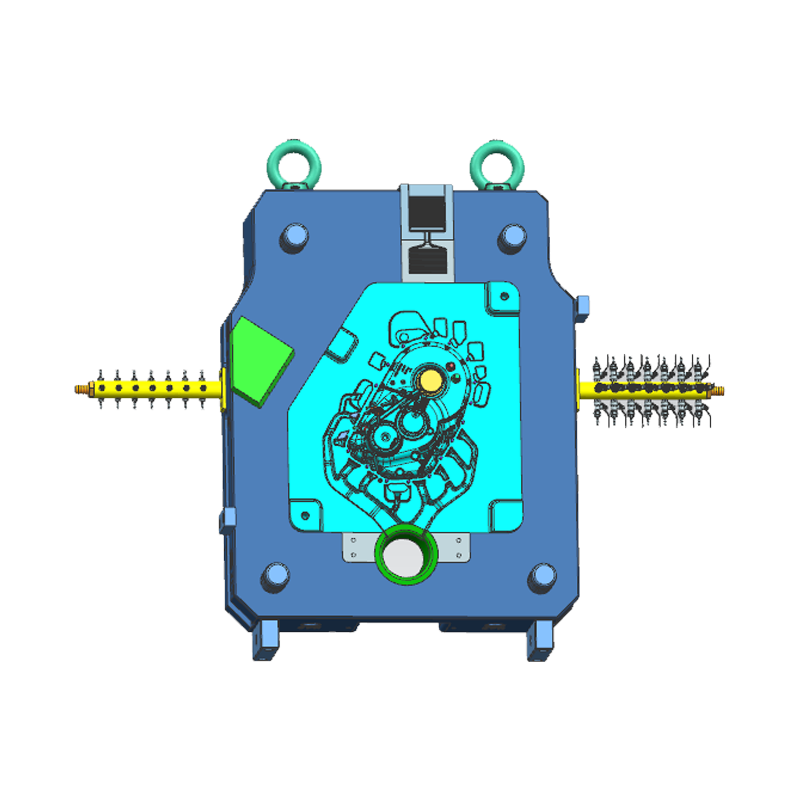
SERES transimission adopts complex cavity structure; high efficiency cooling system, the development...
Copyright © Ningbo Yunmai Precision Machinery Co., Ltd. All Rights Reserved
 OEM/ODM Die Casting/Cast Molds Manufacturers