


Cylinder Head seals combustion chamber, houses valves & spark plugs, forms coolant passages, wit...
Industry News
Home / News / Industry News / How Magnesium Die Casting Enhances Performance in High-Temperature Applications
Content
Magnesium die casting is gaining significant attention in various industries for its ability to produce lightweight, high-strength components. Known for its excellent mechanical properties and superior performance in demanding conditions, magnesium die casting has become a key technology for a wide range of applications, particularly in high-temperature environments. From automotive and aerospace to industrial machinery, magnesium die cast components are increasingly being used to meet the rigorous demands of high-temperature performance.
Magnesium die casting is a manufacturing process in which molten magnesium alloy is injected into a steel die under high pressure. The result is a precisely shaped part that retains the unique properties of magnesium, such as its light weight, strength, and corrosion resistance. This process allows for the creation of complex parts with high dimensional accuracy and surface finish, making it ideal for a wide variety of industries.
Magnesium is the lightest structural metal, weighing about 33% less than aluminum and about 75% less than steel. While magnesium alloys have lower melting points compared to aluminum, they possess high strength-to-weight ratios, making them highly desirable in industries where weight reduction is crucial.
Magnesium die casting offers several unique properties that make it suitable for use in high-temperature environments. These advantages help manufacturers optimize their products and meet the performance demands of high-stress applications.
One of the most significant advantages of magnesium die casting is the material’s lightweight nature. In high-temperature applications, weight reduction is often a priority, especially in industries like automotive and aerospace, where performance is often linked to fuel efficiency or overall speed. Magnesium’s light weight helps reduce the overall weight of components, contributing to improved fuel efficiency and performance.
In addition to being lightweight, magnesium die cast parts also exhibit impressive strength, even in high-temperature conditions. Magnesium alloys like AZ91D, AM60, and AE42 are commonly used for high-temperature applications, offering a good balance of strength, hardness, and thermal stability.
Magnesium alloys exhibit superior thermal conductivity compared to other metals such as aluminum or zinc. High thermal conductivity is a crucial feature in high-temperature applications, particularly in automotive engines, electronics, and heat exchangers. Magnesium die cast parts can efficiently dissipate heat, preventing overheating and ensuring that components perform optimally under extreme conditions.
In engines, for example, magnesium die cast components can help regulate heat, reduce the risk of thermal stress, and enhance the performance and lifespan of the overall system.
Magnesium alloys, particularly those used in die casting, exhibit good corrosion resistance, especially in environments where high temperatures can accelerate corrosion rates. The ability of magnesium to form a protective oxide layer helps maintain the structural integrity of the components under high-temperature stress.
In applications where components are exposed to extreme heat and harsh environments, the corrosion resistance of magnesium die cast parts ensures that they remain durable and functional over extended periods. This is especially important in industries like aerospace and automotive, where reliability and safety are paramount.
Magnesium die cast parts retain their dimensional stability even at high temperatures, making them ideal for use in applications where precision is essential. Materials like aluminum and steel may expand or deform when exposed to heat, leading to performance degradation or component failure. However, magnesium alloys show less expansion and maintain their structural integrity better under thermal stress.
For example, in automotive applications like engine blocks and transmission housings, maintaining precise dimensions is critical to ensuring proper fit, function, and performance. Magnesium’s ability to maintain dimensional stability in high-temperature environments allows for more accurate and reliable components.
High-temperature environments often subject components to cyclic stresses, which can lead to material fatigue. Magnesium alloys, especially those used in die casting, have excellent fatigue resistance, which is important in applications where parts are subjected to repeated stress, such as automotive engines, gearboxes, and turbines.
This enhanced fatigue resistance helps magnesium die cast components maintain their functionality and structural integrity over time, even under harsh operating conditions. This is particularly beneficial in aerospace and automotive sectors, where the longevity and reliability of components are essential.
Magnesium die casting is being increasingly used in various industries to meet the demands of high-temperature applications. Below are some of the key sectors that benefit from the advantages of magnesium die casting:
In the automotive industry, reducing the weight of vehicles is crucial for improving fuel efficiency, reducing emissions, and enhancing overall performance. Magnesium die casting plays a vital role in helping automakers achieve these goals. Lightweight components such as engine blocks, transmission housings, and intake manifolds are commonly made using magnesium die casting.
Magnesium die cast components also help improve thermal management in engines and other high-temperature parts. The ability of magnesium to dissipate heat efficiently ensures that components remain cool and perform optimally, even during extended periods of high engine temperatures. Additionally, the corrosion resistance of magnesium alloys helps extend the lifespan of critical automotive parts, reducing maintenance costs over time.
The aerospace industry places a high premium on lightweight, durable, and heat-resistant materials. Magnesium die casting is used extensively in aerospace components, including housings, structural parts, and heat shields. Magnesium’s low weight helps reduce the overall weight of aircraft, which in turn leads to improved fuel efficiency and reduced emissions.
In aerospace applications, parts are often exposed to extreme temperatures during flight, including high-temperature environments in engine compartments. Magnesium die cast components are ideal for these conditions, offering the strength, thermal conductivity, and fatigue resistance required for long-lasting performance.
In the electronics industry, magnesium die casting is used to create components that require high thermal conductivity to manage heat. Heat sinks, laptop casings, and other electronic enclosures benefit from magnesium's ability to dissipate heat quickly, preventing overheating and ensuring the longevity of sensitive electronic components.
Magnesium die cast parts are also used in the production of mobile devices, where lightweight and durable materials are essential. The corrosion resistance of magnesium ensures that electronic devices remain functional and intact, even in harsh environmental conditions.
Industrial machinery, such as engines, pumps, and turbines, often operates under high temperatures and high-stress conditions. Magnesium die casting offers an ideal solution for producing lightweight, heat-resistant components that can withstand the rigors of continuous operation in these environments.
The high thermal conductivity of magnesium alloys helps prevent overheating in machinery components, while the material’s fatigue resistance ensures that parts can endure the repetitive stresses typical in industrial applications. Magnesium die cast parts are used in critical machinery applications where performance, durability, and weight reduction are essential.
While magnesium die casting offers many advantages, it is important to note that there are certain challenges associated with the process. Magnesium is highly flammable in its molten state, and care must be taken during the casting process to minimize the risk of ignition. Additionally, magnesium die casting requires specialized equipment and expertise to ensure quality and precision.
Another consideration is the cost of magnesium alloys, which can be more expensive than other metals like aluminum or zinc. However, the long-term benefits, including weight reduction, fuel efficiency, and performance improvements, often justify the higher initial cost in high-temperature applications.

Cylinder Head seals combustion chamber, houses valves & spark plugs, forms coolant passages, wit...

The camshaft bracket cover secures the camshaft position, seals oil channels to prevent leaks, block...

Aluminum die-casting gearbox mold the most critical requirements: 1. Material properties require hig...

Die casting transmission EM Side Housing mold is designed by JYD(Yunmai) for NIO transmission Rear H...

transmission rear Housing molds are foundational to the efficient and precise manufacturing of autom...
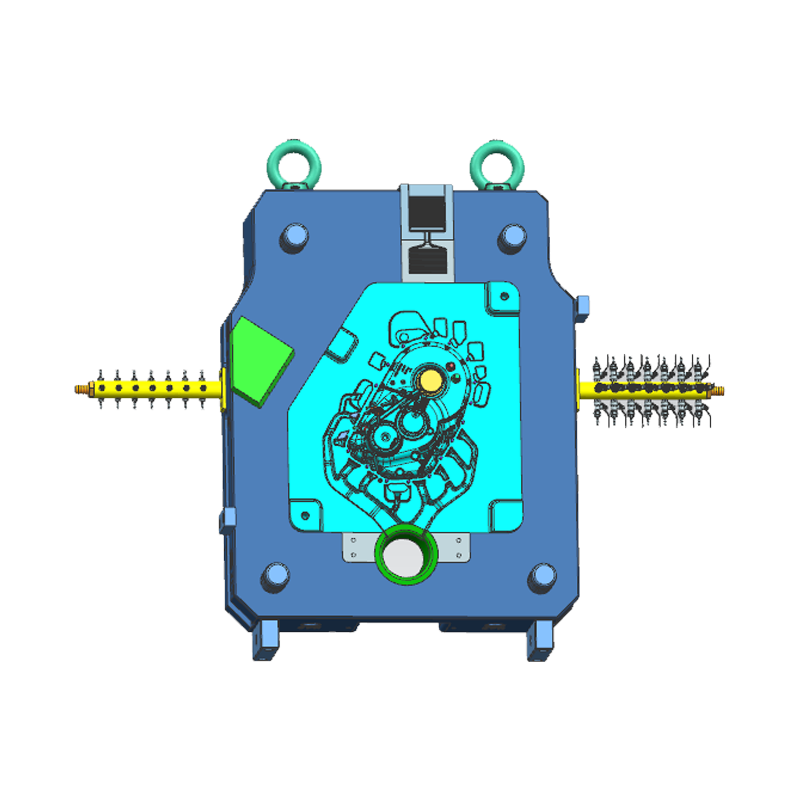
SERES transimission adopts complex cavity structure; high efficiency cooling system, the development...
Copyright © Ningbo Yunmai Precision Machinery Co., Ltd. All Rights Reserved
 OEM/ODM Die Casting/Cast Molds Manufacturers