


Cylinder Head seals combustion chamber, houses valves & spark plugs, forms coolant passages, wit...
Industry News
Home / News / Industry News / Motorcycle Die Cast: Enhancing Durability and Precision in Motorcycle Engineering
Content
In the fast-paced world of motorcycle engineering, performance and reliability are paramount. Every component, whether it’s an engine part, frame, or accessory, plays a crucial role in ensuring that the motorcycle delivers the desired performance, durability, and safety. Over the years, the technology behind manufacturing these parts has evolved significantly. One such innovation that has revolutionized motorcycle parts manufacturing is die casting. Known for its ability to produce highly durable, precise, and lightweight components, Motorcycle Die Cast is becoming increasingly popular in the industry.
Die casting is a manufacturing process where molten metal is injected into a mold, or "die," under high pressure. This process allows manufacturers to produce complex, precise, and detailed components with exceptional consistency. In motorcycle manufacturing, die casting is used for producing a wide range of parts, including engine cases, frames, wheels, brake calipers, and even decorative elements.
The materials commonly used in Motorcycle Die Cast include aluminum, magnesium, and zinc alloys, with aluminum being the most popular due to its combination of lightweight properties, strength, and corrosion resistance. These metals are ideal for high-performance motorcycle parts that need to withstand intense stress, heat, and external elements.
Motorcycle parts are subjected to harsh conditions, including high vibrations, extreme temperatures, and significant mechanical stress. The durability of each component is crucial to ensuring the overall reliability of the bike. Die casting plays an essential role in enhancing the durability of motorcycle parts in several key ways:
The choice of materials in die casting, such as aluminum and magnesium alloys, provides excellent strength-to-weight ratios. These metals are highly resistant to fatigue, which is a common cause of failure in parts that are constantly exposed to high levels of mechanical stress. For instance, engine casings made from die-cast aluminum can withstand the vibrations and pressures generated by the engine without cracking or deforming. Magnesium alloys, while lighter, offer comparable strength and are used in components where weight savings are particularly important, such as the frame or wheels.
The die casting process allows for components to be produced with uniform thickness, reducing the likelihood of weak points that could fail under pressure. The ability to create precise, intricate parts in one piece also reduces the need for welding or additional fasteners, which can weaken the overall structure of a component. This results in parts that are not only stronger but also more reliable, as there are fewer potential failure points.
Motorcycles are often exposed to the elements, including rain, mud, and salt on the roads. Aluminum and magnesium alloys used in die casting are naturally corrosion-resistant, making them ideal for motorcycle parts that need to endure long-term exposure to these elements. This resistance to corrosion helps maintain the aesthetic appearance and functionality of the parts over time, contributing to the overall durability of the motorcycle.
Motorcycle parts, particularly engine components, are exposed to extreme temperatures. Die-cast materials, especially aluminum, offer excellent thermal conductivity, which helps dissipate heat away from critical areas. This not only prevents overheating but also contributes to the longevity of engine components by reducing thermal stresses that could lead to cracks or deformation over time.
Precision is another critical factor in motorcycle engineering. Every component must fit perfectly to ensure optimal performance and safety. Die casting offers several advantages in terms of precision:
The die casting process is known for its ability to produce parts with exceptional dimensional accuracy. When molten metal is injected into the die at high pressure, it fills every detail of the mold, capturing intricate features with high precision. This level of accuracy is essential in motorcycle manufacturing, where even a slight deviation in part dimensions can lead to poor performance or fitment issues. For example, die-cast engine cases, which house delicate internal components, must be manufactured to precise tolerances to ensure that all parts fit together properly, reducing the risk of mechanical failures.
One of the standout features of die casting is its ability to produce complex geometries. Motorcycle components, such as frames or suspension parts, often require intricate designs to meet performance specifications. Die casting allows manufacturers to create parts with complex shapes, which would be difficult or costly to achieve using other methods like machining or forging. Additionally, die casting can produce hollow or lightweight structures, which is particularly useful for components like wheels and frame elements where weight reduction is essential for performance and handling.
Die casting ensures that each component produced has a consistent quality. Once the mold is created, thousands of parts can be produced with the same dimensions and properties. This level of consistency is crucial in motorcycle manufacturing, where each part needs to function harmoniously with the others. For example, brake calipers, which are critical to safety, must be manufactured to precise specifications to ensure they work effectively under pressure.
Die casting also offers the ability to achieve tight tolerances, ensuring that parts fit together perfectly during assembly. This is particularly important in the assembly of high-performance engines, where even small variations in part dimensions can lead to poor alignment, increased wear, or even failure. The precise fit provided by die-cast parts reduces the need for extensive post-production machining, which can help save both time and money.
While die casting may seem like a high-tech process that requires specialized equipment, it is also highly cost-effective for motorcycle manufacturers, particularly when producing large volumes of parts.
Since die casting produces parts in a fully automated process, labor costs are reduced compared to other manufacturing techniques that require more manual labor, such as machining or forging. The ability to produce large quantities of parts with minimal human intervention makes die casting an efficient and cost-effective option for mass production.
Die casting is known for its high material efficiency. The process allows for near-net-shape production, meaning that very little material is wasted during manufacturing. In addition, scrap metal can often be recycled and reused, further reducing material costs and the environmental impact of production.
The die casting process allows for rapid production, which is essential when manufacturers need to meet tight deadlines or respond quickly to market demand. The speed of production, combined with the consistent quality of the parts, makes die casting a reliable and efficient manufacturing method for the motorcycle industry.
Die casting is used in a variety of motorcycle components that require high durability and precision. Some of the most common applications include:

Cylinder Head seals combustion chamber, houses valves & spark plugs, forms coolant passages, wit...

The camshaft bracket cover secures the camshaft position, seals oil channels to prevent leaks, block...
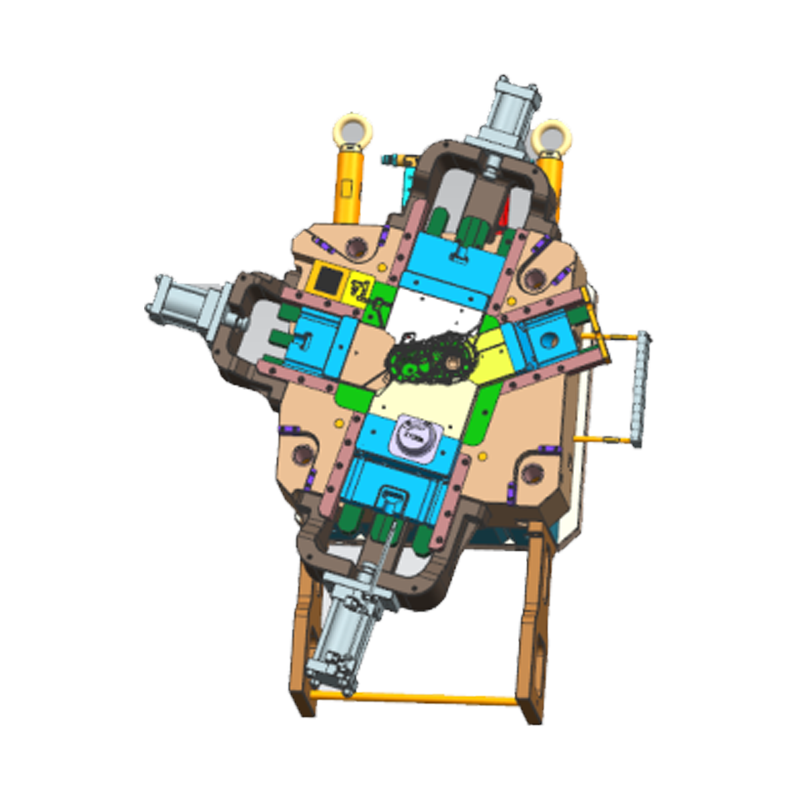
Aluminum die-casting gearbox mold the most critical requirements: 1. Material properties require hig...

Die casting transmission EM Side Housing mold is designed by JYD(Yunmai) for NIO transmission Rear H...

transmission rear Housing molds are foundational to the efficient and precise manufacturing of autom...
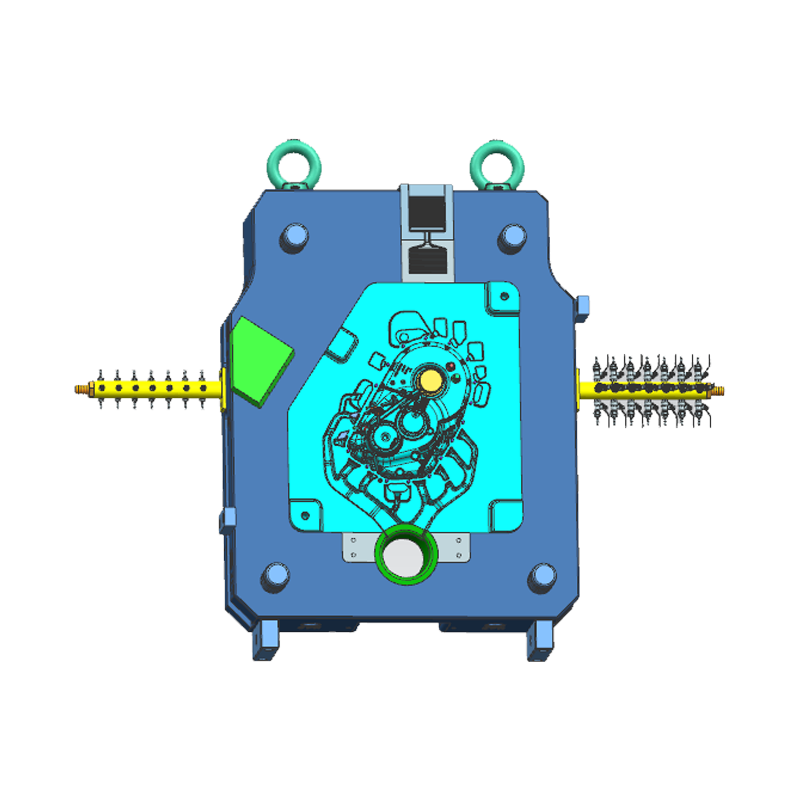
SERES transimission adopts complex cavity structure; high efficiency cooling system, the development...
Copyright © Ningbo Yunmai Precision Machinery Co., Ltd. All Rights Reserved
 OEM/ODM Die Casting/Cast Molds Manufacturers