


Cylinder Head seals combustion chamber, houses valves & spark plugs, forms coolant passages, wit...
Content
Die cast aluminum is not inherently better than aluminum—it is a specific form of aluminum shaped through a high-pressure casting process, optimized for mass production of complex, near-net-shape parts. The real question is whether die casting is the right manufacturing method for your aluminum application. Compared to wrought aluminum (extruded, rolled, or forged), die cast aluminum offers superior dimensional accuracy and production speed but lower tensile strength and reduced weldability. The best choice depends entirely on your part geometry, mechanical requirements, volume, and budget.
"Aluminum" as a broad term covers a wide family of alloys and manufacturing forms—sheet, plate, extrusion, forging, and casting. Die cast aluminum is one specific subset: molten aluminum alloy (most commonly A380, A383, or ADC12) injected into a hardened steel mold under pressures ranging from 10 to 175 MPa. The metal solidifies in seconds, producing a near-finished part with tight tolerances and smooth surfaces.
Wrought aluminum, by contrast, is mechanically worked from solid billets or ingots. Common wrought alloys include 6061, 7075, and 2024—alloys rarely used in die casting because their chemistry is not optimized for fluidity in a mold. Each manufacturing route produces aluminum with fundamentally different microstructures and, therefore, different mechanical properties.
On most strength metrics, wrought aluminum alloys—especially forged or extruded grades—outperform die cast aluminum. The die casting process introduces micro-porosity (tiny trapped gas bubbles) that act as stress concentrators, reducing fatigue life and ductility.
| Property | Die Cast A380 | Wrought 6061-T6 | Wrought 7075-T6 |
|---|---|---|---|
| Tensile Strength (UTS) | 317 MPa | 310 MPa | 572 MPa |
| Yield Strength | 159 MPa | 276 MPa | 503 MPa |
| Elongation at Break | 3.5% | 12% | 11% |
| Hardness (Brinell) | 80 HB | 95 HB | 150 HB |
| Density | 2.71 g/cm³ | 2.70 g/cm³ | 2.81 g/cm³ |
The data shows that wrought 6061-T6 has a yield strength nearly 74% higher than die cast A380, and 7075-T6 is more than three times stronger in yield. For structural components subjected to cyclic or impact loading—aircraft frames, bicycle components, climbing hardware—wrought aluminum is the clear choice.
Despite lower peak strength, die cast aluminum delivers advantages that wrought processing simply cannot match for certain applications.
Die casting can produce highly complex three-dimensional shapes—internal channels, thin walls as thin as 0.8–1.5 mm, undercuts, and integrated bosses—in a single operation. Achieving the same geometry through machining wrought aluminum would require extensive multi-axis CNC work and generate significant material waste. A typical automotive transmission housing, for example, would cost 5–10 times more to machine from wrought billet than to die cast.
High-pressure die casting achieves dimensional tolerances of ±0.1 mm on small features and surface roughness values of Ra 1.6–3.2 µm as-cast—often eliminating the need for secondary machining on non-critical surfaces. This level of consistency is reproducible across hundreds of thousands of parts, which is essential for high-volume assembly lines.
A die casting machine can complete a cycle—inject, solidify, eject—in 15 to 60 seconds depending on part size. For production runs exceeding 10,000 parts, the per-unit cost of die casting is typically far lower than any alternative. The high tooling cost (steel dies can cost $20,000–$150,000) is amortized over large volumes, making break-even typically around 5,000–10,000 parts.
The most significant structural limitation of die cast aluminum is gas porosity—microscopic voids formed when air or hydrogen becomes trapped during the high-speed injection process. Porosity levels in standard high-pressure die castings typically range from 1% to 5% by volume.
The practical consequences of porosity include:
Vacuum-assisted die casting and squeeze casting processes reduce porosity significantly, enabling some heat treatment and improving mechanical properties—but at higher process cost.
Both die cast and wrought aluminum form a natural protective oxide layer, giving both good baseline corrosion resistance. However, there are practical differences when applying surface treatments.
Aluminum is widely used for heat sinks, housings, and busbars due to its conductivity. Die cast and wrought aluminum differ here as well.
| Material | Thermal Conductivity (W/m·K) | Electrical Conductivity (% IACS) |
|---|---|---|
| Die Cast A380 | 96 | 27% |
| Wrought 6061-T6 | 167 | 40% |
| Pure Aluminum (1100) | 222 | 59% |
The high silicon content in die cast alloys significantly reduces both thermal and electrical conductivity. Wrought 6061 conducts heat nearly 74% more efficiently than die cast A380. For LED heat sinks, power electronics housings, or busbars, wrought aluminum is the functionally superior choice. Die cast aluminum is acceptable for structural housings where heat dissipation is secondary.
Both forms of aluminum machine well compared to steel, but there are notable differences in practice.
Real-world application patterns illustrate where each form of aluminum delivers the most value.
Use the following criteria to determine which form of aluminum best suits your project.
| Decision Factor | Choose Die Cast Aluminum | Choose Wrought Aluminum |
|---|---|---|
| Production Volume | >10,000 parts | Low to medium volumes |
| Part Complexity | High (internal features, thin walls) | Low to moderate |
| Structural Load | Moderate, non-fatigue-critical | High strength / fatigue-critical |
| Heat Dissipation | Secondary requirement | Primary requirement |
| Surface Finish | Paint or powder coat | Anodizing or bare metal |
| Welding Required | No | Yes |
| Heat Treatment | Generally not possible | Yes (T6, T5, etc.) |

Cylinder Head seals combustion chamber, houses valves & spark plugs, forms coolant passages, wit...

The camshaft bracket cover secures the camshaft position, seals oil channels to prevent leaks, block...
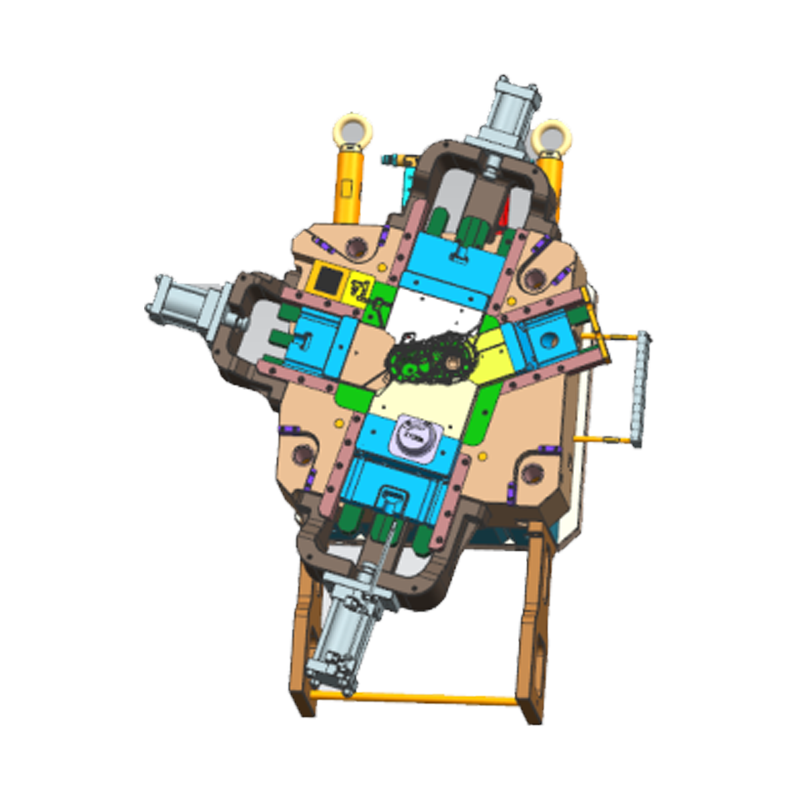
Aluminum die-casting gearbox mold the most critical requirements: 1. Material properties require hig...

Die casting transmission EM Side Housing mold is designed by JYD(Yunmai) for NIO transmission Rear H...

transmission rear Housing molds are foundational to the efficient and precise manufacturing of autom...
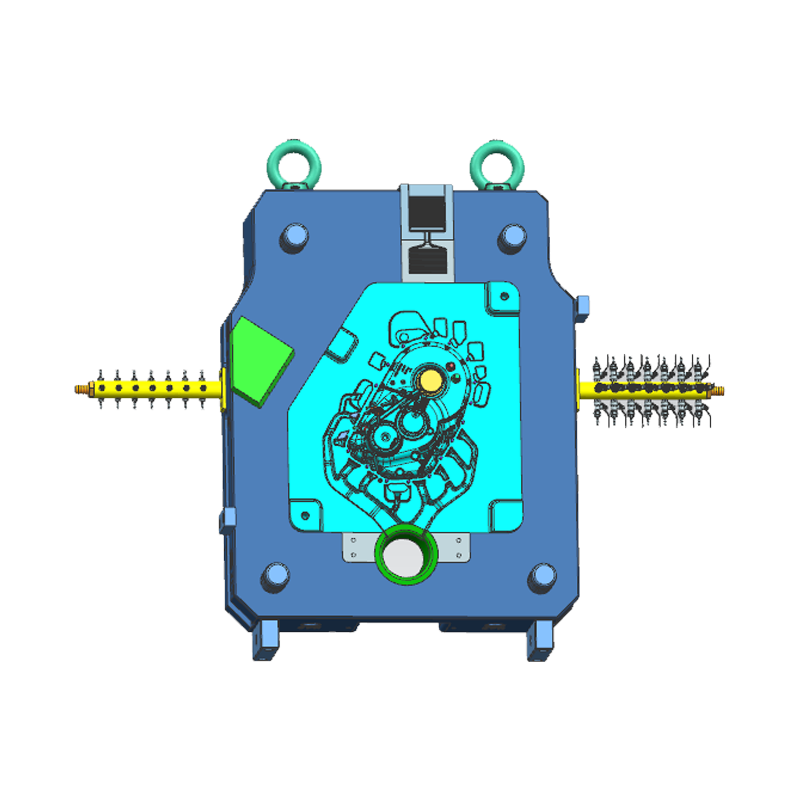
SERES transimission adopts complex cavity structure; high efficiency cooling system, the development...
Copyright © Ningbo Yunmai Precision Machinery Co., Ltd. All Rights Reserved
 OEM/ODM Die Casting/Cast Molds Manufacturers