


Cylinder Head seals combustion chamber, houses valves & spark plugs, forms coolant passages, wit...
Industry News
Home / News / Industry News / Zinc Alloy Die Castings: Alloys, Benefits, Applications & Design Guide
Content
Zinc alloy die castings offer a combination that few production materials can match: strength and toughness sufficient for automotive safety components, plus the thin walls, tight tolerances, and smooth surface that decorative hardware and electronics housings demand. The practical conclusion is simple. If the part fits in your hand and the production volume is high, zinc alloy die casting is usually the most economical route to a durable metal part.
Zinc melts at roughly 420°C, fills complex die cavities quickly, and produces repeatable parts with minimal secondary machining. Ningbo Yunmai Precision Machinery, a die casting manufacturer with in-house mold design and production, has delivered zinc alloy castings alongside aluminum and magnesium components to automotive, communication, lighting, hardware, and machinery customers since 2012. What follows reflects daily production decisions, not just material datasheets.
Zinc alloy die casting is a high-pressure process in which molten zinc alloy is injected into a hardened steel die at high velocity. The metal solidifies within seconds, and each machine cycle produces a finished, dimensionally consistent part. Because the die fills in a fraction of a second, details as fine as 0.3 mm can be reproduced, and part-to-part consistency holds across long production runs. It is an efficient method for mid to high-volume production of complex parts with thin sections and cast-in features such as threads, bosses, and small holes.
Zinc casting alloys fall into two families. ZAMAK alloys, which combine zinc with aluminum, magnesium, and sometimes copper, cover the majority of production parts. ZA alloys use higher aluminum content to improve elevated-temperature strength and creep resistance. Because each grade balances strength, ductility, hardness, and castability differently, the alloy decision should be made before the die is designed, not after the drawing is released.
Four grades cover the large majority of zinc die castings in production today.
| Alloy | Aluminum % | Copper % | Key Characteristics | Typical Applications |
|---|---|---|---|---|
| Zamak 3 | 3.5 - 4.3 | 0 | Best all-round balance of strength, ductility, and castability; excellent plating results | General mechanical parts, enclosures, hardware |
| Zamak 5 | 3.5 - 4.3 | 0.75 - 1.25 | Higher strength and hardness than Zamak 3 | Automotive components, machinery parts |
| Zamak 2 | 3.5 - 4.3 | 2.5 - 3.5 | Highest strength and hardness among ZAMAK grades; good bearing properties | Gears, bearings, high-load brackets |
| ZA-8 | 8.0 - 8.8 | 0.8 - 1.3 | Improved creep resistance and strength at elevated temperatures | Housings and structural parts near heat sources |
Specialty high-fluidity alloys push minimum wall thickness down to roughly 0.5 mm, which is valuable for lightweight electronic shields and finely detailed decorative parts. ZA-12 and ZA-27 are also available, but they are usually considered when gravity or low-pressure casting enters the decision; for conventional die casting, the four grades above are the practical set. For most structural and hardware components, though, Zamak 3 is the safest starting point: it is the best-documented grade, with predictable mechanical properties and well-established plating behavior. Since alloy chemistry and process standards keep evolving, reviewing die casting industry news periodically helps engineers keep their specifications current.
The case for zinc shows up in five measurable advantages:
For electronics, there is an additional benefit: zinc provides natural electromagnetic interference shielding, a property that plastic housings can only achieve with applied conductive coatings.
Zinc alloy die castings appear in more industries than most buyers realize.
Automotive components. Lock cylinders, seat belt anchors, mirror mechanisms, sensor housings, and small brackets are typical zinc parts. They are small but safety-relevant, so dimensional stability and material consistency are critical. Our zinc alloy automotive components are produced to that expectation, usually with dies designed in-house to keep tolerances under control.
 Custom Zinc Alloy Automotive Components Suppliers, FactoryNingbo Yunmai Precision Machinery Co., Ltd. is China custom Zinc Alloy Automotive Components suppliers and Zinc Alloy Automotive Componen...View Product →
Electronic and electrical parts. Connectors, switch housings, terminals, and micro-gearboxes use zinc for its dimensional precision, thin-wall ductility, and conductive shielding. When a housing must be both small and electromagnetically shielded, zinc is often more economical than plastic with secondary coatings. Representative examples, including housings and covers with cast-in details, are shown in our zinc alloy electronics and electrical parts.
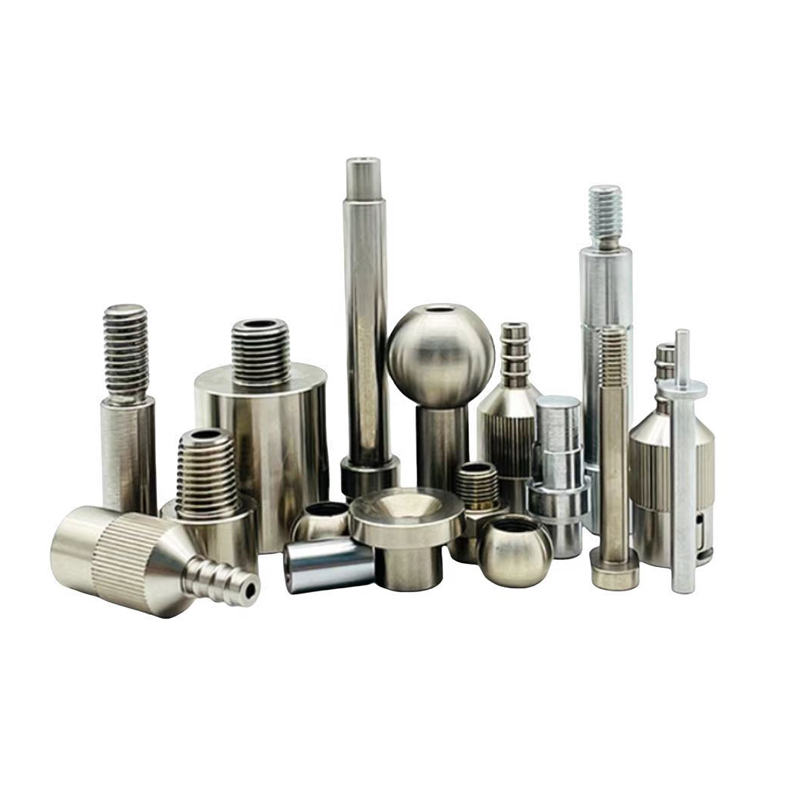 Custom Zinc Alloy Electronics & Electrical Parts Suppliers, FactoryNingbo Yunmai Precision Machinery Co., Ltd. is China custom Zinc Alloy Electronics & Electrical Parts suppliers and Zinc Alloy Electronic...View Product →
Hardware and bathroom accessories. Surface finish is the deciding factor in this sector. Faucet handles, shower heads, door locks, and cabinet hardware are die-cast in zinc because the material reproduces fine detail and accepts chrome, brushed-nickel, and PVD finishes without porosity problems. Our zinc alloy hardware and bathroom accessories are managed as a dedicated line, since finishing quality depends on controlled melt quality and well-designed dies.
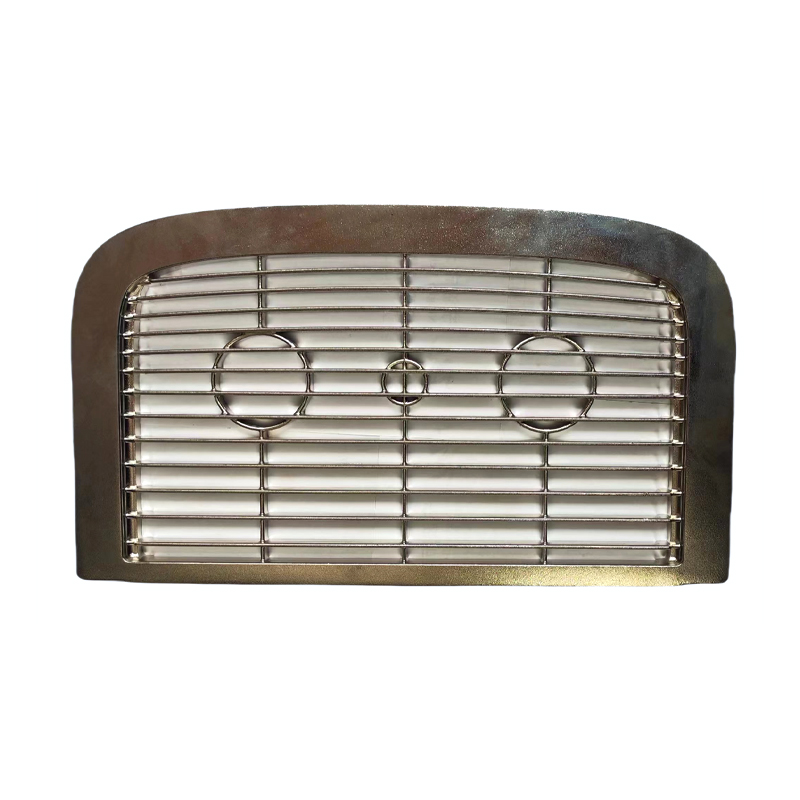 Custom Zinc Alloy Hardware & Bathroom Accessories Suppliers, FactoryNingbo Yunmai Precision Machinery Co., Ltd. is China custom Zinc Alloy Hardware & Bathroom Accessories suppliers and Zinc Alloy Hardware ...View Product →
Machinery and industrial parts. Pneumatic fittings, levers, gears, cams, and small pump components rely on zinc's bearing and wear properties, which allow direct metal-to-metal contact in slow-moving mechanisms without separate bushings. Beyond these sectors, zinc also appears in hand tools, industrial connectors, and decorative trim, where plating quality and dimensional consistency matter more than raw strength.
Keep walls as uniform as possible, typically 0.8 to 1.5 mm for structural parts. Sudden thickness changes create sinks and internal porosity, because thick sections stay molten longer and pull material from the surface. Where extra stiffness is needed, add ribs rather than increasing wall thickness.
Design in at least 0.5° of draft on cavity walls, and 1° to 1.5° on cores, so the part releases reliably from the die. Internal corners need generous radii; sharp corners concentrate stress and slow metal flow, producing both cosmetic and mechanical defects. Modern mold-flow analysis identifies filling and solidification problems before steel is cut, which is why a new die should never be approved without simulation review.
Specify tolerances according to function. A practical starting point is ±0.05 mm on mating surfaces and more relaxed values elsewhere, avoiding the cost of unnecessarily tight drawings. Threads, slots, and press-fit features can usually be cast directly. If the part will be plated, remember that decorative chrome and nickel systems add several microns to the surface and can affect tightly fitting dimensions.
The fast decision rule: choose zinc for small, complex, high-precision parts; choose aluminum for large, lightweight structural parts that see higher service temperatures.
A few numbers make the trade-off concrete. Zinc's melting point of about 420°C allows faster cycles and typically two to three times the die life of an equivalent aluminum tool. Zinc can be cast with walls down to 0.5 mm, while aluminum generally needs at least 1.5 mm to avoid cold flow and porosity. Zinc also provides higher impact strength and a better as-cast surface. Aluminum's advantages are its density, roughly one-third lower, and its stronger performance at elevated temperatures.
Mixed projects are common: a large aluminum housing paired with small zinc brackets, or a zinc mechanism inside an aluminum frame. Both metals have their place, and producing both allows us to recommend based on function rather than available equipment. For a fair cost comparison, model the finished part cost including tooling amortization, cycle time, secondary operations, and finishing, rather than comparing material price per kilogram alone.
The single biggest lever on cost and lead time is whether the supplier designs and builds the die in-house. When mold design, toolmaking, and casting are handled by separate companies, tolerances become a negotiation instead of an engineering decision. A supplier that controls the entire chain compresses the schedule and takes clear responsibility for the result.
Before selecting a partner, ask these five questions:
A foundry with broad application experience brings process discipline to small precision parts. Die makers who have built molds for transmission housings, communication components, and lighting parts understand gating, thermal control, and ejection in ways that prevent problems downstream. Follow our company news for updates on tooling and production capabilities.
With the right alloy, the right die design, and a partner who controls both, zinc alloy die castings remain one of the most reliable and cost-effective metal-forming processes available to manufacturers.

Cylinder Head seals combustion chamber, houses valves & spark plugs, forms coolant passages, wit...

The camshaft bracket cover secures the camshaft position, seals oil channels to prevent leaks, block...
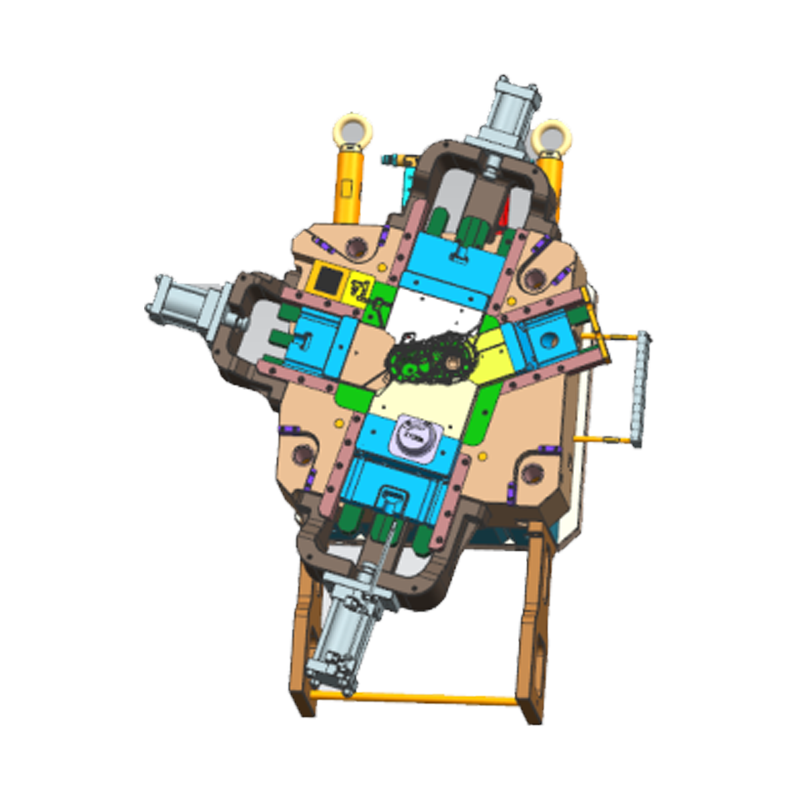
Aluminum die-casting gearbox mold the most critical requirements: 1. Material properties require hig...

Die casting transmission EM Side Housing mold is designed by JYD(Yunmai) for NIO transmission Rear H...

transmission rear Housing molds are foundational to the efficient and precise manufacturing of autom...
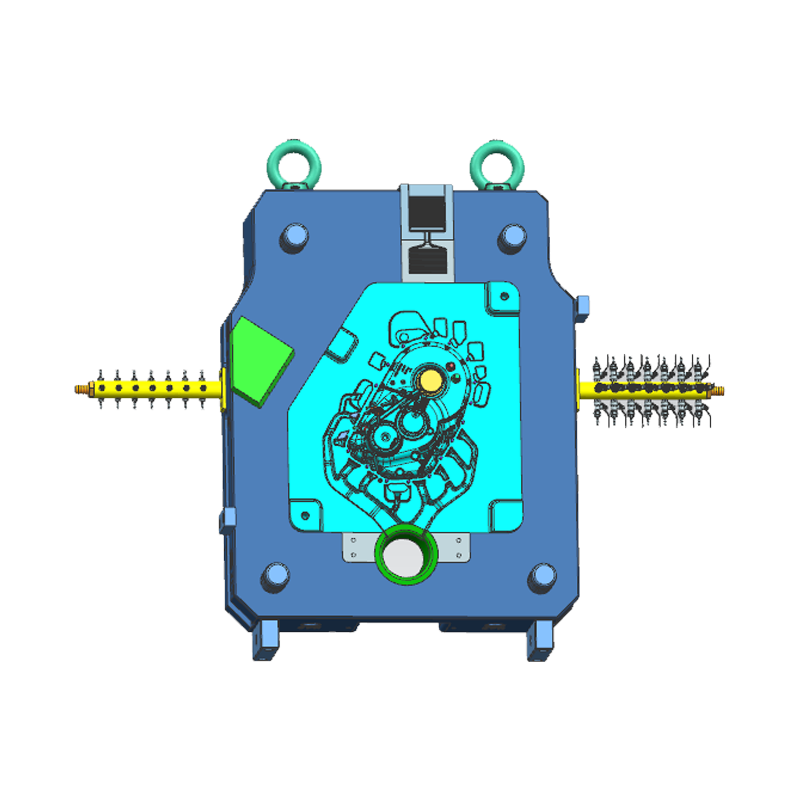
SERES transimission adopts complex cavity structure; high efficiency cooling system, the development...
Copyright © Ningbo Yunmai Precision Machinery Co., Ltd. All Rights Reserved
 OEM/ODM Die Casting/Cast Molds Manufacturers